

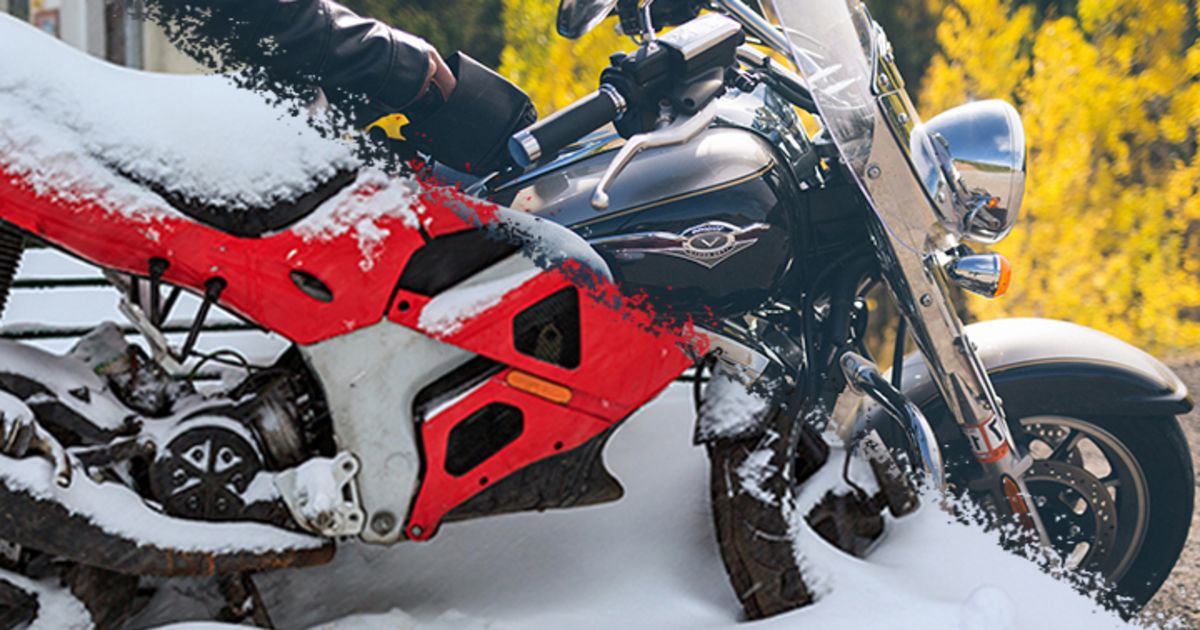
Now that spring is here, people are asking us how to take their bike out of winterization mode. They're curious about the steps to make sure that your bike is safe and ready to rent on Twisted Road. Now if you had the local dealership store your bike for you (many Harley-Davidson dealers offer this) then dewinterization isn't as big a deal. But if not? Read on.
It's time once again to ready our rides for this year's motorcycle season. Anyone who didn't brave a blizzard on two wheels is now tasked with getting their prized machine road ready. Do you remember what process you (or your dealership) went through to induce bike hibernation? The trick to de-winterization is a reversal of steps, but everyone's winterization process is different. Where some let a rain shower "wash" their bike before hanging it from the ceiling, others might perform a full tear down, placing every washer in its own individual Ziploc bag. Obscure, model-specific requirements alter what was never really an "every bike" process to begin with. Below is a bit of logic you can use to reverse your steps. There may be some reordering—e.g., changes in priority due to unique long-term storage concerns. Be patient while you go through the motions and you'll be rollin' with the rest of 'em in no time.
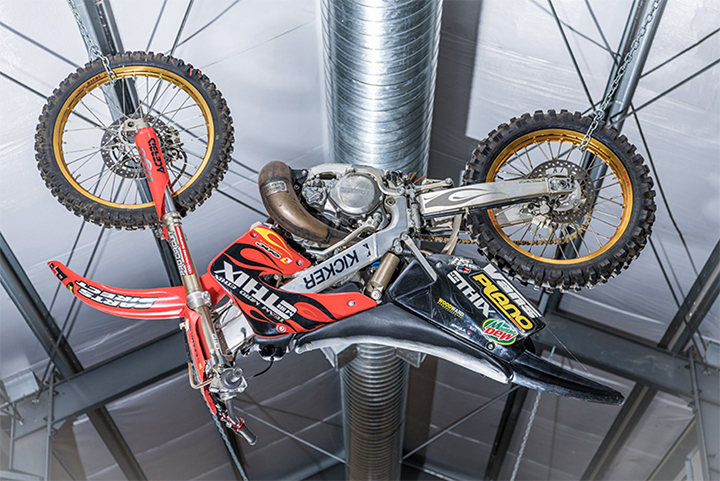
A Motorcycle In Stasis
Science is unforgiving. It doesn't care how anxious you are. Fortunately, our restless nature is why we winterized in the first place!
• Our bike is already cleaned and lubricated.
• Its fuel, oil and seals are preserved, fresh, and protected.
• The motor is fogged, battery charged, and pivot points greased.
• Both tires were separated from the cold/frozen pavement.
• Metals all around are jacketed in some form of wax polish.
• Exposed intakes have "stuffing" in them or are covered.
I mean, if we hadn't done any of the above, the de-winterization aftermath might require mechanical labor. Even something is better than nothing. Now, let's undo what was done. Here's how to get your motorcycle ready for spring!
Reversing The Winterization Process
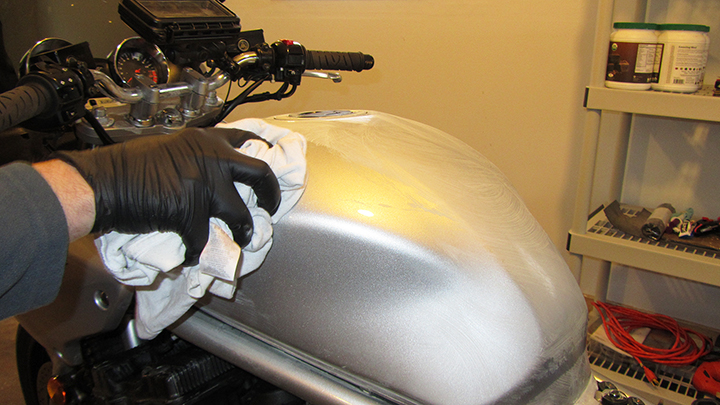
1. Get the hand cramp on with a microfiber wipe down.
By applying a wax before storage, we've installed a temporary barrier to shield the entire chassis. While plastics and vinyl are of less concern, they aren't completely immune. Misting/wiping with Armor All protects and shines but be sure to wipe it all away! Otherwise you may as well be sitting on an ejector seat. Give this wipe down the same focus as washing/waxing/detailing allows. That way, you can eye all of the little bits and remedy unexpected hazards.
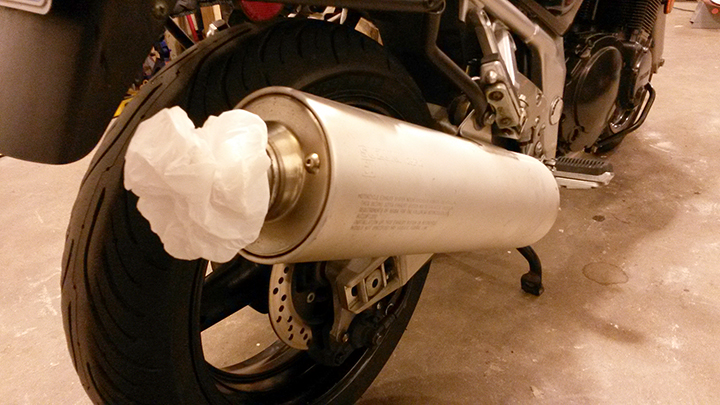
2. Remove materials you used to stuff or cap sensitive outlets.
Examples: exhaust, air intake, disconnected hosing (reconnect!), etc. The barriers we put in place stopped vermin from infiltrating our air intake and exhaust. Caps, plastic wrap and rubber bands prevented dust and foreign chemicals from corrupting any systems. All things fuel and air are readily intact.
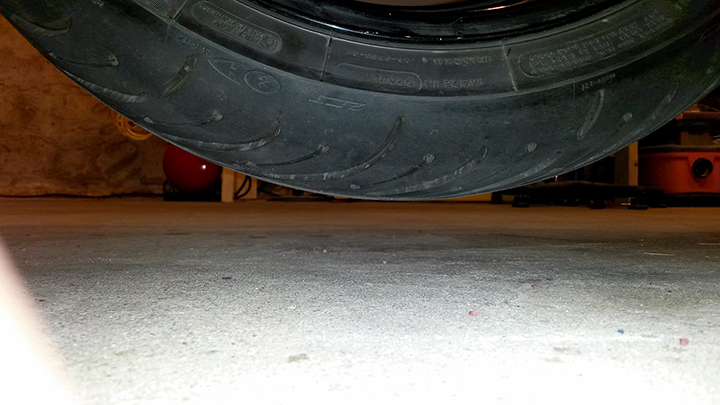
3. Pull whatever you've placed under each tire (plywood, MDF, carpet, whatever).
With ambient temps in better balance and regular riding on the docket, separating rubber from the road is no longer necessary. Yes, the pavement may still be thawing out but even a full week of parking is allowable. It was that deep freeze, peek winter weather that could've given our spring awakening an initially "thunkity" launch.
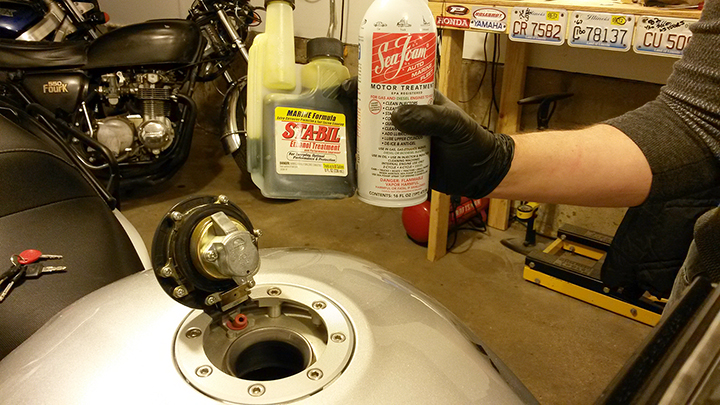
4. Place the bike on a center stand, shift into high gear and crank the rear wheel.
2 - 4 revolutions will cycle through all four strokes, hinting to the bike … "Wakey wakey, your alarm is goin' off soon". Having added Sta-Bil, Seafoam or maybe both, we can at least be at peace with the status of our fuel. Its molecules remain structurally bonded, though it isn't likely as easy to spark as before. High gear with a manual crank-through not only moves/frees the fogging oil we added to the cylinders during winterization, it also evenly blends sediment that might otherwise cause heavier sputtering at startup.
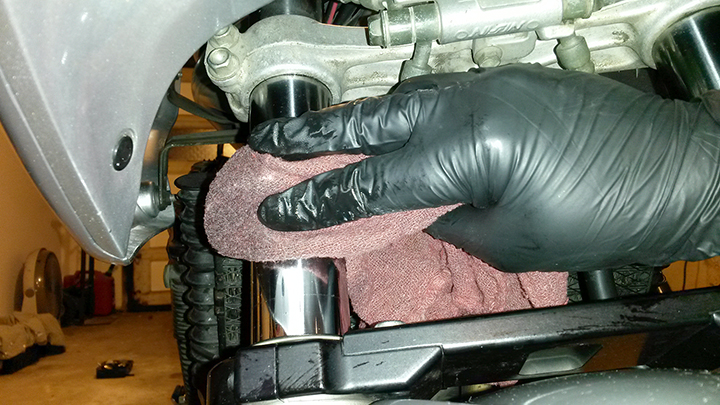
5. Test non-motor moving parts.
Does the steering feel right? Swingarm? Side/center stands? We'll do this again after we de-winterize. Our application of household oil to the fork seals, along with whatever our manual suggests for pivot points, now stands to benefit from physical testing. Most greases and oil based lubricants can withstand temperatures dipping below 32 degrees F. Many can tolerate temperatures below 15 degrees. If temperatures drop into the critical zone, however, lubricants can stiffen or become extremely viscous. So…check 'em!
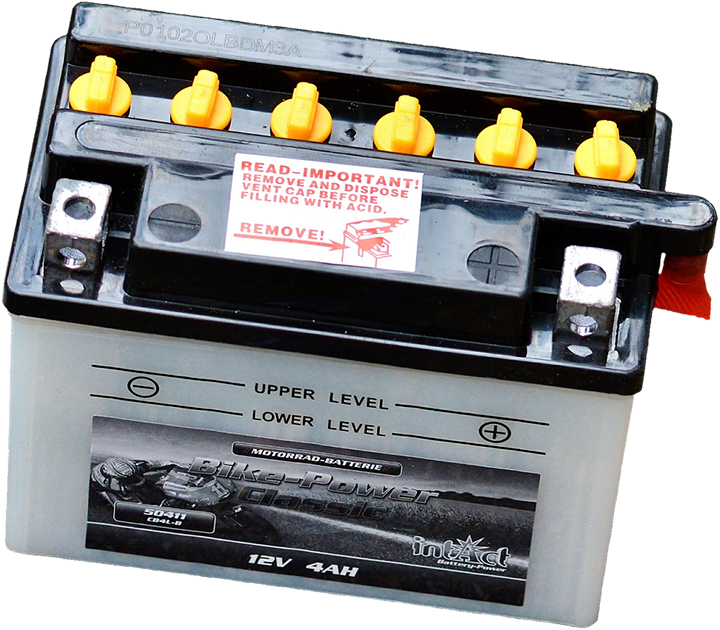
6. If we pulled the battery, reinstall it.
Positive first, ground last! That battery should likely be in good shape having been kept on a trickle charger. Leakage between terminals might be slower in the cold but it still happens, so battery voltage testing is a good idea. Anything under 12v (12 ~ 14 preferred), and it's time to think about replacing that battery.
"May We Ride Now?"
No! Sorry. It's time for a quick inspection. Your bike is still asleep. Before waking it, the first thing to do is the most basic of motorcycle inspection processes. Be sure to video the inspection so that we can issue a badge on your motorcycle listing.
Assuming everything is in order and with consideration for the bike's engineering, we can now go through the gentlest of start up routines. Once running, DO NOT rev or over-choke for higher RPMs! Listen for anything that sounds strange.
Your Ride Is Waiting
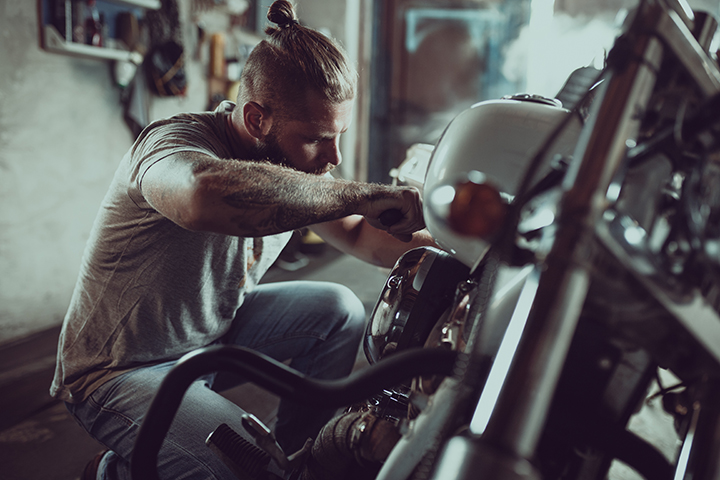
Make that first ride a mellow cruise. Be mindful of the RPMs, at least for the first 30 miles. If you document your maintenance and address every concern, a bit of relaxed moto-bonding will get those kinetics back in order. A week in, if you haven't already, consider signing up for a riding course. It doesn't have to be the basics or astronomically advanced. Whatever gets your mind and body back in touch with those second nature decision making strategies (complete with ear-to-ear grins). Me? I'm hittin' the track as soon as my world and wallet will allow. That's the safest place to twist the wrist and tell the machine: "Remember me? Because I sure as heck remember you."
In a few months, when you're ready to winterize your bike again, check out our 10 step process to motorcycle winterization.