
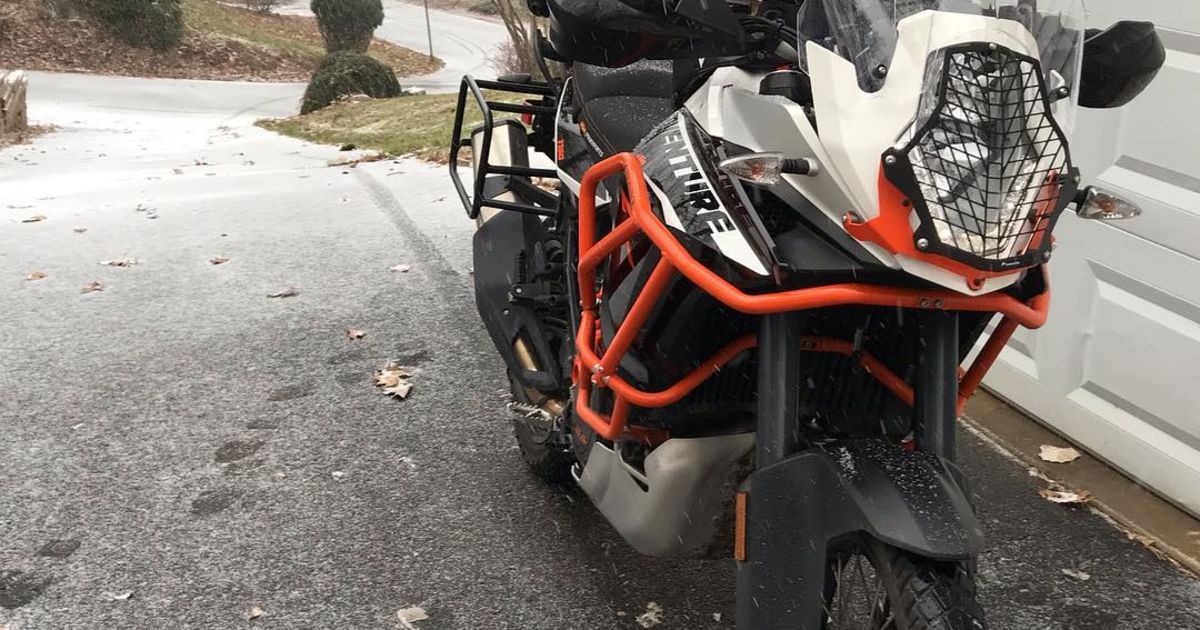
Every December, as the cold begins setting in here in Northeastern Pennsylvania and the temps plunge below 30 degrees, I say I'm moving south.
But with a 10-year old in a great school district and the ability to travel during the winter peak, I continue to stay put.
So, for over two decades, I've had to store motorcycles for winter. I collect - and ride every single bike in my collection because I can't see bikes simply sit - so winterizing motorcycles has become a yearly ritual that involves a simple process (along with a few CAO Flathead cigars and some Cab!).
Storing your motorcycle for winter isn’t just about keeping it clean and cozy—it’s about making sure you can roll it out in a few months and immediately get riding.
Here are eight ways I ensure my bikes survive the winter hibernation unscathed in my MotoShed. I also provide some quick bullets on what to do when you take your bike out of storage.

1. Clean Your Motorcycle: Don’t Store It Dirty
I never put my bikes away dirty. It’s not just about appearances; it’s about avoiding rust and corrosion. Dirt traps moisture, and moisture is a death sentence, especially for anything metal! A quick example: I had a 2003 Suzuki V-Strom DL1000 that was, for a large portion of its life, my only Adventure bike, TCK 50 rubber, and all the fun add-ons for serious off-road riding.
But once I added a KTM 1190 Adventure R to the stable, the V-Storm became my "winter" bike and was neglected. The salt and dirt that wasn't cleaned off actually deteriorated the engine cases and side covers—they literally got thinner! Being a Suzuki, the bike continued to ride strong until the very day I sold it with nearly 100K.
Before storage, I always give my bike a thorough wash with a good-quality motorcycle cleaner, scrubbing every area. And drying? That’s just as critical. I use a dedicated heated blower to get water out of the tight spots, like under the seat and around the chain. A quick coat of wax afterward gives the paint some extra protection, and I hit any exposed metal with an anti-corrosion spray like ACF-50. It’s like a spa day for your bike before its long nap.
Don’t forget the chain. Clean it with a good chain ACF-50, dry it thoroughly, and apply a fresh coat of chain lube or wax after you heat the chain up. You can either ride around for a few minutes or keep the bike on its center stand, or wheel stands and let the bike idle in first gear for a minute or two. Leaving a chain dirty and dry over the winter is a recipe for rust. I've continually got over 20K from chains, and I attribute this process to it (plus cleaning/waxing every 500 miles on street bikes, and 250 or so on my adventure bikes).
2. Change the Fluids and Check the Coolant
If you think you can leave that old oil in there all winter, you’re asking for trouble. Used oil is full of contaminants that can cause havoc on internal parts if left sitting. I always change the oil and filter before storing the bike. It’s a quick and easy step that ensures your engine isn’t sitting in a sludge bath for months. Some friends still do fresh oil changes in spring, which is still better than doing nothing at all.
I also check my clutch and brake fluids, changing them if they're dark or if the clutch lever feels heavy.
For those of you with liquid-cooled bikes, check your coolant while you’re at it. Make sure it’s rated for the temperatures your garage/storage area might hit. There’s nothing fun about discovering frozen coolant has cracked something expensive. Antifreeze is cheaper than engine repairs.
3. Stabilize the Fuel
Gasoline doesn’t age like fine wine; it ages like milk.
If left untreated, varnish will coat your fuel lines and injectors. I fill my tanks to prevent condensation, then add a fuel stabilizer like STA-BIL. Running the engine for a few minutes ensures the stabilizer gets through the entire system. For carbureted bikes, I go one step further and drain the carb bowls to prevent gumming. I learned that lesson the hard way multiple times.
4. Maintain the Battery
Batteries are another weak spot. Unless you enjoy replacing them every spring, you’ll want to keep yours charged.
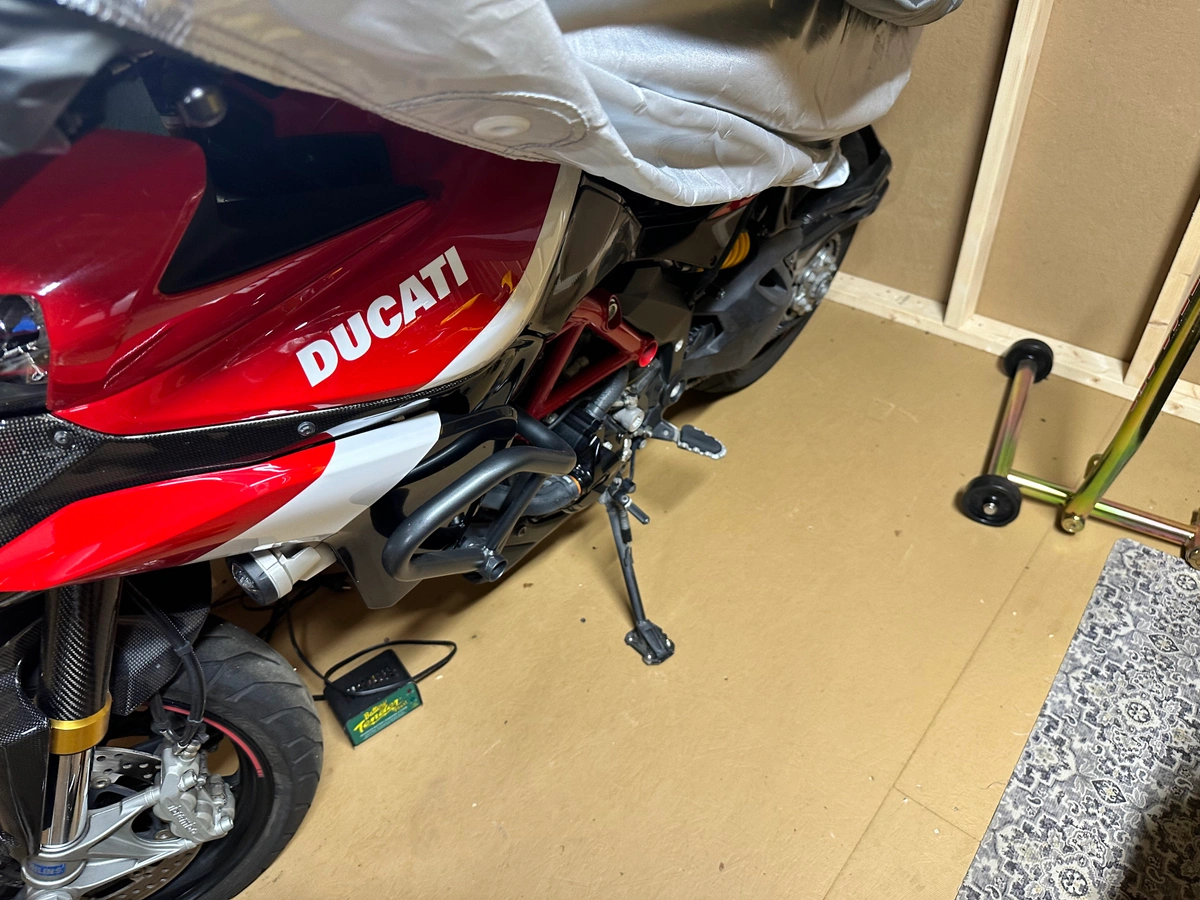
You can either remove the battery from the bike and connect it to a smart charger or add a pigtail to connect directly to the trickle charger like a Battery Tender. These keep the charge at an optimal level without overdoing it. If your bike has a lithium battery, make sure your charger is compatible, or you’ll fry it faster than you can say, “expensive mistake.” I nearly did this on my Ducati DesertX last season.
I used to pull batteries out, which was good because I'd keep them in a warm basement on a charger. But as the collection grew and the MotoShed got some insulation, pigtails with battery tenders made life much simpler.
5. Protect Your Tires
Motorcycle tires are often overlooked, but they shouldn’t be. Flat spots are inevitable if you leave your bike sitting on its tires for months. If a bike is not on paddock stands
I inflate mine to the recommended PSI, and I keep the sportbikes on paddock stands and all bikes with a center stand on the center stand.
No stands? No problem. Rotate the tires every few weeks to distribute the weight. Bonus points if you park on a piece of carpet or rubber mat instead of cold concrete. Make rotations a ritual, also. It's always an excuse for me to head to the MotoShed and have a few drinks.
6. Cover It Right
Don’t cheap out here. A high-quality, breathable cover will protect your bike from dust and moisture while letting it breathe.
I’ve used cheap tarps in the past, and let’s say they do more harm than good. Also, if you’re storing your bike in an area prone to critters, stuff your exhaust pipes with steel wool or rags to keep mice from moving in. Nothing says “spring tune-up” like pulling a nest out of your muffler.
7. Plan for Critter Prevention
Speaking of mice, don’t underestimate their determination. I’ve had this happen not once but twice on a VFR800 I have since reluctantly parted with. One spring, the bike felt like it was running on two of four cylinders, and I thought I had a huge issue. But it was just an airbox clogged with nesting material and dog food! Ensure your space is pest-proof.
8. Don’t Forget Regular Check-Ins
Even though your bike is in hibernation, it’s good to check on it every few weeks (again, another excuse for drinks with friends). Look for signs of moisture, tire pressure loss, or rodent activity. Spin the wheels, check the cover, and give everything a quick once-over. These small check-ins can save you from nasty surprises in the spring. I also do most of my accessory/parts upgrades during the winter, spending a few nights a week in the MotoShed. This provides ample opportunity to ensure all is stored properly.
What to Do When Taking Your Motorcycle Out of Storage
How about when the warmer weather arrives? Here are a few tips for getting that bike out of storage.
- Inspect the Battery: If you removed the battery, reinstall it fully charged. If it stayed in the bike, test it with a multimeter to ensure it’s holding a charge. If it’s weak, replace it.
- Check the Tires: Inspect for cracks, flat spots, or other signs of damage. Ensure the tires are properly inflated to the recommended PSI.
- Inspect Fluids: Check engine oil, coolant, brake fluid, and clutch fluid levels. If you didn’t change the oil before storing, now’s the time.
- Inspect the Fuel System: If you used a stabilizer, your fuel should be good to go. For carbureted bikes, ensure there’s no gumming in the carb bowls. If you drained them, refill with fresh fuel.
- Check the Chain or Belt: For chain-driven bikes, ensure the chain is properly lubed and tensioned. Inspect for rust or excessive wear. Belt-driven bikes should be checked for cracks and tension.
- Test the Brakes: Check brake pads, rotors, and fluid levels. Squeeze the levers to ensure there’s no sponginess. Replace fluid if it’s old or contaminated.
- Inspect Electrical Components: Test all lights, turn signals, horn, and the starter. Ensure everything is functioning properly before hitting the road.
- Look for Rodent Damage: Inspect wiring, airbox, and exhaust for signs of critter activity. Remove any plugs or covers you used to block openings.
- Warm It Up: Start the engine and let it idle for a few minutes to ensure everything is running smoothly. Listen for unusual sounds or vibrations.
- Test Ride Cautiously: Take your bike for a short ride to check handling, braking, and overall performance. Use this time to spot any issues that need addressing before longer rides.
Why Proper Storage Matters
All these steps might sound like a lot, but they’re worth it. There’s nothing like rolling your bike out in spring, firing it up, and hitting the road without worrying about whether it’ll break down on you. Proper winter storage isn’t just about maintaining your bike; it’s about maintaining your sanity as a rider. Nothing kills the joy of that first spring ride faster than a dead battery or gummed-up fuel system.
And if storing your bike makes you feel down, here’s another idea: travel somewhere warm and rent one from Twisted Road. It’s the perfect way to scratch the riding itch while keeping your own bike in perfect winter slumber.
FAQs
Why is it important to winterize a motorcycle?
Winterizing prevents corrosion, fuel system damage, battery failure, and tire issues. Proper storage ensures your bike starts easily and rides safely when spring arrives.
Should I clean my motorcycle before winter storage?
Yes. Dirt and salt trap moisture, which leads to rust and corrosion. A thorough wash, complete drying, and light corrosion protection help preserve metal and finishes.
Is it better to change motorcycle oil before or after winter storage?
Changing oil before storage is best. Used oil contains contaminants that can damage internal engine components if left sitting for months.
Do I need to stabilize fuel before storing my motorcycle?
Yes. Fuel stabilizer prevents varnish buildup in fuel lines and injectors. Fill the tank, add stabilizer, and run the engine briefly to circulate it.
What should I do with the battery during winter storage?
Keep the battery on a smart charger or battery tender. You can remove it and store it indoors or leave it installed with a pigtail connected to a maintainer.
How do I prevent flat spots on motorcycle tires during storage?
Use paddock stands or a center stand when possible. Inflate tires to proper PSI and rotate them periodically if the bike remains on the ground.
Should I cover my motorcycle during winter storage?
Yes, but use a breathable motorcycle cover. Avoid plastic tarps, which trap moisture and can cause corrosion.
How do I keep mice and rodents out of my motorcycle?
Seal openings like the exhaust with rags or steel wool. Inspect airboxes and wiring regularly, and keep the storage area clean and pest-resistant.
How often should I check on a stored motorcycle?
Every few weeks. Look for moisture, rodent activity, tire pressure loss, or battery issues. Light inspections prevent spring surprises.
What should I check when taking a motorcycle out of winter storage?
Inspect the battery, tires, fluids, brakes, chain or belt, electrical systems, and fuel. Perform a cautious test ride before returning to normal use.
What is the most common mistake riders make with winter storage?
Leaving fuel untreated or skipping battery maintenance. Both often lead to hard starts, fuel system problems, and unnecessary repairs in spring.
What can I do if winter storage keeps me from riding?
Travel somewhere warm and rent a motorcycle. Platforms like Twisted Road let you ride year-round while keeping your own bike protected during winter.