

Yes, your smartphone can do everything. But for the serious motorcyclists, your smartphone isn’t cutting it anymore.
Sure, they’re fine until the screen overheats, loses signal, or sends you down a fire road in the middle of nowhere because it thinks your Street Glide transformed into a Rubicon.
Motorcycle-specific GPS units have caught up to the demands of real-world riders, for both on- and off-road riders. We’re talking glove-friendly touchscreens, rugged builds, live weather overlays, group tracking, and routing that actually prioritizes twisties instead of freeways or dirt instead of asphalt.
Whether you're chasing high-speed sweepers in the Smokies or tackling a remote section of a BDR, this guide will help you choose the GPS that works on-road, off-road, or both.

Why Motorcycle GPS Still Matters Today
Even with all the tech in our pockets, motorcycle GPS units offer advantages that phones still can’t match:
-
Better Visibility: Screens are brighter and glove-friendly.
-
Purpose-Built Navigation: Prioritize scenic routes, twisty roads, off-road treks, and avoid highways.
-
Off-Grid Access: Most units work without a cell signal.
-
Rider-Friendly Durability: Waterproof, shockproof, and designed for two wheels.
Now, let’s get to the top units, each one tested, scrutinized, and road (and dirt) proven.
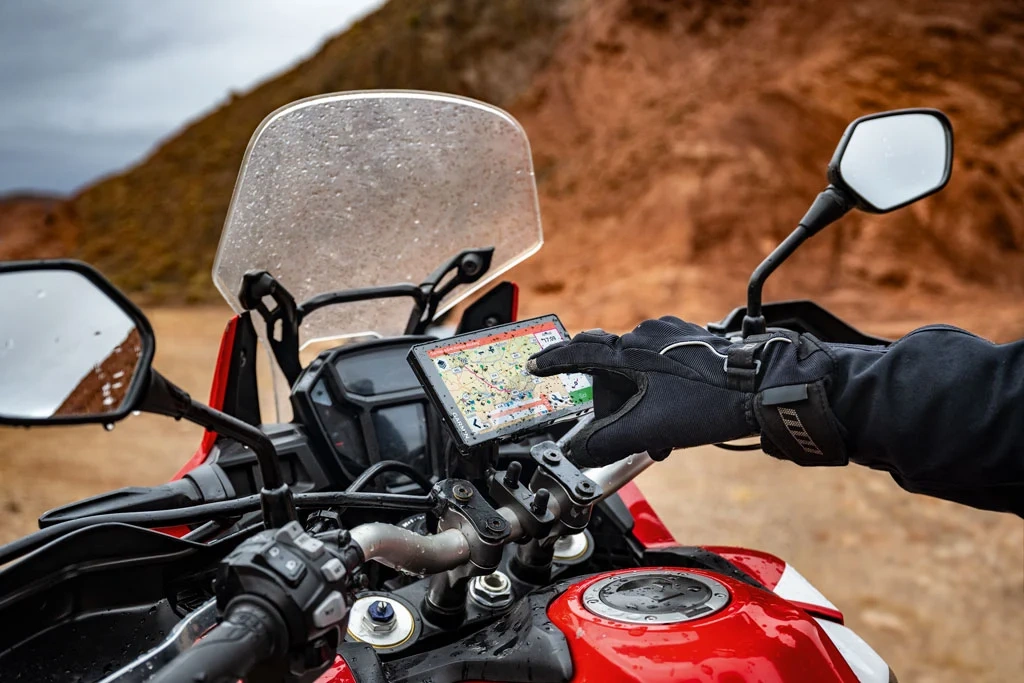
1. Garmin zūmo XT2: The Ultimate All-Arounder
If you ride everything, from backroads to BDRs, the zūmo XT2 is the gold standard. It’s as happy mounted to a touring rig as it is bolted to a dirt-shredding DesertX. This is the updated version of the XT, which many continue to use, but due to some of the newer features, like a half-inch larger screen, group ride, and use with Garmin’s amazing Tread app.
Top Features:
-
6" glove-friendly screen, readable in full sun
-
Street and topo maps preloaded
-
“Adventurous Routing” mode for scenic rides; you scroll for how curvy you want your roads to be.
-
Syncs with Garmin Explore, Tread, and inReach Mini 2 for full off-grid nav + SOS
Why It’s Amazing On-Road:
-
Helps you avoid slab with smart twisty-road algorithms
-
Traffic and weather overlays in real time when connected to a smartphone.
-
Easy POI management for gas, food, scenic lookouts
Why Off-Road Riders Love It:
-
Topo and satellite views
-
GPX import from RideBDR, Gaia, or Rever
-
Tracks breadcrumbs so you can always find your way back
Pro Tip: Long-press the elevation profile during a ride to preview upcoming climbs—key when managing fuel, fatigue, or planning breaks.
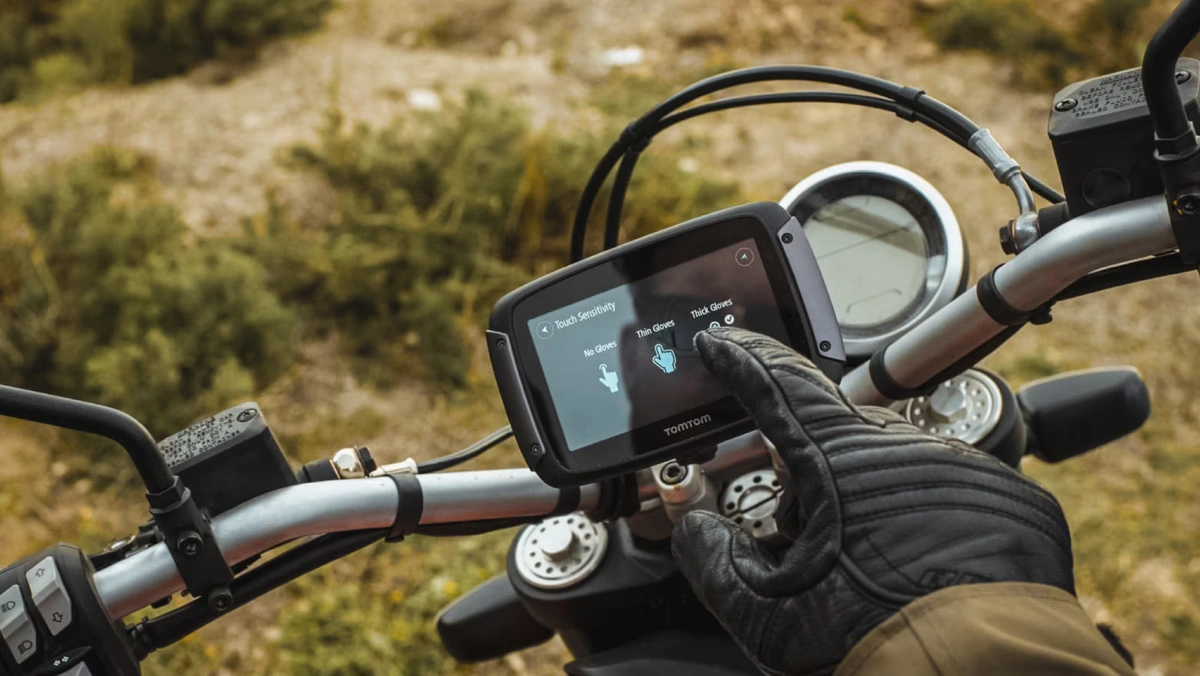
2. TomTom Rider 550 (2025): The Road Rider’s Secret Weapon
TomTom’s back, and they nailed it for road-focused riders. The Rider 550 is designed for twisties, scenic loops, and spirited touring. It’s the GPS you want for making even a mundane commute exciting.
Top Features:
-
“Plan a Thrill,” “Curvy Roads,” and “Hilly Roads” modes
-
4.3" sunlight-readable screen
-
Lifetime map and traffic updates
-
Bluetooth pairing for audio prompts and phone alerts
Why It’s Amazing On-Road:
-
Finds better roads than Google Maps ever could
-
Voice navigation is smooth and intuitive
-
Real-time traffic and speed camera warnings
Why It Can Work Off-Road:
-
While it doesn’t offer topo maps, it can still handle gravel and forest roads if you prep the route beforehand
Pro Tip: Use MyDrive to build routes on your laptop, then sync to the GPS. Build a library of rides to access even without a signal.
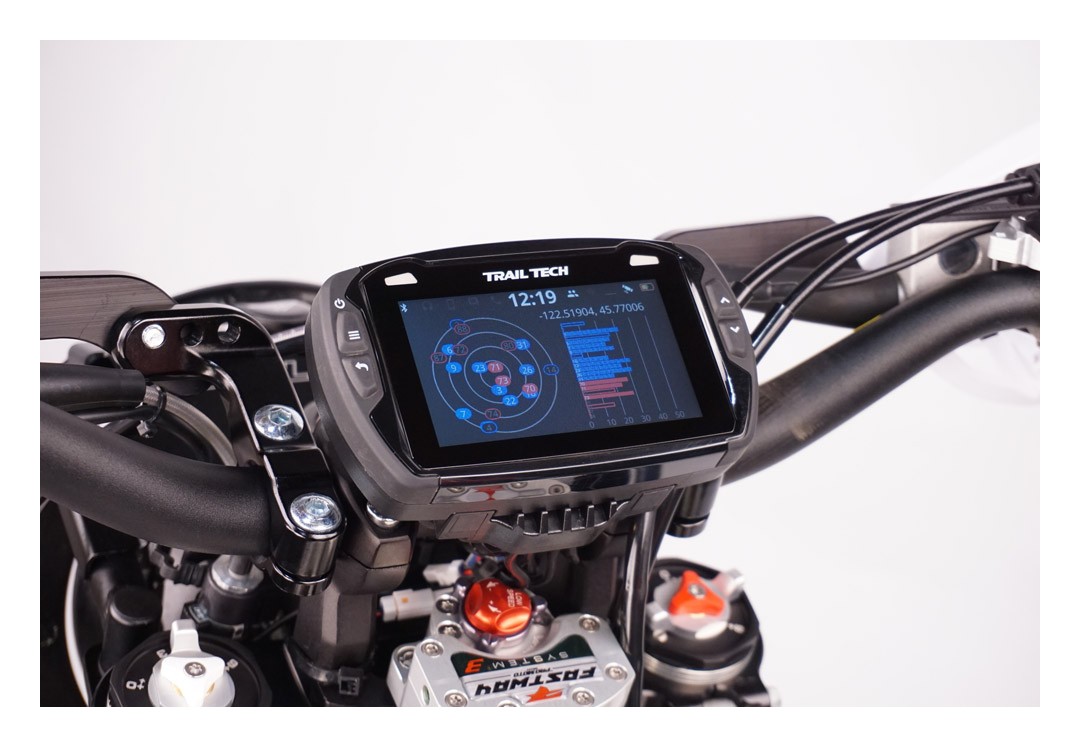
3. Trail Tech Voyager Pro: Built for the Dirt, Surprising on the Street
This one was made for ADV and off-road riders, but with a few tweaks, the Trail Tech Voyager Pro is surprisingly good for mixed-use riders who care about real-time bike data as much as maps.
Top Features:
-
Off-road breadcrumb tracking
-
Buddy tracking over RF (no cell service required)
-
Engine telemetry: temp, RPM, voltage
-
Color touchscreen with offline map layers
Why It’s Amazing Off-Road:
-
Built-in ride logging with full GPS trail history
-
Real-time group location tracking
-
Temp + voltage alerts in high-stress terrain
Why Street Riders Should Consider It:
-
Great for vintage or minimal bikes with no dash—lets you see RPMs, temps, and location data in one spot when connected to the bike.
Pro Tip: Don’t skip the wiring kit. Hooking up RPM and temp sensors gives you an extra layer of control on long adventure rides.
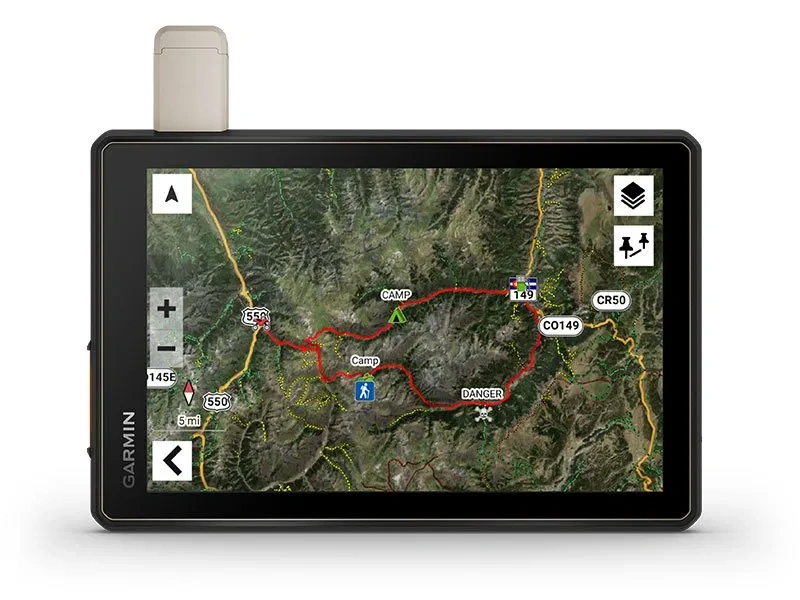
4. Garmin Tread Overland Edition: Touring Powerhouse for Serious Distance
If your idea of touring includes remote campgrounds, public land, and unsupported routes, the Tread Overland is basically a command center for your bike.
Top Features:
-
Huge 8" screen with glove control
-
Built-in altimeter, compass, barometer
-
Group Ride Radio (no cell required)
-
Topo + street + satellite maps included
Why It Works for On-Road:
-
Syncs with Tread app for gas stop planning, scenic POIs, and weather hazard alerts
-
Massive screen is ideal for large ADV rigs or baggers
Why It Works Off-Road:
-
Real topo detail and public land overlays
-
Group ride tracking and RF comms in the middle of nowhere
Pro Tip: Mount it with vibration isolation. This thing is hefty but worth it on the dash of a GS, 1290, or Africa Twin.
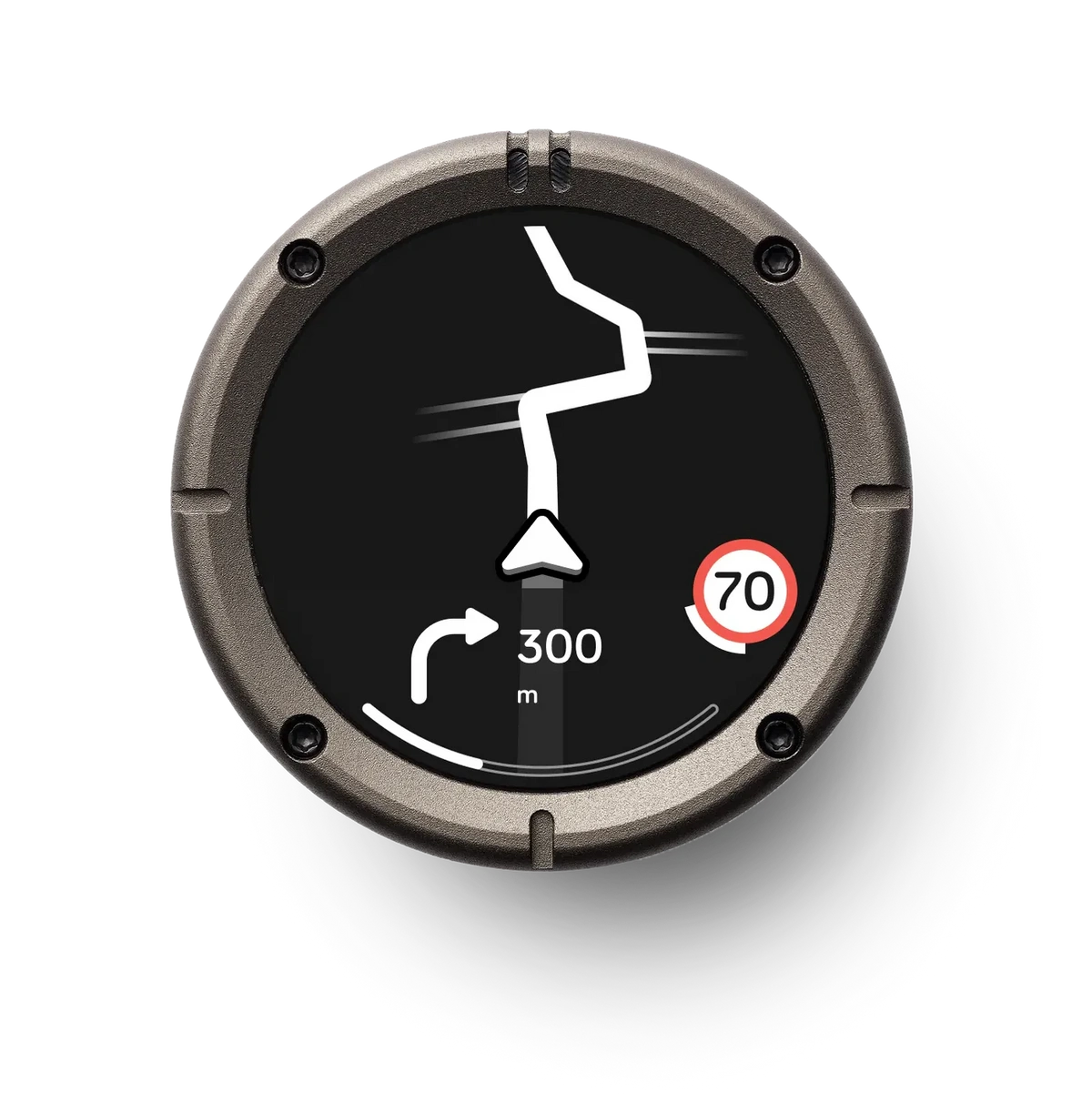
5. Beeline Moto II: For Riders Who Like It Simple
Sometimes, less is more. If you don’t need maps—just direction—the Beeline Moto II is minimal perfection. Ideal for street riders, commuters, and those who love analog bikes but still want smart navigation.
Top Features:
-
Compass-style or route-mode nav
-
30-hour battery life
-
Pairs via Bluetooth to your phone
-
Waterproof, shockproof, and sleek
Why It Works On-Road:
-
Keeps your cockpit clean and uncluttered
-
Super intuitive once you set it up in the app
-
Surprisingly addictive once you use it a few times
Why It Can Work Off-Road:
-
For fire roads or wide-open gravel routes, the simple arrow is often all you need
Pro Tip: Use Route Mode for city or complex rides. Save Compass Mode for open roads or minimal intersections.
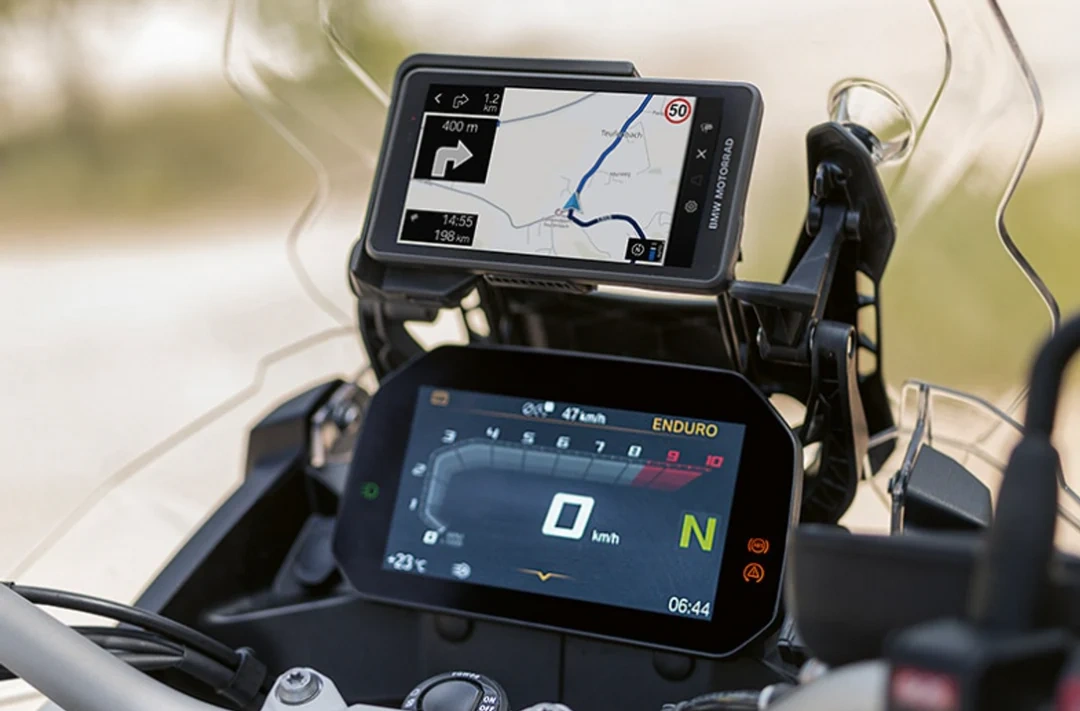
6. BMW ConnectedRide Navigator (New for 2025): Tech-Savvy Touring Redefined
If you ride a modern BMW, this is your new nav hub. Fully integrated with BMW TFTs and handlebar controls, the ConnectedRide Navigator turns your dash into a fully smart ecosystem.
Top Features:
-
Wireless smartphone integration
-
Built-in LTE for traffic and weather
-
Shows tire pressure, maintenance alerts, and nav simultaneously
-
No pairing hiccups—it’s built for BMWs, period
Why It’s Amazing On-Road:
-
One-tap control with your wheel or TFT dash
-
Clean, reliable, factory-level integration
-
Best-in-class lane guidance and real-time hazard alerts
Why It’s Off-Road Capable (Lightly):
-
Good for gravel roads, forest trails, and Euro-style ADV rides
-
Not quite Garmin’s level of backcountry flexibility
Pro Tip: Don’t overlook the service alert integration. You’ll know tire pressures, service intervals, and bike health without touching your main dash.
Don’t Let Navigation Ruin a Great Ride
There’s no single best motorcycle GPS in 2025. There’s the best one for you.
If you’re mostly riding twisties, go TomTom. If you love long hauls and dabble in dirt, grab the zūmo XT2. If you’re off the grid and don’t want to rely on cell signal, the Trail Tech or Tread is your new best friend.
Want seamless BMW functionality? Easy—get the ConnectedRide. And for minimalists? Beeline is pure freedom.
No matter what you choose, remember this: a great GPS doesn’t just show you where to go; it makes you want to get lost, knowing you’ll find your way back.
FAQs
Can I just use my smartphone and skip a dedicated GPS?
Yes, for paved roads—but phones often lose signal or battery power on long off-road routes. A dedicated GPS or satellite device offers superior durability, offline maps, and stronger reception.
What happens when GPS loses signal under dense canopy or in deep gorges?
Devices with multi-Band (L1 + L5) or GNSS support (GPS, GLONASS, Galileo) reduce dropouts. You should also carry a fallback (maps, compass) and plan for signal gaps.
How often should I update maps and firmware?
At least annually before major trips. For frequently traveled routes, update quarterly. Firmware usually enhances stability, adds satellite fixes, and patches bugs.
Can I power the GPS from my motorcycle battery?
Absolutely. Use a wired 12V source with an in-line fuse and cable management. Avoid undue stress on connectors and consider a backup battery for multitools or phone charging.
What mount style is best for vibration-prone off-road use?
Use anti-rotate dampeners (silicone or rubber grommets), dual-screw mount plates, and isolation padding. Position in the steering head area where vibration is lower.
Q: If I rent a bike, who’s responsible if the GPS or mount breaks?
Check the rental’s damage policy. Some owners require rental coverage for accessories. Always note and photograph the mount condition at pickup and return.