

During riding season, you can barely go a day without noticing an adventure-touring bike.
The ADV segment has grown stronger than any other over the past decade, and this trend shows no signs of slowing anytime soon.
This assertion is backed not just by anecdotal evidence but by actual data. A report by Allied Market Research reveals that the worldwide market for adventure motorcycles saw revenues of $31.8 billion in 2022, with projections estimating a rise to $64.5 billion by 2032.
Adventure tourers have become the booming class in the touring market. A huge “why” is because riders can traverse miles of pavement, rugged terrain, and anything in between.
But in 1980, this wasn’t the case. Besides the pure dual sports of the '60s and '70s, enduros and tourers had never crossed paths. That is, not until BMW Motorrad debuted an innovative hybrid that’d eventually become the golden standard in adventure touring—the GS.
Over the four decades since the BMW GS was released, the company has perfected the platform, refining nearly every feature, from design to performance, including off-road performance. I know from experience that I participated in a two-day off-road camp at the BMW U.S. Rider Academy and quickly realized just how special the R 1250 GS model is.
This also explains why the modern R 1250 and R1200 GS bikes took second place in the most rented motorcycles on Twisted Road behind the Harley Street Glide.
To understand the history of such a legend, let’s start with the first model: the 1980 BMW R80 G/S.

BMW R 80 GS: 1978–1987
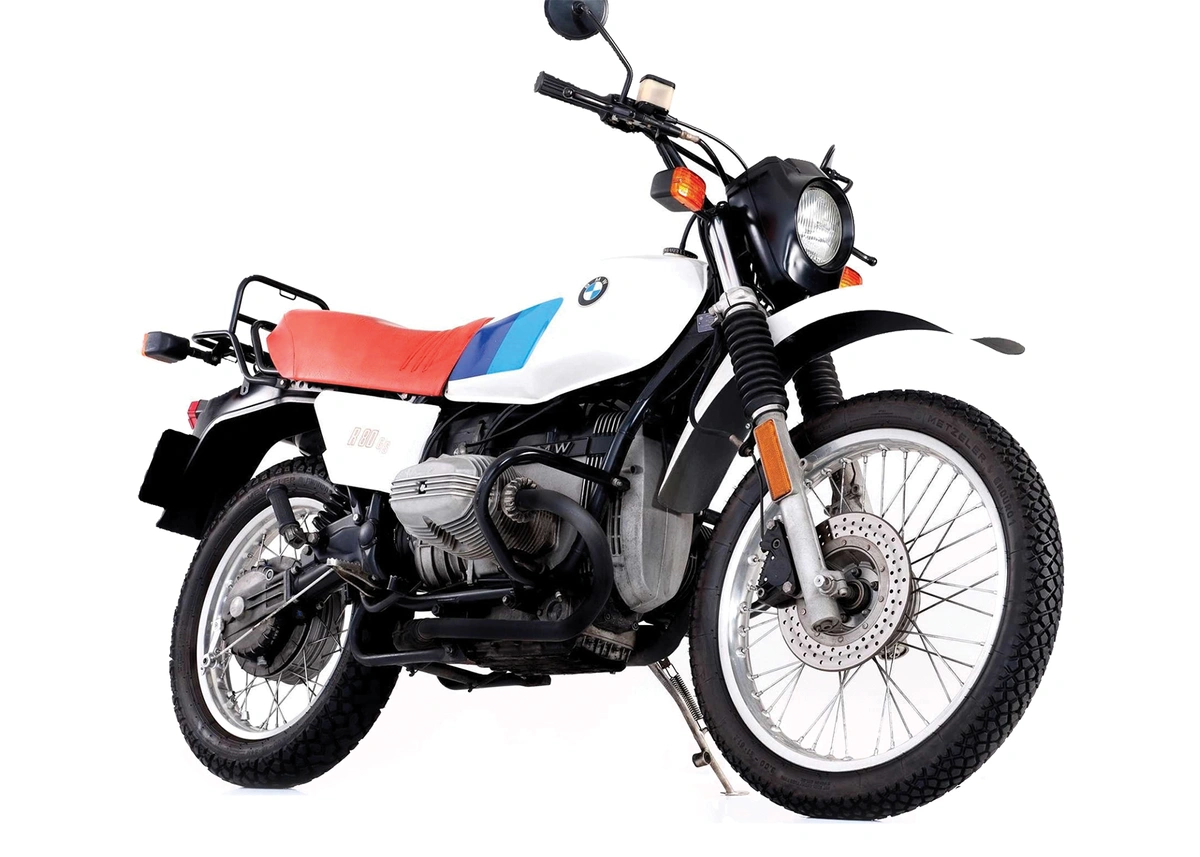
Now, you’ll notice this section kicks off a couple of years prior to the model’s initial release—that’s because, just shy of two years before announcing the 1980 BMW R80 G/S, BMW’s engineers had just developed an intriguing prototype. (BMW used G/S only for this first edition versus the now-standard GS without the slash).
This bike blended the characteristics of a traditional scrambler with a road bike, immediately attracting the attention of BMW’s higher-ups. BMW execs greenlit the project soon thereafter, which kicked off the development phase of the world’s first mass-produced Enduro motorcycle.
Less than two years later, in 1980, the first BMW R 80 G/S rolled off of the BMW Plant Berlin assembly line. The model received the moniker “G/S,” which stands for the German words “Gelände/Straße,” or “offroad/road” in English.
At that very moment, arguably. the adventure touring segment was born. The bike went on to garner worldwide recognition after winning the Paris-Dakar rally in ‘81, ‘83, and ‘84, resulting in the production of a R 80 G/S Paris-Dakar special edition.
The first-generation GS packed such standout features as:
- Monolever, single-side swing-arm rear suspension
- Hydraulic telescopic front forks
- 797.5 cc BMW type 247 engine
- 5-speed transmission
- 5.16-gallon fuel capacity
BMW R100 GS: 1987–1996
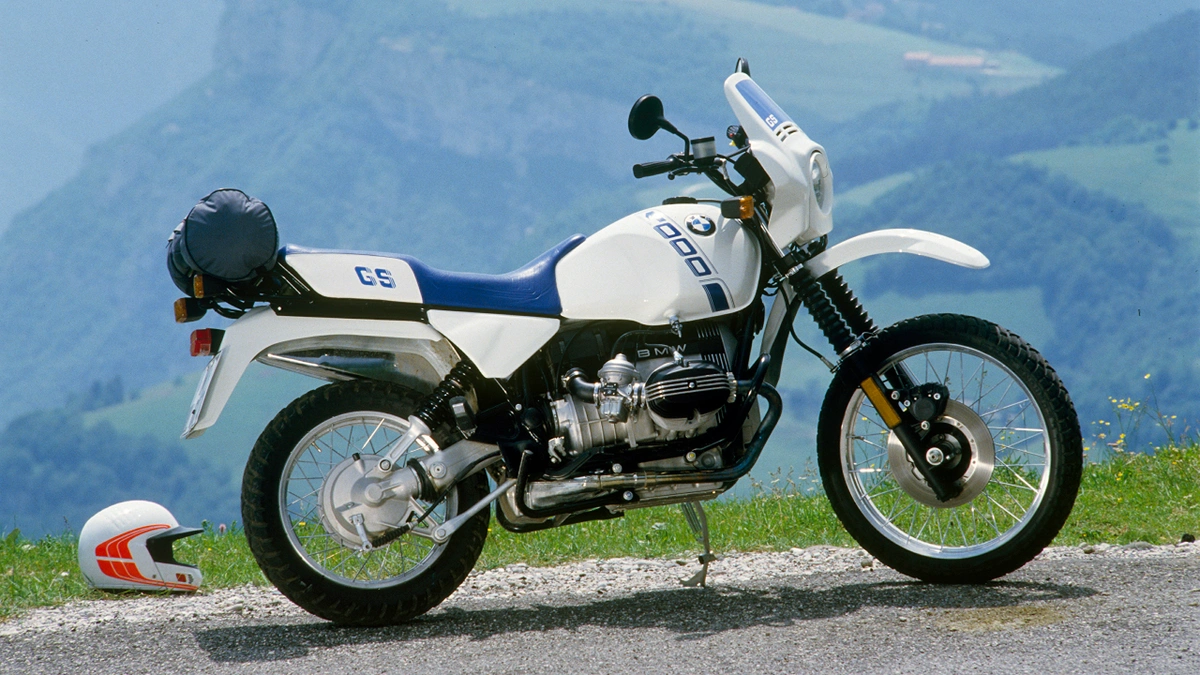
By 1987, other Enduros emerged on the market, causing the GS to lose momentum to competitors with more impressive specifications and larger displacement engines.
These shortcomings didn’t last, however. In 1987, BMW Motorrad announced the all-new, redesigned GS lineup, including the top-of-the-line R 100 GS. This new bike debuted as the fastest Enduro on the market, packing a 980cc four-stroke air-cooled twin-cylinder boxer engine.
By the end of the GS’ second generation, BMW Motorrad offered two different GS bikes: the top-equipped R 100 GS PD Classic and the entry-level R 80 GS Basic.
The second-generation GS packed such standout features as:
- Paralever, single-side swing-arm rear suspension
- Hydraulic telescopic front forks
- 980cc 4-stroke air-cooled twin-cylinder boxer engine
- 5-speed transmission
- 6.3-gallon fuel capacity
BMW R 1100 GS, R 1150 GS, and R 1150 GS Adventure: 1994–2004
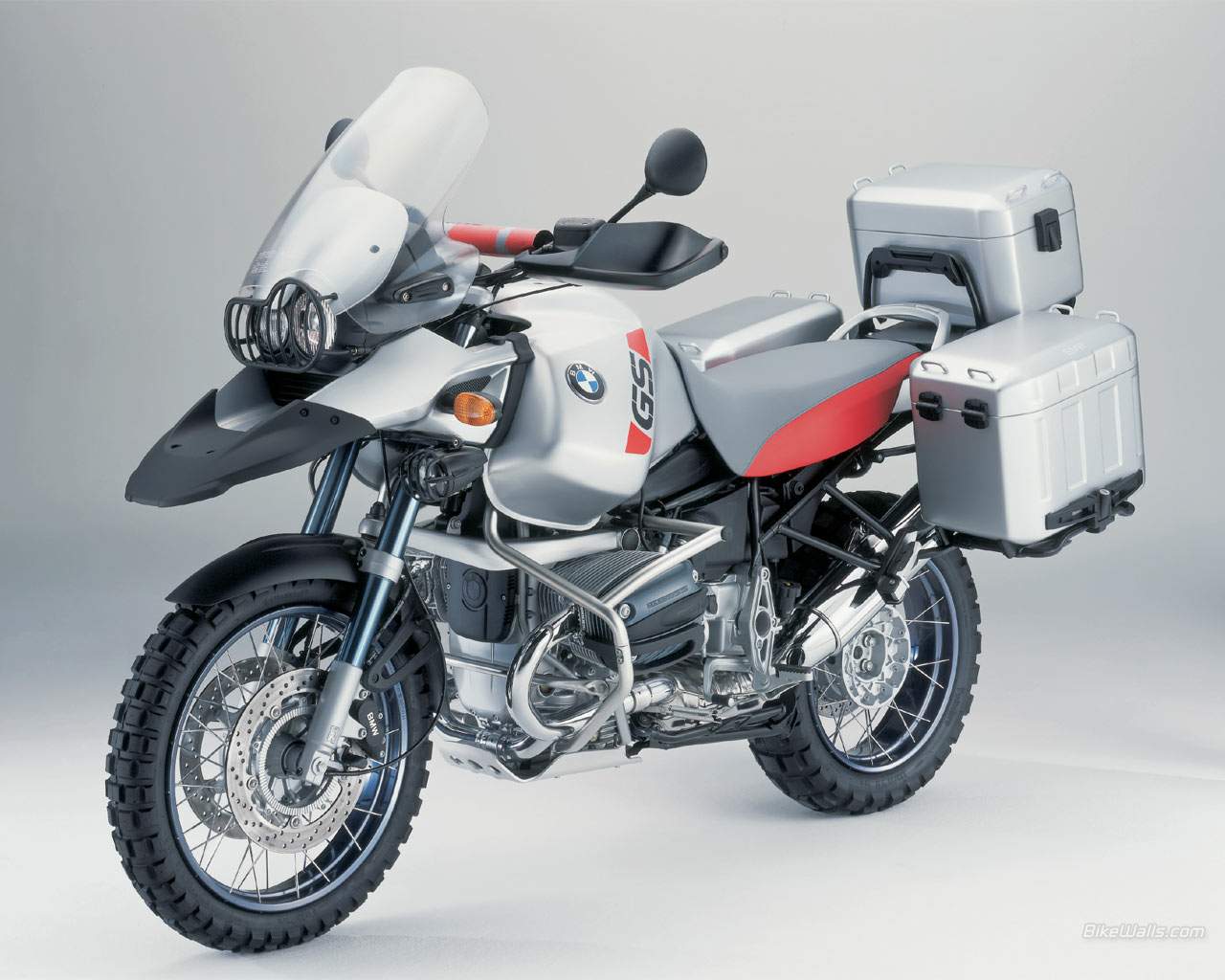
Toward the end of R 1000 GS production, BMW Motorrad announced three new bikes: the R 1100 GS, R 1150 GS, and R 1150 GS Adventure.
The R 1100 GS marked the first-ever Enduro with an air and oil-cooled, fuel-injected 4-valve engine: the 1085 cc (66.2 cu in) flat-twin. This new engine abandoned BMW’s typical air-cooled power plants, which BMW has retained since the 1920s.
Notable features of the R 1100 GS include:
- Paralever, single-side swing-arm rear suspension
- Telelever front suspension
- 1085 cc twin-cooled, 4-valve, flat-twin engine
- 5-speed transmission
- 6.6-gallon fuel capacity
In 1999, the R 1150 GS superseded the R 1100 GS, which packed several new features and updates. The R 1150 GS sports such updates as:
- 1130 cc, air/oil-cooled, 4-valve, flat-twin engine
- 6-speed transmission
1999 also introduced the Adventure sub-model, which provided several features to transform the standard R 1150 GS into a more competent overlander. These features included:
- 80-mm taller suspension
- Single-piece seat
- Integrated “anti-knock” system to allow the use of lower-quality fuel
- Modified gearing to better suit low-speed travel
BMW R 1200 GS: 2004–2017
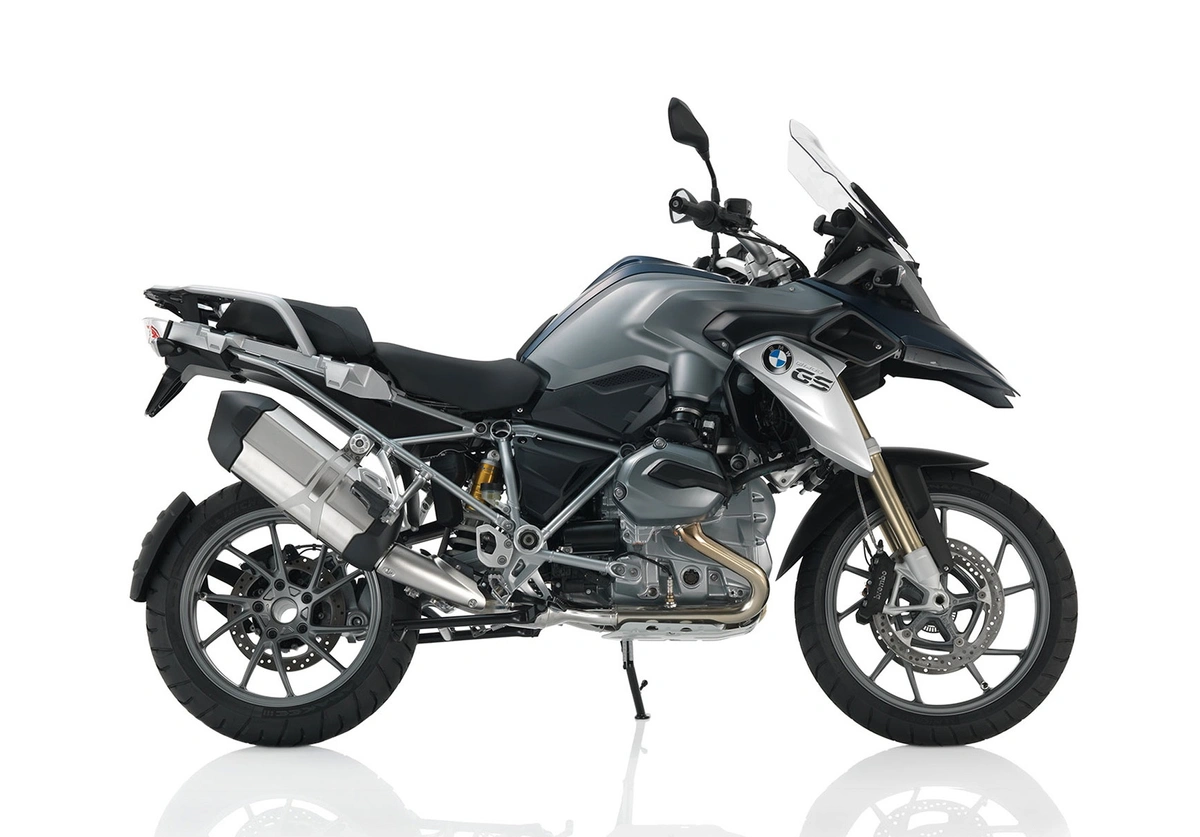
In 2004, BMW Motorrad ditched the R 1150 GS for a lighter and more powerful successor: the R 1200 GS. This new bike was 19% more powerful and 66 pounds lighter than its predecessor, making it the most refined GS yet.
The R 1200 GS closely resembled modern adventure touring motorcycles, sporting a chassis and plastics similar to modern nakeds.
Though these updates resulted in a more subdued aesthetic, they didn't hold the GS back in the dirt. 2006 resulted in the all-new R 1200 GS Adventure, which sported a long-travel suspension system and a massive optional 8.7-gallon fuel tank.
The R 1200 GS sports such standard features as:
- Rear Paralever suspension
- Front Telelever suspension
- 1,170 cc, air/oil-cooled, 4-valve, flat-twin engine
- 6-speed transmission
- 5.3-gallon fuel capacity
The R 1200 GS line reached even greater heights than its predecessors, earning accolades like the UK’s top-selling motorcycle in 2006. Motorcycle publication Cycle World even referred to the R 1200 GS as "the most successful motorcycle in the last two-and-a-half decades.”
In 2013, the R 1200 GS received an all-new powerplant, ditching the venerable air/oil-cooled boxer engine for a new liquid-cooled variant. While retaining its displacement, this new engine received a notable power bump—from 109 horsepower to 123.
BMW R 1250 GS: 2018–2023
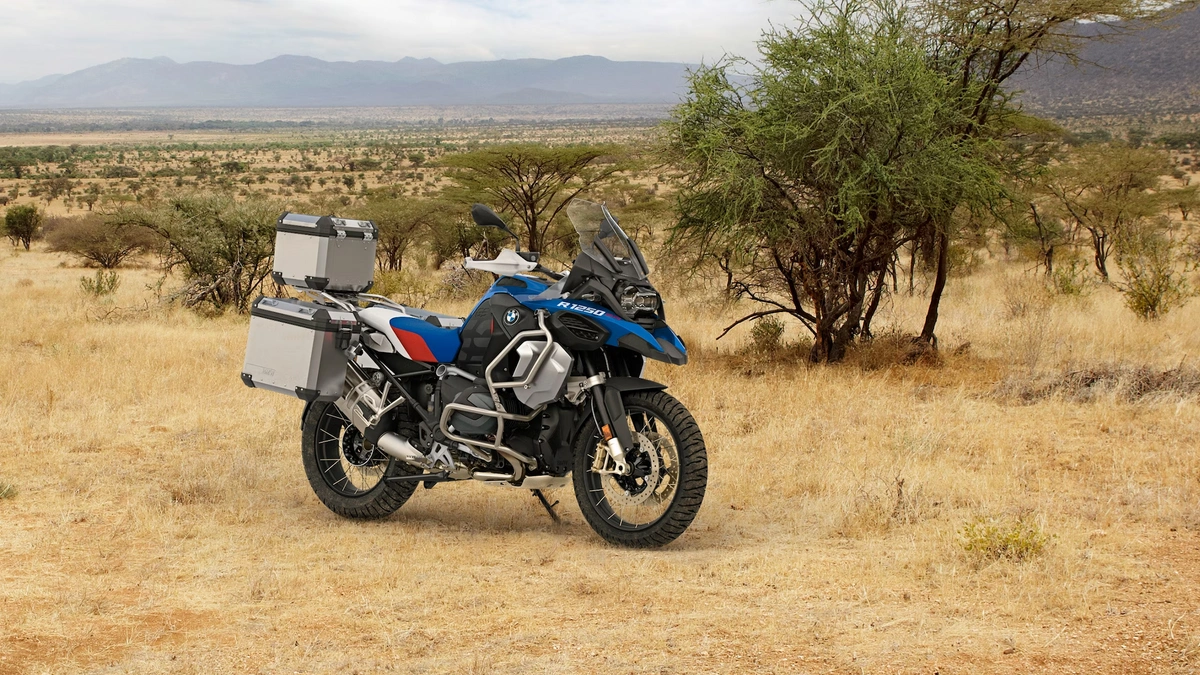
After a successful 13-year-long run, BMW Motorrad discontinued the top-selling R 1200 GS and R 1200 GS Adventure for a new successor: the R 1250 GS. The new bike followed the trend of previous generations, bumping displacement and updating plastics/tech while retaining a similar chassis design.
The new bike dropped the liquid-cooled boxer for an all-new 1,254 cc, 4-valve, flat twin with, for the first time, variable valve timing (VVT). The new “Shift Cam” VVT system, alongside the slightly higher displacement, grants the R 1250 GS 134 horsepower and 105.5 ft-lbs. of torque, up 11 horsepower from the previous generation.
The R 1250 GS features such standard features as:
- Rear Paralever suspension
- Front Telelever suspension
- 1254 cc, 4-valve, twin-cooled, flat-twin engine with VVT
- 6-speed transmission
- 5.3-gallon fuel capacity
The R 1250 GS remained BMW Motorrad’s top-of-the-line Adventure tourer through 2023 until the company announced a successor in 2024: The R 1300 GS.
BMW R 1300 GS: 2024–on
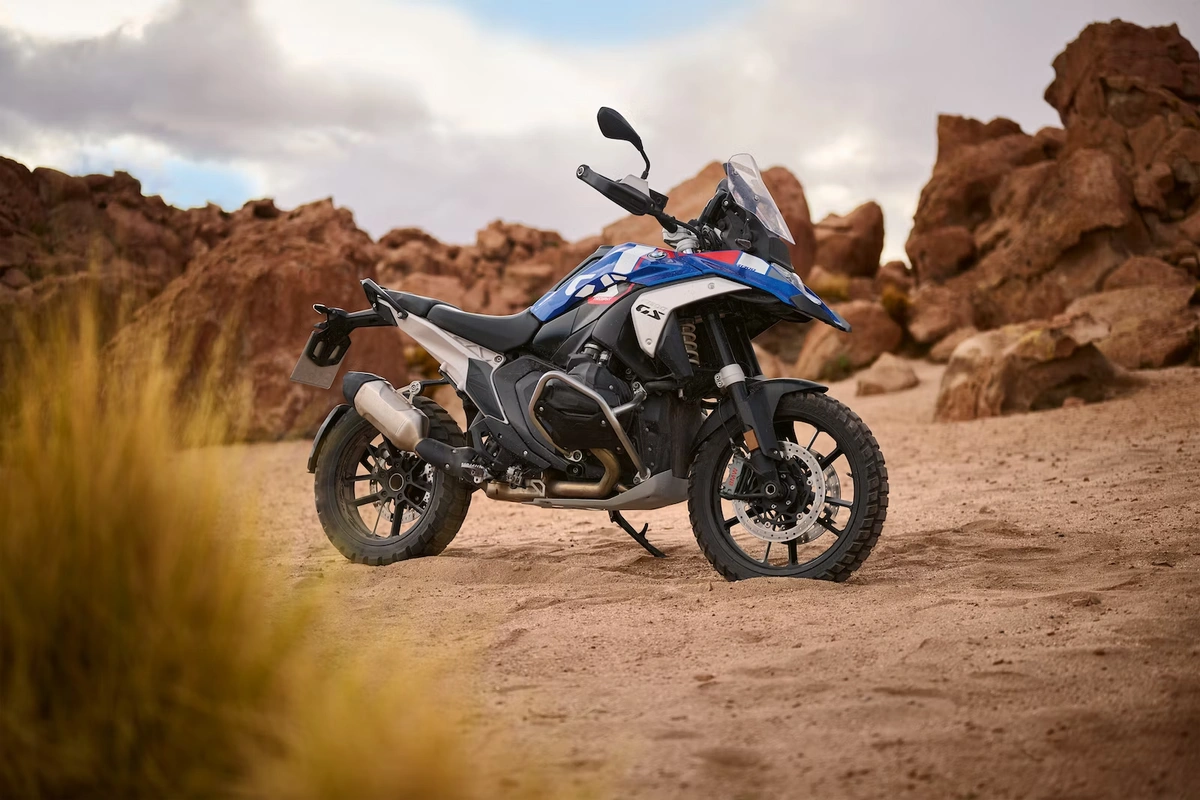
Unlike previous GS generations, which retained similar chassis designs, BMW Motorrad’s R 1300 GS completely rewrote the script.
The R 1300 GS, launched in 2024, features an entirely new design, including a larger-displacement 1,300 cc boxer engine mated to a redesigned underslung transmission—this new combo cuts weight by nearly nine pounds.
The redesigned drivetrain sits in a brand-new frame, eliminating the previous generation’s dated trellis architecture. Both changes help the R 1300 GS shed 26 pounds from the previous model.
Standard features of the redesigned GS include:
- Rear Evo Telelever Front Suspension
- Front Evo Paralever Rear Suspension
- 1300 cc 4-valve, twin-cooled, flat-twin engine with VVT
- 6-speed transmission
- 5-gallon fuel capacity
The BMW GS is more than a motorcycle; it is the architect of a movement. From the pioneering R 80 G/S that single-handedly created the Adventure-Touring category to the tech-heavy R 1300 GS of today, BMW Motorrad has never been afraid to "completely rewrite the script."
Whether you are crossing continents or navigating the daily commute, the GS remains the benchmark for versatility, reliability, and engineering prowess. As we look toward the next horizon—be it an R 1350 or an entirely new electric frontier—the "Spirit of GS" continues to lead the way.
To this day, the GS remains the undeniable golden standard in adventure touring. And this is a huge reason you’ll find so many GS platforms for rent on Twisted Road.
FAQs
What does "GS" actually stand for?
The "GS" moniker originally stood for Gelände/Straße (German for Off-road/Road). In the first 1980 model, it was stylized as G/S. From the R 100 GS onwards, BMW dropped the slash, and today the name is synonymous with the "dual-sport" or adventure-touring category they helped create.
What are the maintenance intervals for a BMW GS?
Standard
-
Minor Service (6k miles): Includes an engine oil and filter change, diagnosis check, and inspection of brakes, tires, and lights.
-
Major Service (12k miles): Includes all minor service items plus
valve clearance checks
What is the BMW Telelever suspension?
Unlike traditional telescopic forks, the Telelever system (found on the larger Boxer GS models) separates the functions of wheel guidance and damping. Its main advantage for adventure riders is that it significantly reduces "brake dive," keeping the bike stable and the geometry consistent during hard braking on or off-road.
Is the BMW GS chain or shaft driven?
The flagship Boxer models (like the
Why is the Boxer engine layout used on the GS?
The horizontally opposed "Boxer" engine provides a low center of gravity, which makes the heavy GS surprisingly agile once it’s moving. Additionally, the cylinders protrude into the airflow for better cooling and act as a natural "crash bar" to protect the rider's legs in certain tip-over scenarios.
What is the "ShiftCam" technology?
Introduced on the R 1250 GS,
How many miles can a BMW GS engine last?
The GS is legendary for its longevity. With
Does the BMW R 1300 GS have an automatic transmission?
Yes, as of the 2025 model year, BMW introduced the
Is there a 2026 BMW GS model?
Yes, the
How much weight did the R 1300 GS lose compared to the R 1250 GS?
The R 1300 GS is approximately 26 lbs (12 kg) lighter than the outgoing R 1250 GS. This was achieved primarily through the new compact engine design, an underslung transmission, and a redesigned sheet metal frame that replaced the traditional steel trellis.