

Motorcycle tires are arguably the most important part of the entire machine. They provide traction for accelerating, braking, and turning while still acting as the first step in suspension absorption. As many tire companies have touted, they are the only thing between you and the road.
However, ask fellow riders when they last checked tire pressures or checked for wear, and you'll likely be met with shrugs. Why is something so important and vital to safety so consistently overlooked?
You could blame laziness or lack of knowledge, but in any case, motorcycle tires contain the entire spec sheet and wear indication right on the tire. Knowing how to break the code and check for signs of misuse can keep you safe and enjoy more miles yearly.
The following tips will help you understand your motorcycle tires, allowing you to ride safer and longer.


1. Read the Writing
Each manufacturer's tire has a series of raised numbers and letters debossed on the sidewall. To the untrained eye, these numbers represent nothing more than gibberish and maximum tire pressure. However, they are crucial for understanding the date of manufacture, tire size, and speed rating. We'll go into more detail below.
2. (Tire) Size Matters
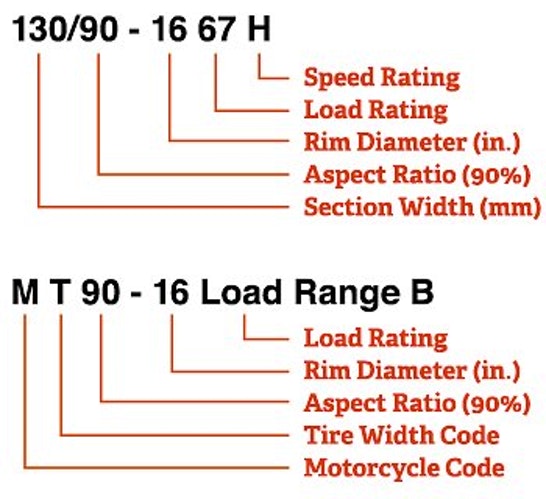
The first set of numbers you should look at are the tire size. The first two-to-three-digit number is the section width in mm. The second is the aspect ratio in percentage form and finally, you'll find the size of your wheels.
Looking at your tires, you will see something resembling 120/70-17 front and 190/55-17 rear. Some motorcycles are even pushing into the 240 series section width from the factory, dependent upon swingarm width and hugger clearance!
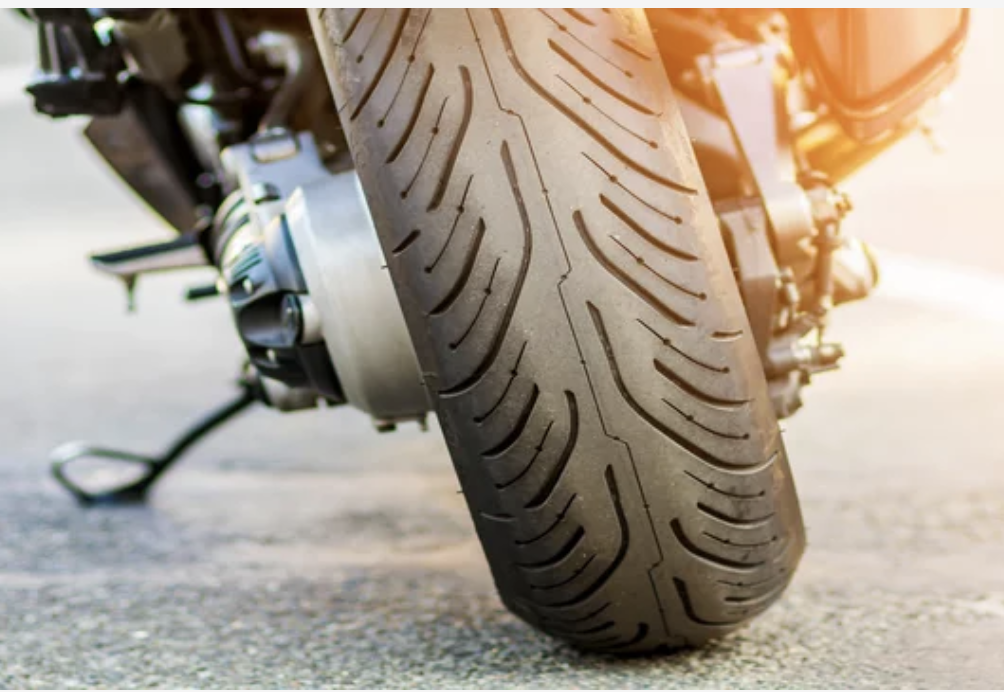
While it’s possible to swap out sizes of the section width, bigger is not always better and can create handling and fitment issues.
3. Speed & Load Rating on Motorcycle Tires
While sticking with factory-recommended sizes is a safe bet, we also need to make sure we are getting the proper load and speed rating. These can be found in letter form near the end of the tire text.
Starting with the letter J at 62mph, K at 68mph, and so on one letter at a time until Z/ZR pushes the limits at 149+ mph. Complicating things further, somehow X fell off the coconut tree, and H randomly landed at 130mph.
| CODE | RATED SPEED | CODE | RATED SPEED |
| J | 62 mph | S | 112 mph |
| K | 68 mph | T | 118 mph |
| L | 75 mph | U | 124 mph |
| M | 81 mph | H | 130 mph |
| N | 87 mph | V | 149 mph |
| P | 93 mph | W | 168 mph |
| Q | 99 mph | Y | 186 mph |
| R | 106 mph | Z/ZR | 149+ mph |
The load rating, also known as “load index,” will inform you of how much weight you can have on your bike before the tires are overloaded. While it would be easy if the manufacturer just listed the load maximum on each tire, instead you'll need to check your tire for the load index (ranging from 33 to 90) then consult a load index chart to convert that number into weight. For example, 33 is 254 lbs, 48 is 397 lbs, and so on up to 1,323 lbs.
For example, riding a Ninja 250 two-up with pack mule tendencies might require you to rescope the tires you purchase.
See the example of tire size, speed, and load rating from parts and gear company, Revzilla, below.
4. Motorcycle Tire Age
As you lay on the ground spinning your tire around with a flashlight in hand, you'll eventually run across a circled four-digit number or a long run of numbers, the last four being the most important. This will tell us the tire's date of birth.
The first two digits are the week of the year, while the second is the actual year. Typically, you’ll want to have a tire that is less than five years old to maintain fresh traction.

If by chance you have a three-digit number circled, it’s time to tow it to the dealership and watch the tech tirelessly try to break the bead. I recommend avoiding eye contact and claiming it’s your buddy's bike or that you just bought it.
5. When to Replace Motorcycle Tires
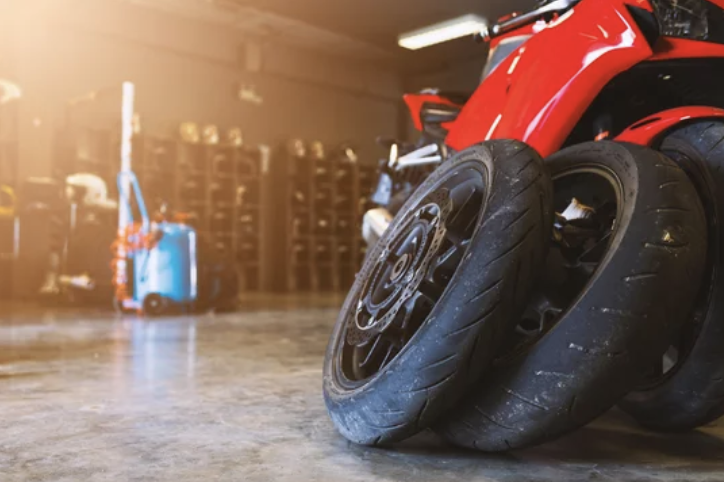
Motorcycle tires contain wear indicators between each groove that will let you know when it’s time for a change. You will want to stay above the 2/32nds mark at any point on the tire before making the appointment. When you start seeing cords and meeting your maker is not currently on the bucket list, replace them ASAP.
6. Routine Motorcycle Tire Maintenance
Now that “I didn’t know” is removed from your excuse, Rolodex, we can move on to maintenance. Maintenance can easily be viewed as a non-fun expense similar to shipping charges. However, the cost of tires easily outweighs the cost of medical help and new plastics!
To keep your tires fresh, I recommend the following steps.
What is the right motorcycle tire pressure?
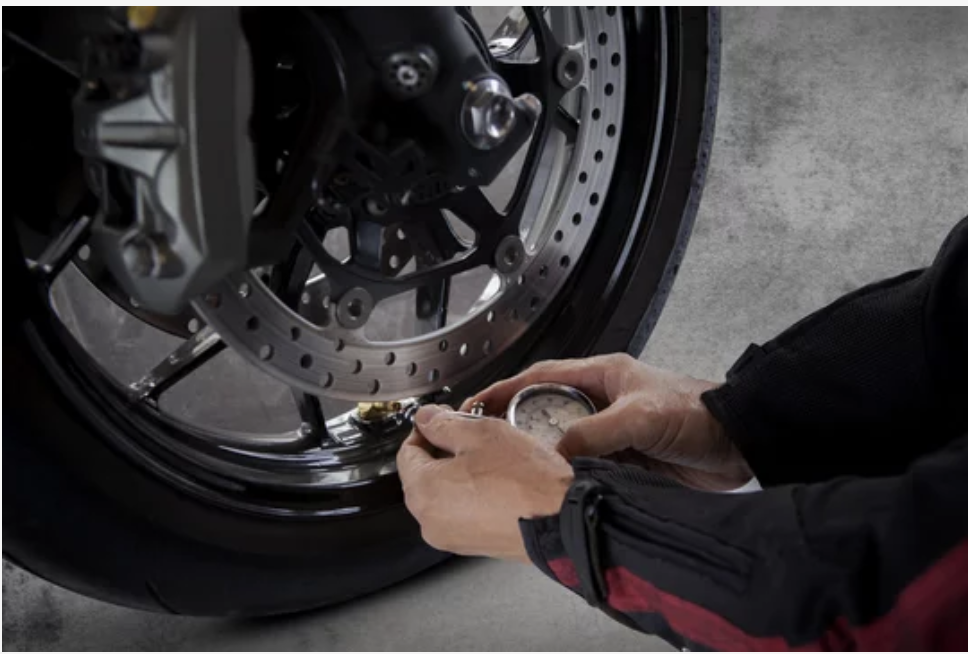
Air pressure, air pressure, air pressure. A motorcycle tire gauge can accurately measure your current pressure. To avoid the Ford/Firestone situation, I recommend reading your owner’s manual combined with recommendations from your local technician to find your tire’s correct pressure. You can also play with your motorcycle tire pressure for optimal handling. You can change 1-3 PSI and see if it helps or hinders. Maximum tire pressure does not equal the tire pressure you should run!
How do I balance my motorcycle tires?
Balancing a motorcycle tire is just as necessary as making sure it is properly aligned. Improper balance can result in poor handling, accelerated tire wear, and improper wear patterns. Check your chain adjusters notches to make sure your rear wheel is aligned properly. If you enjoy buying tools you can purchase a chain alignment tool to help.
How do I clean my motorcycle tires?
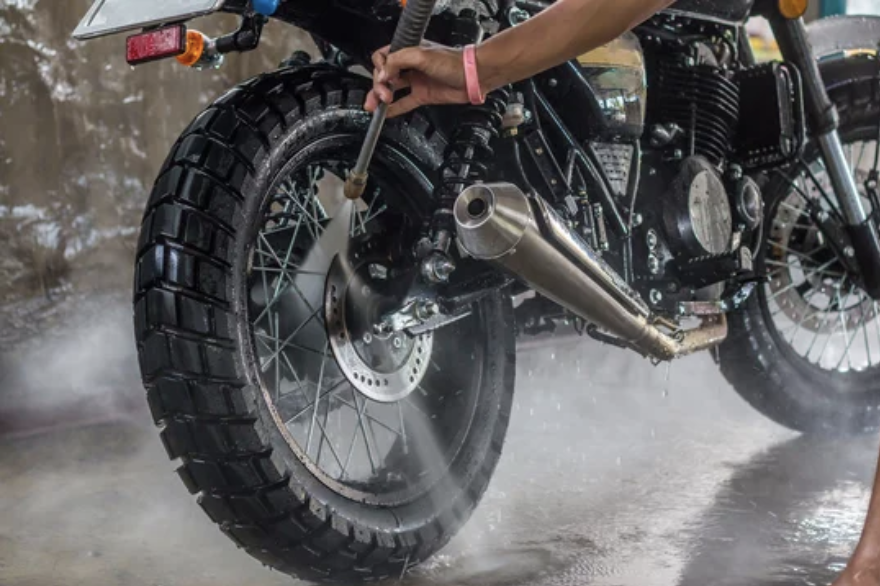
Tire shine is a four-letter word in the motorcycle industry. Unless you have plans to do a massive burnout celebrating the fact you have ended a tire’s safety life and almost your own, stick to soap and water. I recommend washing your motorcycle tires after every ride to help spot damaging debris on the tire and locate potential leaks.
When do I replace a tire?
If your question matches my subheading, then there is a good chance that it’s time! Also, look for any sidewall punctures or large puncturing wounds on the tires’ surfaces. Tires that have run on low air pressure or started cupping from overbraking and underinflation should be replaced. So should tires that are outdated, weathered, or have any other damage. Any of these could mean it is time to pay the piper.
Reminder: Make a Practice of Keeping Motorcycle Tires in Shape
To recap, if you enjoy keeping the wheel side down and your body off the pavement, make sure your tires are in the best possible shape.
This will include frequently checking air pressure, tire condition, and age. Always be on the lookout for odd feelings such as abrupt turn in or drastic handling changes. Remember to inspect for damage after rides and only clean with soapy water!