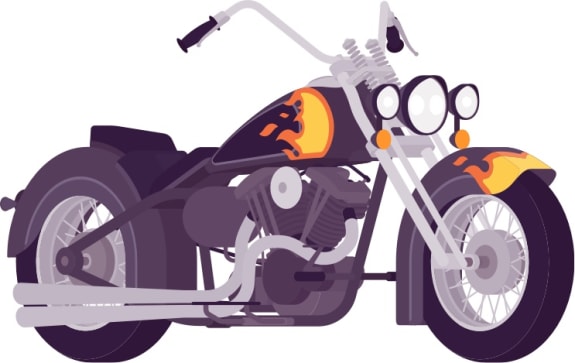


Singles. Twins. Boxer Twins. Triples. Inline Fours.
There are many choices when it comes to motorcycle engine types. Each one caters to different motorcycle styles and, most importantly, delivers a unique feeling.
Knowing about each engine style can influence your decision whether you’re shopping for or renting a motorcycle—or renting before shopping, as many do on Twisted Road.
We'll break down each type and discuss the pros and cons, the ideal riding scenarios, and some legendary models that put them on the moto map.
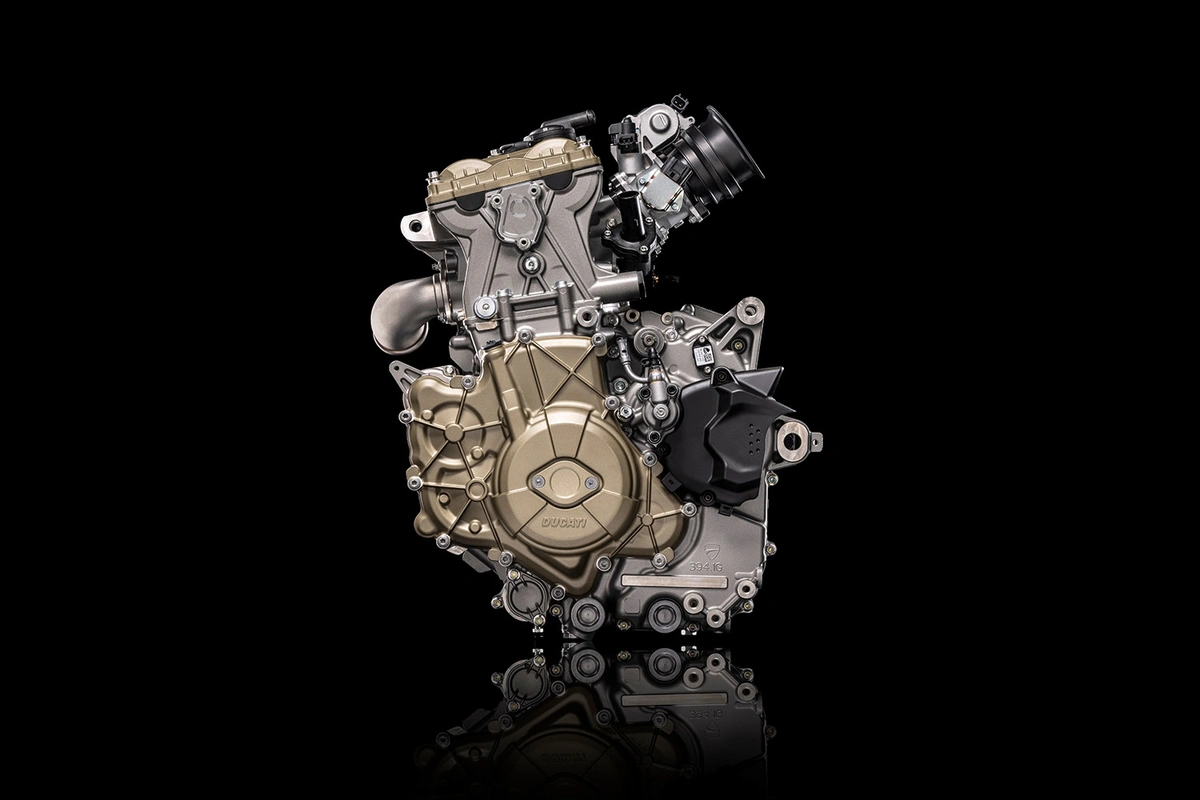
Single-Cylinder Engines: Simple and Reliable
Imagine the earliest motorcycles—straightforward machines pulsating with raw mechanical energy. Those bikes usually relied on single-cylinder engines.
Though many road riders consider it a bit “old-school” compared to the sophisticated multi-cylinder options available today, single-cylinder motorcycle engine types still hold a special place in the motorcycle world—especially when it comes to off-road riding and motocross racing.
Why? They are incredibly simple, which translates to affordability. They're often powering beginner-friendly bikes or smaller motorcycles, like those designed for city commutes or off-road adventures. But don’t let the simplicity fool you; a single-cylinder engine with larger displacement is more than capable, as proven by motorcycles like the KTM 690 Enduro and the all-new Ducati Hypermotard 698 Mono.

The Allure of Less
The charm of single-cylinder engines lies in their no-frills design. With fewer moving parts than their multi-cylinder cousins, they tend to be cheaper to produce and require less maintenance.
Conversely, fewer cylinders often translate to more vibration—you’ll feel the engine beneath you. This is why manufacturers often equip single-cylinder bikes with counterbalancers (gear or chain-driven) to smooth out the ride, especially at higher speeds. Two very distinct examples of single-cylinder motorcycles on the market are the Royal Enfield Classic 350 and the powerful KTM 690 SMC R, each illustrating the wide range this engine type covers.
These characteristics have helped single-cylinder motorcycles remain relevant over time. Today, singles are more important than ever primarily due to their affordability, reliability, and lightweight nature.
Best Rides for Single-Cylinder Engines
Of course, singles are perfect starter bikes. Their manageable power and uncomplicated mechanics make learning the ropes a joyride. But they're not just for beginners.
Many experienced riders love them, especially for:
- Off-road riding, where their lightweight and punchy low-end torque excel.
- Commuting through city traffic, easily weaving in and out of jams.
- Casual cruising, enjoying a relaxing ride without breaking the bank.
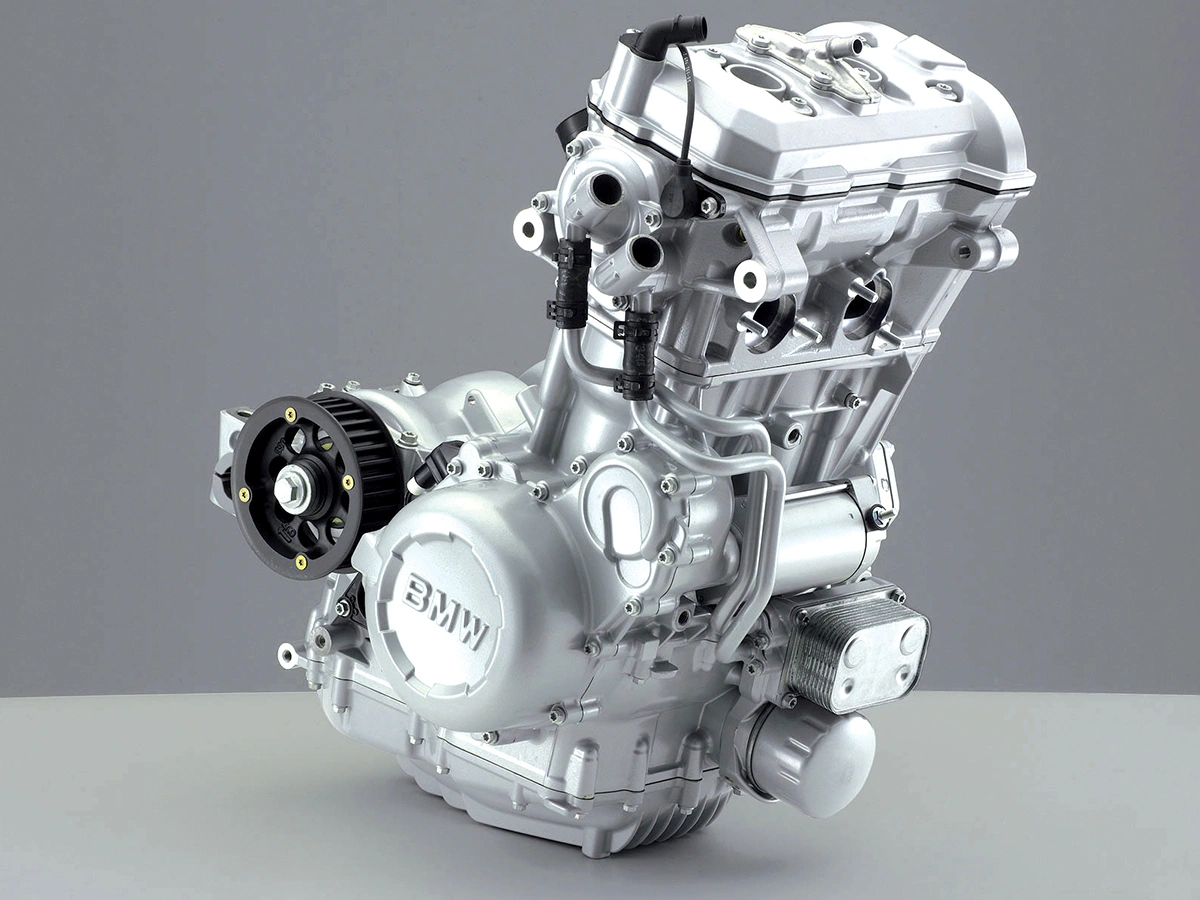
Parallel-Twin Engines: A Balance of Power and Efficiency
If you’re after a bit more power output than a single-cylinder without diving into the complexities of more cylinders, then parallel-twin motorcycle engine types might be your optimal choice. Imagine two pistons pumping up and down in perfect sync—that’s the essence of a parallel twin.
Pros of the Parallel-Twin
The advantage of a parallel-twin engine lies in its balance of affordability, relatively straightforward design, and ability to deliver a more spirited performance than its single-cylinder siblings. This delightful middle ground has catapulted them to fame, making them a darling in many motorcycles across various styles and riding purposes.
Parallel twin engines can be found in various motorcycle sizes with a diverse range of engine displacements, also known as cc. For example, this engine configuration starts from 471cc in the Honda SCL500 Scrambler, going all the way up to 889cc in adventure motorcycles like the Husqvarna Norden 901 Expedition. They are known for having a wide powerband.
Finding the Right Fit
These motorcycle engine types power some fantastic machines. Take the sporty Aprilia RS660 and the capable Honda Africa Twin, both lauded for their performance. Their versatility is evident as they smoothly transition from urban settings to tackling more adventurous trails.
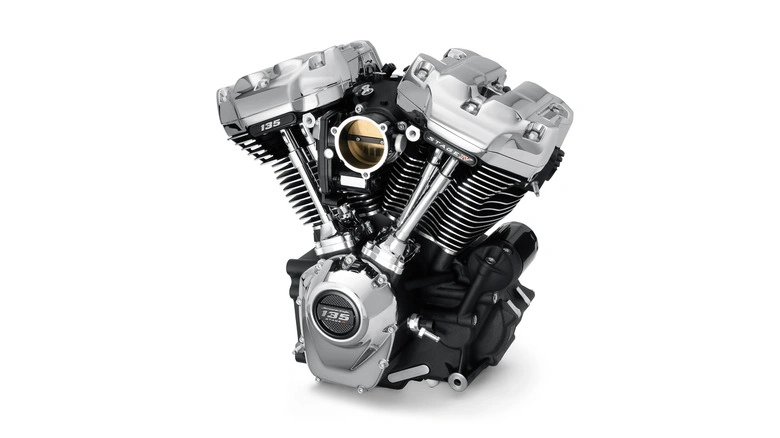
V-Twin Engines: The Heartbeat of the Open Road
Picture this—a cruiser motorcycle rumbling down a seemingly endless highway, the iconic V-twin sound echoing through the air. Yes, these motorcycle engine types are synonymous with power. They’re often linked with cruiser motorcycles from legendary brands like Harley-Davidson, though these engines aren't limited to just cruisers.
Unpacking the V-Twin Engine
In a V-twin engine, the cylinders are set apart in a “V” shape rather than standing straight up. Take note—Ducati’s V-twin is referred to as an “L-twin” due to the 90-degree configuration. The V-twin’s distinct rumble comes partly from this layout and how the pistons fire. Often, these motorcycles prioritize torque, which means they pack a punch right from the start.
These motorcycle engine types can vary significantly in size, from the 249cc V-twin in the Yamaha V-Star 250 to the Kawasaki Vulcan VN2000 with its 2,000cc V-twin.
Let's not forget brands like Harley-Davidson, known for their signature 45-degree V-twin and its “po-ta-to” sound. Cruiser-style bikes generally favor a more substantial build, so expect their engines to match.
Riding the V-Twin Wave
Motorcycles sporting the V-twin are all about a certain feeling. It's the feeling of open highways, a relaxed posture, and enough power at your fingertips to leave all your worries in the dust. A classic example of a V-twin in action? The Harley-Davidson Softail Slim.
However, remember that some V-twins can pack serious power, such as the Ducati 1299 Panigale superbike that produces well over 200 horsepower. So, if you’re just getting started, you may want to get a feel for things on a more manageable model before graduating to the big leagues. Also, compared to inline engines, you can expect more vibration with a V-twin.
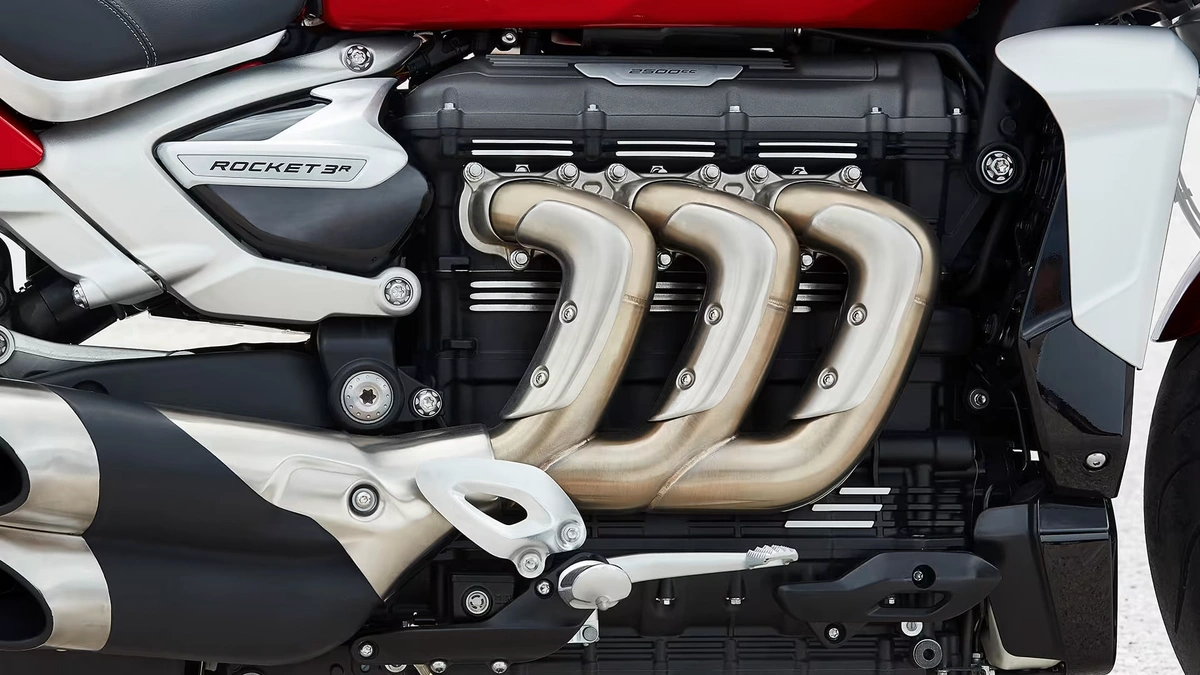
Inline-Triple Engines: A Blend of Smooth and Spirited
Looking for that magic balance of thrilling performance and a smooth power delivery? That’s where the often overlooked inline triple (also called an inline three) takes over. These motorcycles give riders a sweet spot in terms of engine power, vibration, and cost.
This makes them an awesome choice for those who find four-cylinder engines too bulky and parallel-twin engines a bit too shaky. Plus, they can hit high RPMs while still letting you feel those satisfying engine vibes. They also offer the smooth power delivery that many riders enjoy.
Understanding Inline-Triple Engines
Picture three cylinders all lined up in a row—neat, right? That’s an inline triple. The position of the crankshaft makes it stand out from other engine types.
In a parallel twin, for instance, the cylinders fire at uneven intervals, causing that signature “thump” that some find too jarring. This is a result of the crankshaft design.
But in an inline triple, that extra cylinder smooths things out while delivering a consistent powerband. You end up with an engine that’s happy cruising around town at lower RPMs but can quickly ramp things up for a burst of adrenaline when you hit those open roads.
A Trio of Winners
Want to know more about these unique motorcycle engine types? Look no further than the stylish Yamaha XSR900 GP, the sharp-looking MV Agusta Superveloce 800, and the beastly 2458cc Triumph Rocket 3. They all rock the inline triple.
These aren’t just powerful; they handle beautifully, too. Their inline design gives them an edge in maneuverability. And thanks to that unique crankshaft we talked about, the ride is much smoother compared to a V-twin. It’s almost like a well-choreographed dance of power and balance.
Plus, one more bonus for those dipping their toes into bigger bikes—many riders agree they are surprisingly beginner-friendly. It’s all that smoothness and that linear power delivery. No sudden surprises. If you want a narrow-profile engine, the inline triple is a great choice.
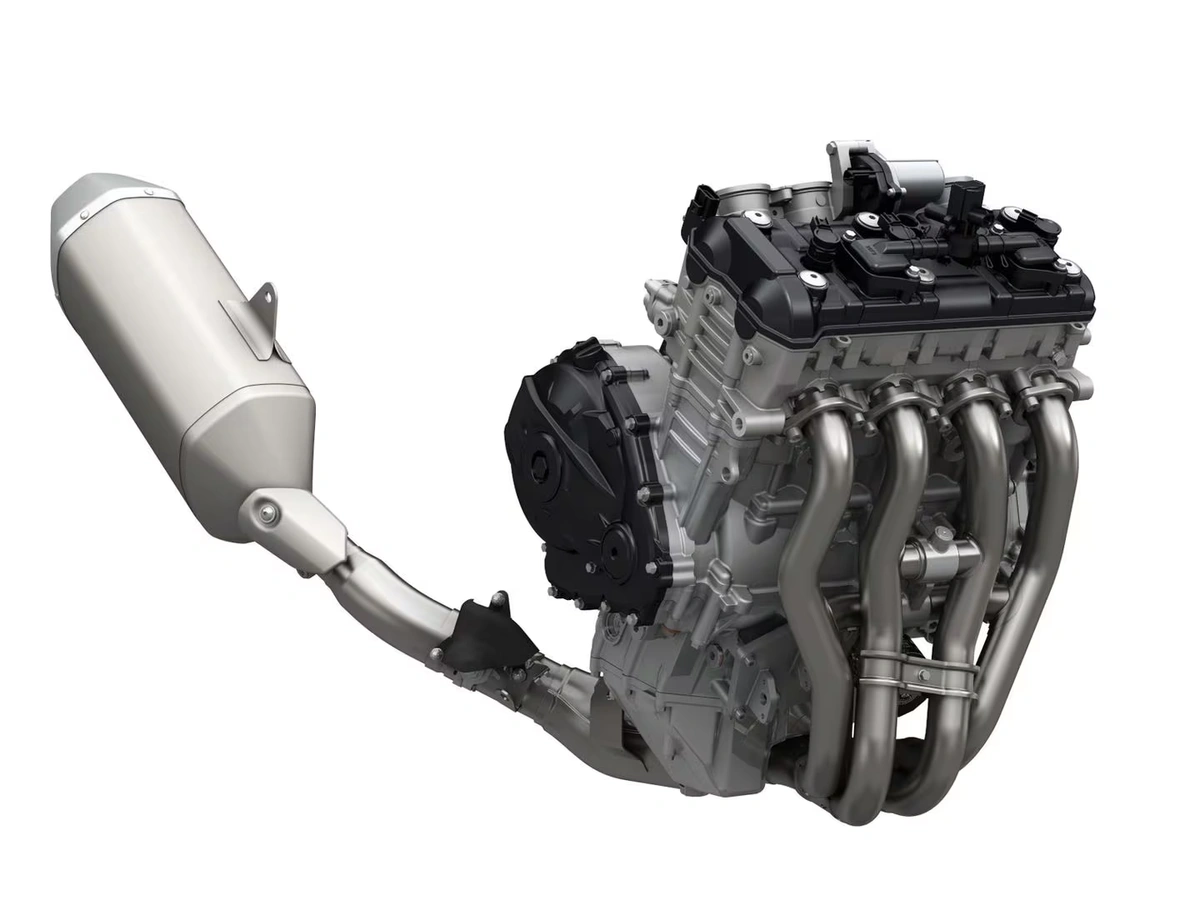
Inline-Four Engines: High-Performance Powerhouses
Think superbikes tearing up racetracks—machines engineered for pure speed. Now, think of the engine powering those beasts, roaring like a force of nature. That is the magic of inline-four motorcycle engine types.
These engines are meticulously designed. Four cylinders are all lined up, firing in a rapid-fire sequence, creating immense power. But that’s not all. Their perfectly balanced nature makes for a remarkably smooth ride, even when you’re pushing the limits.
So, if you dream of a machine that effortlessly delivers mind-blowing acceleration, the inline-four could be right in your lane.
The inline-four's ability to effortlessly reach dizzying speeds puts it in a league of its own. This engine configuration delivers unmatched performance. Although inline fours are known to have high vibrations, modern designs have significantly reduced them.
These motorcycle engine types truly find their purpose in motorcycles designed for one thing: pure, unadulterated speed. But high performance comes with its demands. These high-revving wonders can guzzle fuel, especially when pushed hard.
However, if you want to experience the sheer thrill of cutting-edge motorcycle engineering at its best, there’s nothing quite like it. Many high-performance motorcycles utilize this type of engine.
Take the legendary Big Four Japanese manufacturers, renowned in the world of sport bikes. Inline-four engines are behind the performance of names like the Honda CBR, Kawasaki Ninja, Yamaha R1/R6, and Suzuki GSX-R.
This type is revered by riders for its exceptional speed and admirable fuel efficiency, proving that you can strike a balance between exhilaration and practicality. If you crave speed, this might be your dream ride. But keep in mind that this level of performance is often reflected in the price tag.
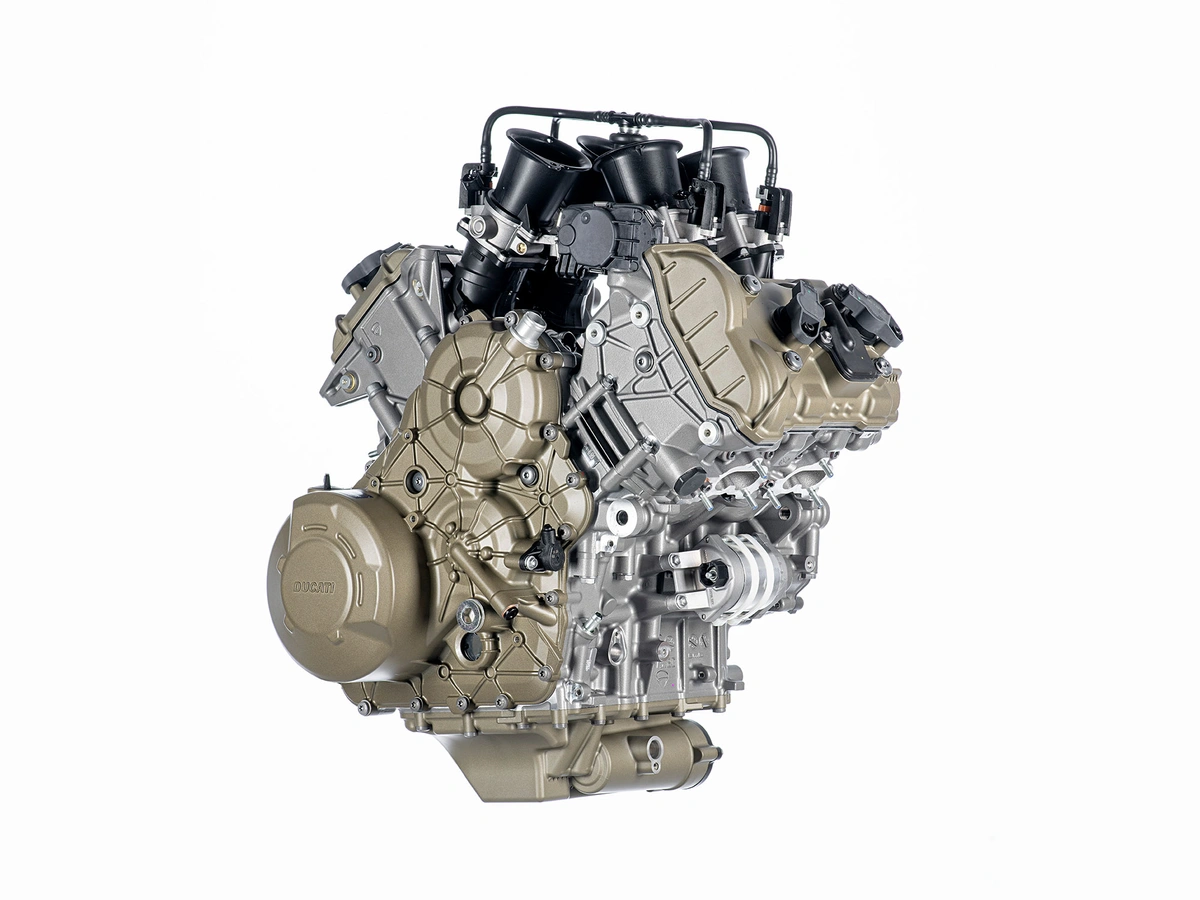
V-Four Engines: The Pinnacle of Performance and Refinement
Imagine the best attributes of a parallel-twin engine and an inline-four combined in one powerful package. That’s where these motorcycle engine types sit. They've got this raw power but manage to be incredibly smooth at the same time, making them a favorite in high-performance sportbikes and those ultimate touring machines built to eat up miles effortlessly.
It's that winning blend of brute force and a refined riding experience—an exhilarating combination. These motorcycle engines also offer a wide powerband for maximum performance at any RPM.
V-Four Engine Configuration: Compact Power
Similar to their V-Twin relatives, the V-Four’s cylinders are neatly arranged in that iconic "V" formation. However, this configuration utilizes a four-cylinder setup.
This approach allows manufacturers to craft potent and incredibly responsive engines. It’s as if the engine anticipates your every move, making for an incredibly satisfying riding experience, especially when pushing the motorcycle to its limits. If you are concerned about the weight of the motorcycle, then this engine might not be for you, as it tends to be heavy.
Where to Find Them?
Want to experience the legendary V-Four firsthand? Look at iconic models like the sleek Honda VFR800 or the aggressive beauty of the Aprilia RSV4. And Ducati really upped the game when it went from its known L-twin superbikes to the V4 in the Panigale. However, the V-Four engine’s complexity means a higher price tag—often more than bikes rocking inline-four engines.
Other Motorcycle Engine Types
Though less common, a few unique motorcycle engine configurations stand out. For example, some manufacturers experimented with six-cylinder engines, offering incredible smoothness and high-end power but at the cost of being larger and heavier.
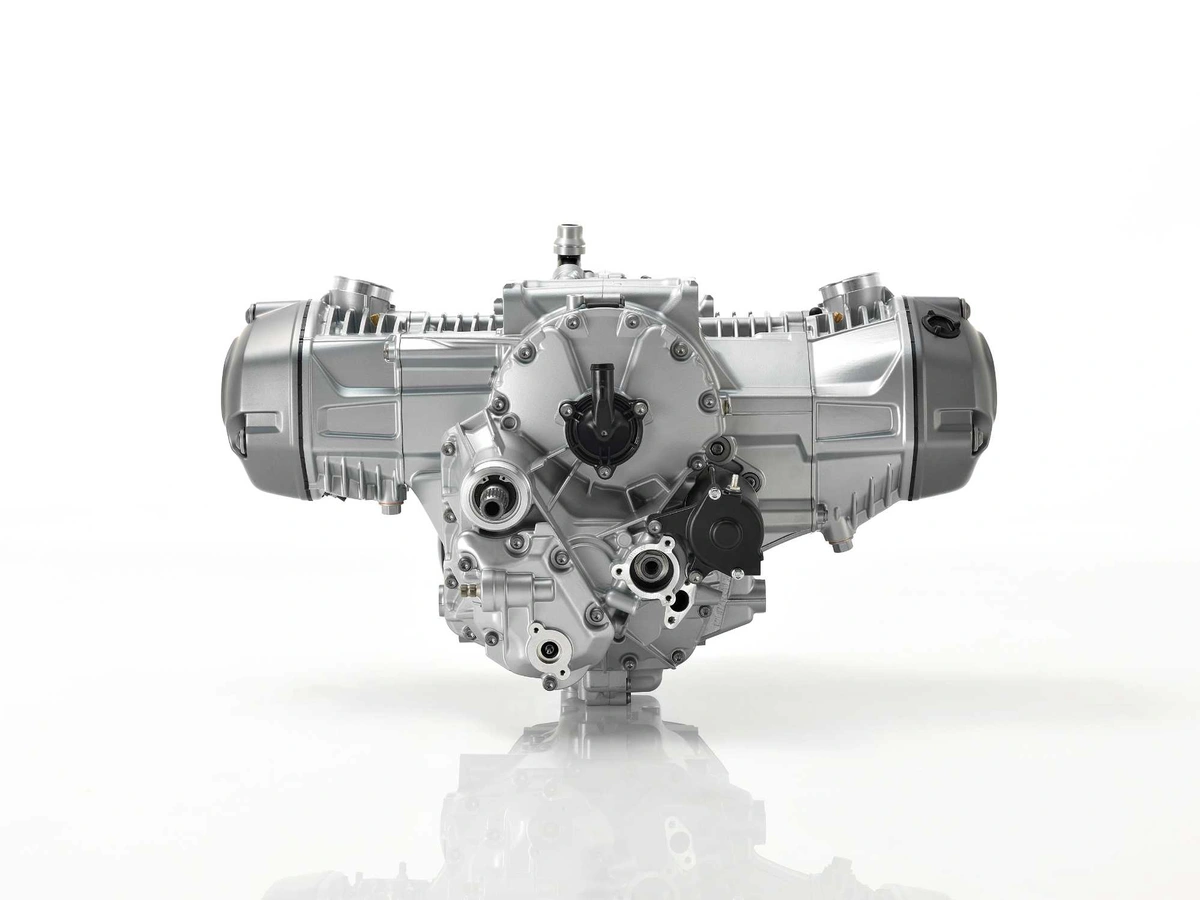
There’s also the Flat-Twin or Boxer Engine. These are often associated with BMW and its iconic, especially in its iconic GS series. They’re instantly recognizable by the cylinders that jut out to the sides, which creates a lower center of gravity that some riders find improves handling.
Finding Your Perfect Match
Selecting the ideal motorcycle engine type involves a few crucial questions. Ask yourself: What's your riding style, experience, and budget?
- New Riders: A single or parallel-twin motorcycle will likely suit your needs perfectly, offering manageability, simplicity, and, generally, a friendlier price tag.
- Adventure Seekers: Opting for that robust single-cylinder or even the versatile parallel-twin is usually the best choice. And, of course, the Boxer opposed twins!
- Speed Seekers: The world of inline-fours, V-Fours, or rare inline-sixes is calling your name. Get ready to unleash those beasts.
Different motorcycle engine types offer riders various flavors of thrills and practicality, from thumping single-cylinders to the high-pitched screams of V-fours.
It's more than just how fast it can go; it's also about understanding what makes each engine tick (literally) and how that translates to the feeling you get in the saddle.
Our recommendation? Rent one of each kind, and see what feels best and speaks directly to your personal riding style.
FAQs
What are the different types of motorcycle engines?
The most common motorcycle engine types include:
- Single-cylinder engines.
- Parallel-twin engines.
- V-twin engines.
- Inline-triple engines.
- Inline-four engines.
- V-four engines.
You can also find some unique motorcycle engines, such as flat-twin or boxer engines, and some even have inline-six configurations.
Which motorcycle engine is best?
There is no single “best” type of motorcycle engine—each offers advantages. Single-cylinder engines are simple, affordable, fuel-efficient, lightweight, and easier to maintain but lack power and generate vibration.
Parallel-twin engines balance performance and efficiency, are lighter, more affordable, and have decent fuel economy but may produce vibrations at high speeds. Inline-triple motorcycle engine types give smooth power, making them more manageable for a beginner. However, inline-triple engines may lack low-end torque but produce a great exhaust sound.
The inline-four configuration is famous for its speed, minimal vibration, and smoother performance. However, it is more expensive and heavier. V-twin engines create iconic sounds but come with vibrations and a unique feel. Finally, V-four engines bring refinement to power delivery but are the priciest to maintain. Ultimately, the best motorcycle engine depends on the rider’s priorities. For example, for off-roading, single-cylinders reign supreme. But for speed, it's an inline-four or V-four.
Which engine is best for a bike?
Consider these questions: What kind of riding do I plan to do (commuting, sport riding, off-road)? What’s my budget for maintenance and fuel costs? What engine size is right for me? Once you've defined what's important, choose a motorcycle that best fits your riding experience. Engine layouts play a factor as well as how many cylinders are pointing in which direction.
What is a V engine vs. an inline motorcycle?
In a V engine, cylinders are positioned in a V-shape. In contrast, an inline engine positions cylinders in a straight line. Because of this layout difference, V engines produce more torque at low RPM, which is ideal for cruisers and offers that characteristic rumble. Conversely, Inline configurations tend to rev higher and generate more horsepower, making them ideal for sportbikes seeking top-end speed. Typically, inline engines share a single exhaust header between multiple cylinders.