
Short motorcycle trips or weekend tours are cool. But longer riders are one of the purest ways to experience travel.
You really feel every change in air temperature, smell every shift in the environment, and sense the landscape in a way no car can match. After more than two decades of riding, including repeated cross-country runs, multi-day travels across Europe, and multi-week loops along the East Coast on various platforms, from Ducati Multistradas to Kawasaki Concours, I have learned that preparation is a must to crush the stress and enjoy more of the ride.
The same rules apply whether you are heading across the country on pavement or tackling the off-road like the PA Wilds BDR-X or the Northeast BDR. Planning well shapes your confidence, safety, and comfort, and lets you focus on the experience rather than potential surprises.
This guide breaks down everything you need before setting off on a multi-day or multi-week trip.

How to Plan Your Route for a Long Motorcycle Trip
Route planning sets the tone for the entire adventure. Long rides are not about just hitting the fastest roads. They are about finding the right roads.
Start with an honest look at your goals. Do you want technical mountain twisties, long empty highways, historic towns, or a mix? On my first coast-to-coast ride, I learned quickly that avoiding major interstates gave me more memorable moments. I drifted through small-town diners, backcountry gas stops, and unexpected scenic overlooks that I still remember years later.
For road trips, use a mix of paper maps and digital tools. Apps like REVER or Scenic help you find twisty routes and scenic byways. A printed map keeps you covered when cell service disappears. I typically use those for planning (or ChatGPT and forums), and then upload them to my Garmin Zumo XT.
For off-road routes like the Northeast BDR or BDR-X PA Wilds, download GPS tracks to your phone and a dedicated GPS unit. This is one reason I love the Zumo XT; it was also built for adventure riders who spend serious time off-road. These Backcountry Discovery Routes pass through remote terrain where you cannot rely on signal or simple visual markers.
Before my first Northeast BDR run, I spent an evening tracing every section and marking fuel stops, water sources, and bail-out points. It saved me multiple times when weather shifted and conditions deteriorated quickly.
The key is flexibility. Plan enough to stay safe, but allow room for discovery. The best moments often happen when you take a turn you did not plan for.
How to Inspect and Prepare Your Motorcycle
Your bike needs to be in top condition before a long trip. A minor problem at home becomes a major problem hundreds of miles from a garage.
Start with the basics: tires, chain (or shaft drive), brakes, fluids, battery, and lights. Think in terms of wear over time. For example, if your chain has 3,000 miles left, but your trip will be 4,000 miles, replace it before you leave.
Suspension matters more than most riders realize. On long rides across rough pavement or uneven dirt, a fresh suspension setup keeps you comfortable and reduces fatigue. Before the PA Wilds BDR-X, I set sag properly, inspected my linkage, and cleaned the fork seals (which I do now after every serious dirt ride). That attention to detail made days of pounding rocky terrain much more manageable.
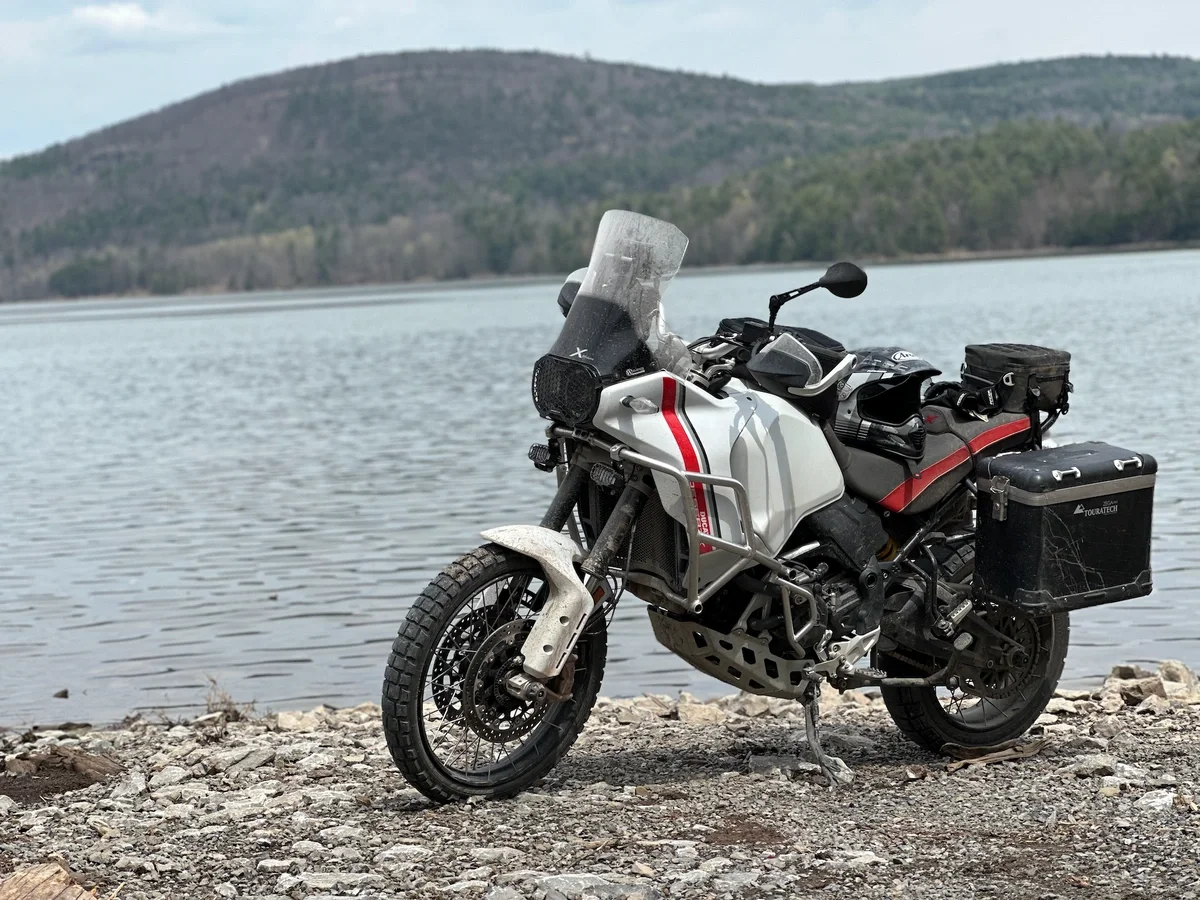
Carry a simple toolkit. Since no one makes one for my Ducati DesertX, I took my KTM Cruz Tools set, and modified it. Bring tools that fit every fastener on your bike, a tire repair kit, a compact inflator, zip ties (lots of zip ties!), fuses, and tape.
These items have saved nearly every long-distance rider at some point. They saved me on the Blue Ridge Parkway years ago when a random nail put a hole in my rear tire at 7 a.m. on a foggy morning. That repair kit kept the trip moving.
If you rent through a platform like Twisted Road, inspect the bike the same way you would your own. Check tire life, brake pad thickness, and fluid levels. Look for crash signs that might indicate hidden issues. A few minutes of inspection creates peace of mind for the entire ride.
How to Pack for a Long Motorcycle Trip
Pack for versatility. Weather changes quickly across states, altitude, and terrain.
You need a layered system for both road and off-road rides. Bring base layers that dry quickly, a mid-layer for insulation, and a waterproof outer layer. These items let you adapt to cold mornings, humid afternoons, and sudden storms.
On my multi-week East Coast loop a few summers ago, temperatures shifted from ninety-five degrees in South Carolina to cold fog in the mountains of Virginia. The riders who packed lazy or light struggled. The riders who layered stayed comfortable and focused.
For off-road segments like the Northeast BDR, pack a few extra items: hydration bladder, compact first aid kit, trail snacks, and extra gloves. When you are hours from the nearest town, these items become essential rather than optional.
Hard luggage gives you security and weather protection. Soft luggage works well off-road because it withstands drops and does not damage your legs, though I still can't get away from my Touratech Zega Panniers for off-road riding.
Choose based on your trip style.
The general rule is simple. Pack less, but pack smarter.
How to Prepare Mentally and Physically for Long-Distance Riding
Long trips test endurance. Not just physical endurance, but mental endurance.
Spend time riding back-to-back days before your trip. Ride at least two or three days in a row to get a feel for how your body reacts. Pay attention to pressure points, seat comfort, neck fatigue, and hydration needs.
I learned this during one of my first 5-day rides from Pennsylvania through the Appalachians and deep into the South. The first few days felt great. Around day four, fatigue hit hard. A small seat pad, more frequent stretching, and simple hydration routines brought me back to form.
Your mental approach matters too. Weather will change. Plans will shift. Miles will feel longer than expected. Staying calm and flexible turns obstacles into stories rather than setbacks.
Take breaks before you think you need them. Stop at scenic overlooks, gas stations, or quiet pull-offs. These moments become the highlights of the trip.
To help you stay fit, check out the article I wrote for ADVMoto.
How to Prepare for Off-Road Motorcycle Trips
Off-road preparation requires more planning than road riding. Routes like the MABDR take you deep into forests, mountains, and remote terrain where help is not always nearby.
Tires are critical. Choose a 50-50 or 70-30 tire with strong sidewalls. Street tires will not hold up to rocky climbs or deep gravel, and if it rains you'll spend more time picking your bike up than riding.
Gear protects you from unpredictable terrain. Wear a chest protector, knee guards, and boots that support your ankles. I don't mean MX style, but rather inserts. I've used Klims Badlands and Latitude gear for over a decade, and won't be changing any time soon.
Off-road falls rarely happen at high speeds, but they often involve rocks, roots, and uneven landings.
Navigation must be redundant. Use a dedicated GPS, a phone app with offline maps, and a paper map as a backup. During my first PA Wilds BDR-X run, a dead phone battery nearly left me navigating blind. A small portable battery saved the day.
Expect slower progress. Off-road miles take more time and concentration. A section that looks short on a map can take hours when the terrain turns rough. Plan accordingly.
Always tell someone your route. Many BDR sections have long distances without cell service. A simple message with your intended track gives you a safety net.
What to Expect Emotionally on a Long Motorcycle Trip
Riding long distances changes how you see travel. There is an emotional rhythm to it.
The first day feels exciting. The second day makes the trip feel real. By the third or fourth day, the miles blend together. You settle into a flow where the bike, the road, and your thoughts move as one.
Although I study guitar and listen to music for the majority of the day, I don't listen to music while riding because of this exact reason. The flow of traveling creates its own music, and allows me to slow the mind while enjoying nature's beauty.
On a four-day trip, I reached this point somewhere in rural Virginia while heading to Roanoke to enter the Blue Ridge Parkway. The sun had just come up. The roads were empty. The air smelled like wet earth. I remember realizing how quiet my mind was.
That clarity is us riders chase long trips. It is a reset that only comes when you spend hours on the road without distraction.
Be open to these moments. They define the journey far more than the destination.
Ride Prepared, Ride Confident
Long motorcycle trips reward preparation. When your gear is ready, your bike is dialed in, and your route is planned with flexibility, the experience becomes immersive and enjoyable rather than draining.
Road or dirt, cross-country or regional, summer or shoulder season, the goal is the same. Ride with confidence, stay adaptable, and let the journey unfold.
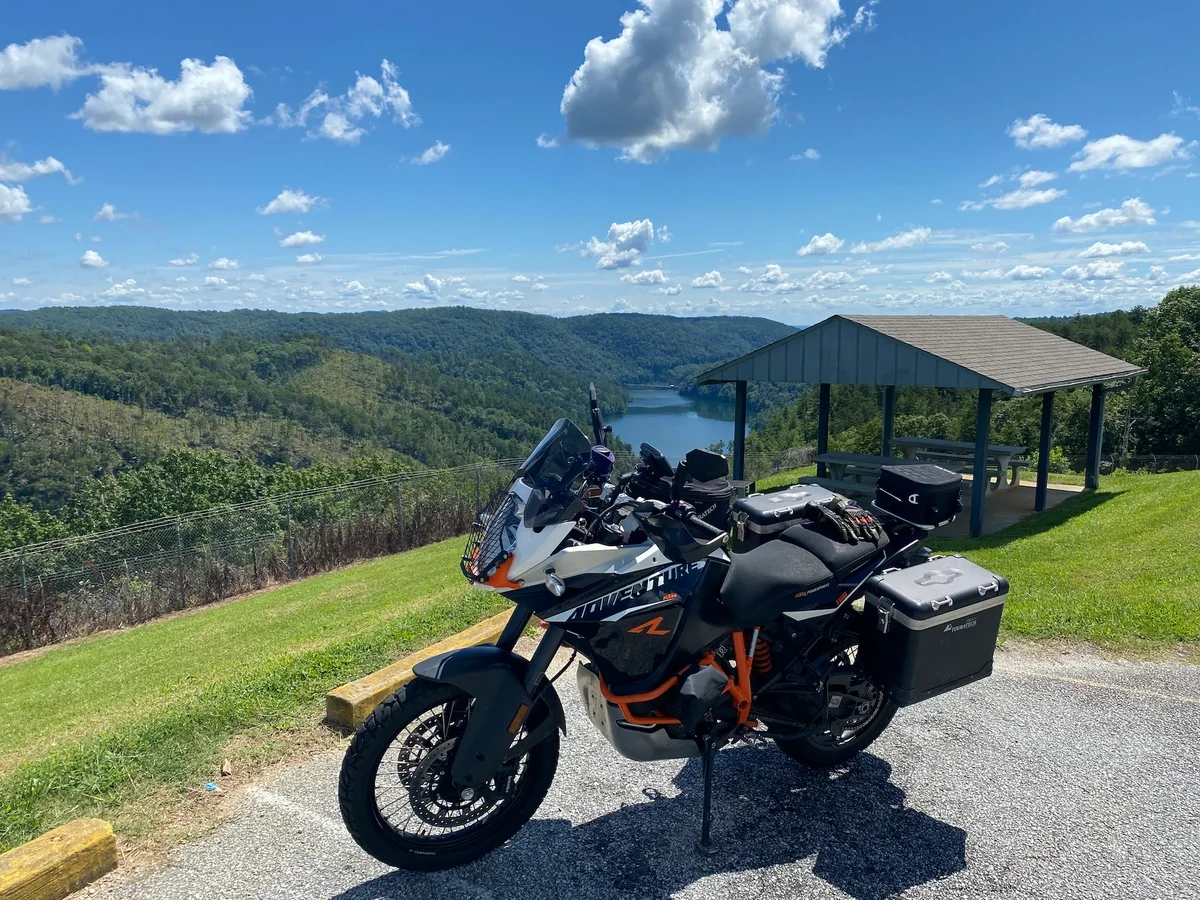
If you want to test a bike before committing to a long adventure, renting through Twisted Road is a simple option. You can try fully equipped touring machines, adventure bikes suited for BDR routes, and everything in between.
Your ride is waiting. The road or trail will shape the experience, but your preparation will shape the outcome.
FAQs
How do I plan the best route for a long motorcycle trip?
Start by choosing your goals, such as twisty roads, scenic byways, or remote backcountry routes. Use digital tools like REVER or Scenic to map the ride, but always carry a printed backup map. For off-road trips like the Northeast BDR or PA Wilds BDR-X, download GPS tracks and mark fuel stops, water points, and bail-out options.
What should I inspect on my motorcycle before a long trip?
Check tires, brake pads, chain or shaft drive, fluids, lights, and battery health. Replace any parts close to the end of their lifespan. Confirm suspension settings and inspect seals and linkage. Bring a basic toolkit with wrenches, fuses, zip ties, a tire plug kit, and a compact inflator.
How much should I pack for a long motorcycle trip?
Pack light but pack smart. Use layers for changing weather and bring a waterproof outer shell. Include base layers, a mid-layer, gloves for different climates, and rainproof gear. Off-road riders should pack hydration, snacks, a first-aid kit, and a compact tool roll.
How do I stay comfortable on multi-day motorcycle rides?
Ride back-to-back days before the trip to understand your comfort limits. Take breaks every one to two hours, stretch regularly, and stay hydrated. Small adjustments like a seat pad, earplugs, or a better windscreen can reduce fatigue.
What gear is best for long-distance motorcycle travel?
Use a modular or full-face helmet, waterproof riding gear, and gloves suited for multiple temperatures. Bring heated gear if traveling through mountains or shoulder seasons. Adventure riders should add armored base layers, knee guards, and off-road boots.
How do I prepare for off-road motorcycle trips like the BDR routes?
Plan fuel stops carefully, carry redundant navigation, and use tires that match the terrain. Pack water, snacks, and extra protective gear. Expect slower progress and changing surfaces. Tell someone your intended route, since many BDR sections do not have cell service.
How long can I ride in a single day on a long trip?
Most riders find 300 to 400 miles comfortable on pavement. Off-road mileage is much lower and depends on terrain. Adjust your daily goals to match your experience, weather, daylight, and energy level.
What should I do if weather conditions change during a trip?
Have waterproof layers ready and adjust your pace. Use rider aids like traction control and ABS to maintain stability. If visibility drops or storms intensify, stop and wait it out. Planning flexible routes allows you to pivot without stress.
How do I mentally prepare for a multi-day motorcycle ride?
Expect shifts in weather, road conditions, and comfort. Stay flexible and focus on the ride rather than the miles. Long trips create a natural rhythm, and settling into that rhythm helps reduce fatigue.
Should I rent a motorcycle for a long-distance trip?
Yes. Renting lets you choose a bike designed for long-distance comfort or off-road capability without committing to ownership. Through Twisted Road, you can test touring bikes, adventure bikes for BDR routes, and other models suited for extended rides.
What is the biggest mistake riders make when preparing for a long motorcycle trip?
The most common mistake is failing to test gear and bike setup before leaving. Take one or two shakedown rides to confirm comfort, luggage fit, and functionality. Small issues at home become big problems on the road.