

Adventure riding demands gear that performs as hard as you do.
Whether you’re standing on the pegs of a Ducati DesertX tearing through sand washes or logging highway miles on a loaded BMW R 1250 GS, your apparel needs to do more than look the part—it has to function flawlessly, adapt to changing environments, and hold up over thousands of punishing miles.
The core idea is simple: the more comfortable you are, the longer and safer you’ll ride.
But what actually makes gear comfortable for real-world adventure touring? That’s where things get nuanced.
As someone who’s pushed gear to its limit on multi-thousand-mile ADV rides here and overseas, here’s what I’ve learned.
And if you're renting from Twisted Road and planning your next ADV trip, this guide will help you gear up properly for the miles ahead, especially if you're reserving adventure heavy hitters like the BMW GS.

Helmets: Protection and Comfort
Regardless of what you ride, helmets are the most critical gear you’ll buy. Their main goal is to protect your noggin, but they also should help prevent rider fatigue. Noise, airflow, and balance matter more than most riders realize—until they're 300 miles into a ride with a headache.
Avoid going cheap here. I’ve met multiple riders who spent over $20K on a new adventure bike and paired it with a $120 clearance helmet. These are the types that get annoyed quickly due to discomfort, blame it on the bike or wind buffeting, and then get out of riding—something a good helmet could have prevented.
My long-standing favorites for ADV riding both on and off road? The Arai XD4 and the Touratech Aventuro Carbon Pro. Both meet rigorous DOT and ECE 22.06 standards, and both have saved me from serious injury multiple times.
They both flow a huge amount of air, and provide strong ventilation. I’ve ridden in temps north of 100 with both, and they kept me cool and safe. However, the Aventuro is my pick for cooler temps due to the chin skirt and vents that seal out all air when needed.
A few pro tips: Try it on and wear it around the house for a solid hour. Look for pressure points—if there’s even a slight hotspot on your forehead, skip it. Ventilation is also critical. Read rider reviews and watch teardown videos. And if you’re heading into long slab sections, consider removing that peak, especially on the XD4. Less drag means more focus and less neck fatigue.
And one last thing. Ensure your helmet is sized correctly. Go by the manufacturer’s specs and measure your head. This is crucial; many riders wear a helmet that is typically a size larger than needed. Yes, a properly sized helmet will fit a bit snug when you wear it, but it’ll break in and match your head size, providing better comfort and protection.
Jackets and Pants: Sit, Stand, Sweat, Soak, Repeat
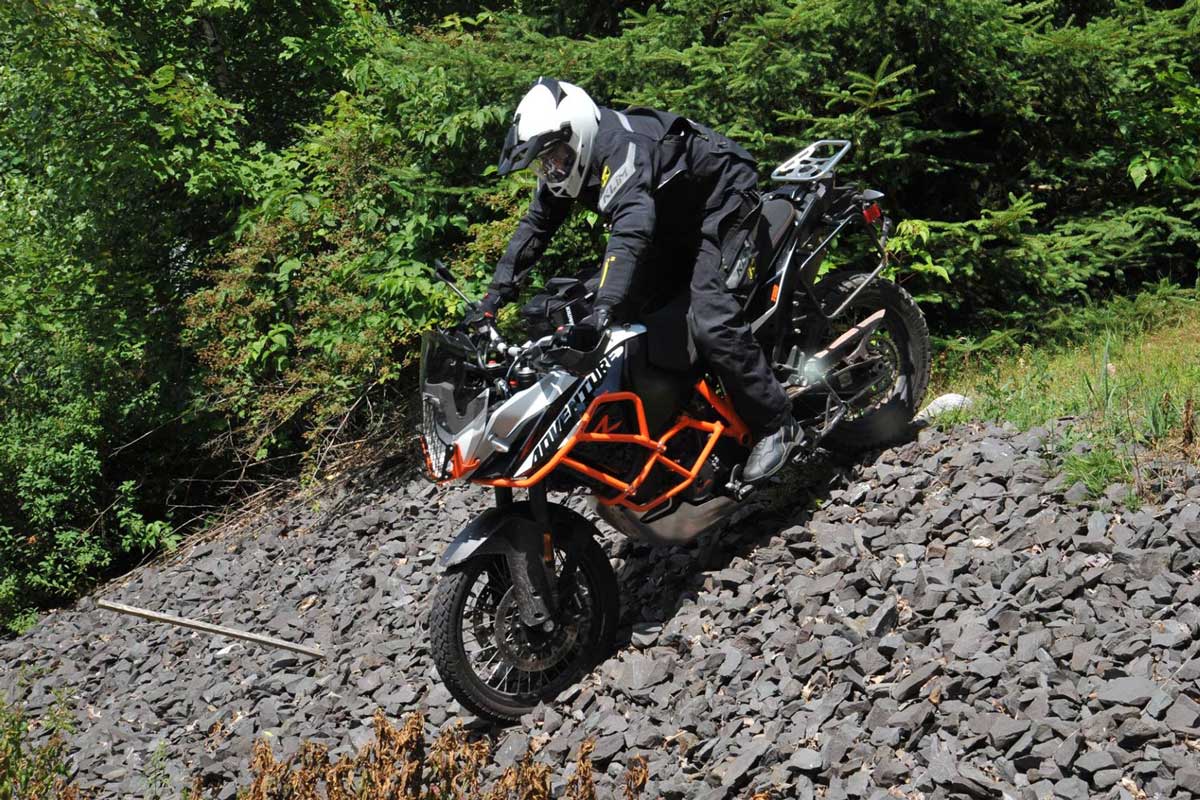
Adventure gear isn’t casual wear. It needs to perform while roasting in desert heat, freezing in the mountains, and getting drenched on coastal highways, which can all happen during the same day. That means your jacket and pants must be fully waterproof (without requiring an internal rain liner), offer real protection, and let you move freely when standing on the pegs.
Gore-Tex is still the gold standard. Not the “water-resistant” stuff—real Gore-Tex. It’s pricey, but it works, breathes, and adds a layer of abrasion resistance no cheap material can touch. Make sure the zippers are waterproof and reinforced. Every zipper should close tightly and stay shut. Reinforced stitching is a must.
Armor matters, too. Look for CE-rated protection in shoulders, elbows, back, hips, and knees. I’ve trusted D3O for years. This stuff is lightweight, flexible until impact, and protective enough to save my ribs during a fast get-off in Utah. I was standing on the pegs of a BMW F 850 GS, caught a hidden stump, and went flying. I walked away intact. My jacket didn’t even rip.
For gear picks: KLIM’s Badlands Pro remains my ride-or-die kit. Over 100,000 miles on the same suit, and it’s still going strong. I also run the Baja 4 when it’s sweltering, but you’ll need to pack a rain layer.
When trying gear, test mobility. You need to move comfortably while seated and standing, especially on technical off-road routes.
Gloves: The Unsung Hero of Comfort and Control
Your hands are your primary control interface. Fatigued or cold fingers slow response time, increase crash risk, and ruin your mood. Bring multiple pairs. I typically carry four sets on tours—two for the rain, one warmer, and a lightweight glove for ultimate cooling.
Go with Gore-Tex for rain. KLIM’s Badlands GTX Long Glove or the short-cuff GTX version are both winners. I rotate between the KLIM Dakar, Baja 4, and the Racer Rallye for warm weather.
Fit is everything. Long fingers ruin the feel. Too tight, and your hands go numb. Waterproof liners should stay put—nothing worse than pulling out the liner when removing your gloves.
Quick tip: Even if the weather calls for zero rain, pack a set of rain gloves. Nothing causes more misery than wet fingers when riding (except maybe wet feet).
Boots: Weatherproof, Grippy, Comfortable
ADV boots need to keep your feet dry, provide decent flex, and offer enough traction to stick on the pegs while ripping through muddy or rocky terrain. I’ve ridden hundreds of miles with soaking wet feet. Never again.
Gore-Tex returns as the MVP. It keeps water out, breathes well, and endures abuse. My current rotation includes the Touratech Destino Ultimate GTX Adventure boot, and, for lighter ADV duty, the surprisingly comfortable Spidi X-Trail Outdry. The Spidi boots lean more towards street but still perform decently off-road—just ensure you have grippier foot pegs.
Avoid boots that require a wrestling match to remove. After 300 miles in sweltering heat, you’ll thank me.
Base Layers and Socks: The Secret to All-Day Comfort
Don’t skip base layers. Ever. They regulate temperature, wick moisture, and prevent your gear from sticking to your skin. I use Touratech’s Primero Allroad for warmer temps and Primero Alpine when things get cold.
And socks? You’ll want full-length, breathable performance blends. Having an extra pair handy and switch midday if needed. A good neck gaiter also goes a long way—soaked in water for cooling, dry for wind, dust, and cold protection.
Some Added Tips
Here are a few tips that helped keep me comfortable on multi-day adventure rides.
1. Rotate Your Gear Throughout the Day
Use your stops to switch gloves, swap layers, or open vents. The better you manage temperature and moisture, the longer you can ride without fatigue.
2. Air It Out
At camp or in that Airbnb or hotel, air-dry all your gear on your bike. While camping, use your mirrors, bars, and panniers as makeshift drying racks. But don’t leave them outside; I always place my gear in my tent or within the vestibule of a tent if I have one. Just remember to shake out any gloves or boots before bringing them into your tent. You don’t want any spiders awakening you.
3. Clean After Every Major Ride
Your gear can last for years if you treat it right. My first-generation Klim Badlands Pro is still going because I am cleaning it (and reactivating the Gore-Tex in the dryer often!). After dusty or muddy rides, hose off the grime, lightly brush the fabric, and let it dry thoroughly. Gore-Tex works better when it’s clean.
4. Wax Your Zippers
This one’s from Helge Pedersen, who knows a thing or two about long-distance ADV riding. Wax your zippers to keep them functioning smoothly and sealed against dirt and water.
5. Bring Emergency Fixes
Always pack duct tape and safety pins. On my last trip from Georgia to Pennsylvania, a vent zipper blew out 200 miles in. No tape, no pins. My right leg froze as the temps dropped. I had to wrap it with a spare neck gaiter. Won’t make that mistake again.
Don’t cheap out on adventure motorcycle gear. The bike matters, but your comfort and protection are what determine how far you’ll go (and how safe you’ll be).
The best ADV gear isn’t just about materials and branding. It’s about fit, utility, and staying focused when conditions get brutal. Your gear should disappear from thought, freeing you to enjoy the ride, push your skills, and return home with stories, not bruises.