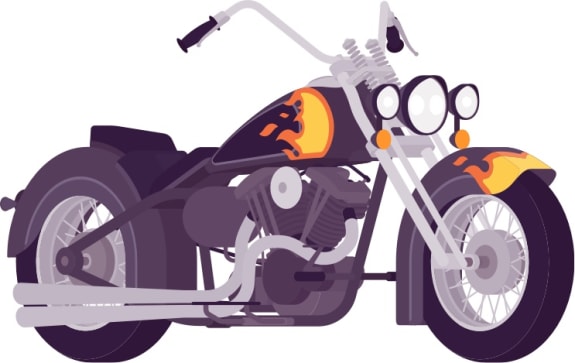


Some of our platform's most popular motorcycle rentals are Triumphs, from the Rocket 3 to the time-proven Bonneville and its multiple iterations. Triumph has continuously reinvented itself and recently even entered the off-road motocross market with its TF 250X.
Let's take a look back at Triumph's history, highlighting its most important moments.
Like most European moto manufacturers, Triumph's roots begin in the bicycle industry. In 1886, German-born Siegfried Bettmann established a bicycle factory in Coventry named Triumph Cycle Company.
It wasn't until 1902 that the first Triumph motorcycle emerged. It featured a Belgian-made 2.25 horsepower Minerva engine mounted on a reinforced bicycle frame. This marked the beginning of Triumph's transition from bicycles to motorized two-wheelers. The machine could reach speeds of up to 30 mph, a remarkable feat at the time.
As production increased, Triumph moved to a larger Priory Street, Coventry facility, reflecting the brand's growing success. By 1905, Triumph began manufacturing their engines, starting with a 363cc single-cylinder four-stroke engine, showcasing their commitment to engineering excellence.
By 1908, Triumph celebrated its first Isle of Man TT victory with Jack Marshall, establishing its presence in motorcycle racing. The Triumph motorcycles of this era were known for their durability and performance, qualities that would become synonymous with the brand.

Triumph During Wartime: A Legacy of Durability
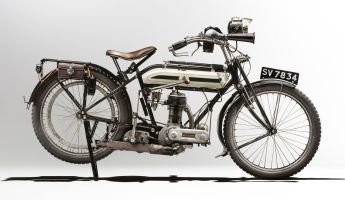
The outbreak of World War I in 1914 brought about a surge in demand for reliable motorcycles. Triumph answered the call, supplying its 499cc Type H "Trusty" model to Allied forces. The Type H was one of the first motorcycles to feature a three-speed gearbox and chain drive, replacing the less reliable belt drive.
Renowned for its durability and ability to handle rugged terrain, the Type H solidified Triumph's reputation for building dependable machines. Over 30,000 units were produced during the war, making it a critical asset for communication and transport on the front lines.
Triumph motorcycles would continue to be a trusted brand in the years to come, not just for their performance but also for their contribution to significant historical events.
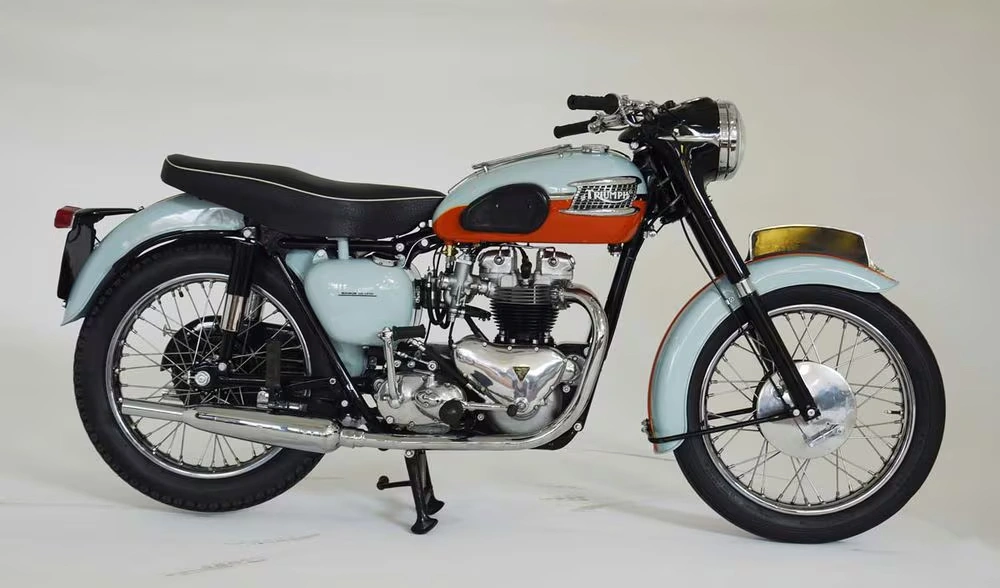
Triumph continued to break barriers. In 1936, Jack Sangster took ownership of Triumph’s motorcycle division and appointed Edward Turner as chief designer. Turner's vision would shape Triumph’s future by introducing the groundbreaking 498cc Speed Twin in 1937.
This revolutionary model, influenced by Mauritz Schulte’s work on the 1936 BMW R5, set new standards for speed and performance, reaching over 90 mph. Its iconic parallel-twin engine became a hallmark of Triumph motorcycles for decades.
Triumph's Post-War Resurgence: A Return to Glory
Following World War II, Triumph experienced a resurgence fueled by the popularity of their motorcycles among returning soldiers. With its powerful engine and stylish design, the iconic Bonneville Bobber became synonymous with the 1960s biker culture.
In 1959, Triumph launched the Bonneville T120, named after the Bonneville Salt Flats, where Triumph had set numerous land speed records. With a 649cc parallel-twin engine producing 46 horsepower, the Bonneville T120 could reach speeds up to 115 mph. Its combination of speed, style, and affordability combination made it an instant classic.
This period also witnessed a return to racing glory. In 1966, Buddy Elmore achieved a historic victory in the Daytona 200 on a Triumph Tiger 100. His average speed of 96.6 mph (155.5 km/h) set a new record and further cemented Triumph's reputation in the racing world.
This period also witnessed a return to racing glory. 1966 was a big year for the brand, marked by Buddy Elmore's historic victory in the Daytona 200 on a Triumph Tiger 500.
Triumph motorcycles became synonymous with the biker culture of the 1950s and 1960s, thanks partly to celebrities like Steve McQueen and Marlon Brando. McQueen famously rode a Triumph TR6 Trophy in the movie "The Great Escape," performing his stunts and showcasing the motorcycle's capabilities. And everyone who rides knows of Brando’s character Johnny Strabler and his Thunderbird 6T in the 1953 iconic biker flick “The Wild One.”
But Triumph motorcycle history wasn’t always smooth sailing. As the 1970s unfolded, the British motorcycle industry faced intense competition from Japanese motorcycle brands like Honda and Yamaha. Triumph faced financial struggles that led to the company’s closure in 1983. However, this was not the end for Triumph motorcycles.
A New Era: Triumph Motorcycles Under John Bloor
In 1983, British entrepreneur John Bloor acquired the Triumph brand and its manufacturing rights. Recognizing the value of Triumph's heritage and its potential for a comeback, Bloor set about rebuilding the company from the ground up.
A new factory was constructed in Hinckley, Leicestershire, incorporating modern manufacturing techniques. The company would go on to release a variety of bikes with engines.
Triumph officially returned at the 1990 Cologne Motorcycle Show, introducing a new generation of motorcycles that combined modern technology with classic design elements.
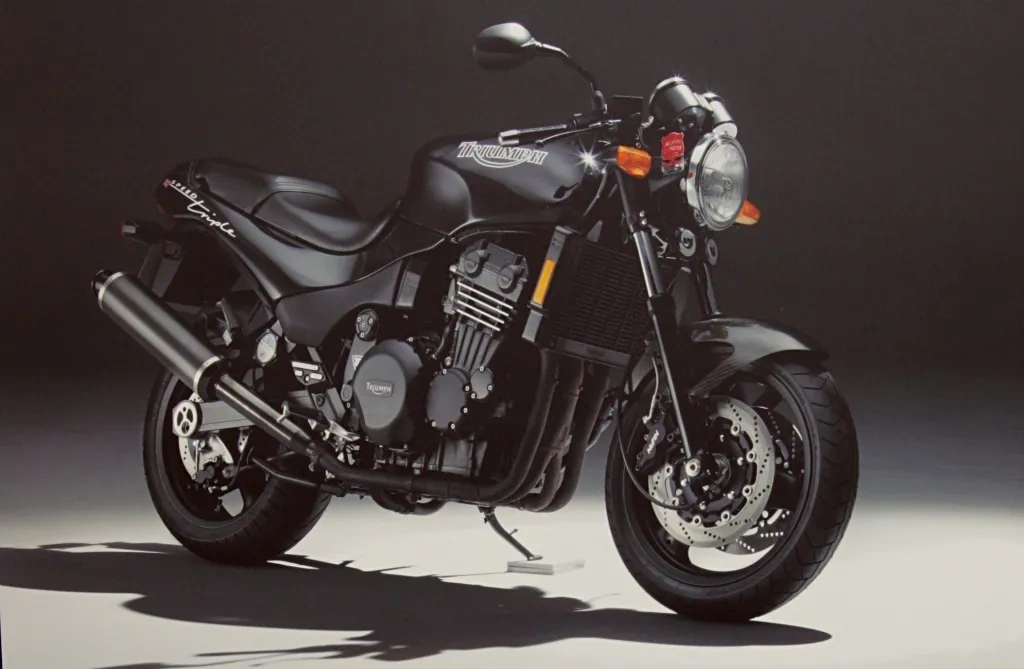
Among these, models like the Trident, Trophy, and Daytona signaled Triumph’s return to performance and innovation. These bikes featured the signature cc triple engines that became a trademark of Triumph motorcycles, showcasing the brand's engineering strength.
Triumph’s return was enthusiastically received by motorcycle enthusiasts worldwide. The Speed Triple and Street Triple would become some of the company's most popular models.
Triumph Today: Global Expansion and Innovation
Triumph's revival continued into the 21st century. Triumph expanded its model lineup to cater to various riding styles and preferences. They introduced modern classics like the Bonneville family, adventure motorcycles like the Tiger range, and the powerful Rocket 3 roadster, which holds the record for the largest production motorcycle engine in the world.
In 2020, Triumph made a strategic move by shifting some of its manufacturing operations to Thailand in response to evolving global market trends and growing demand in Asia. This move enabled Triumph to remain competitive while expanding its reach to new markets.
As documented by Motorcycles Data, by 2023, the brand recorded positive sales figures in regions like Latin America, Eastern Europe, and Asia. Triumph continues to push the boundaries of motorcycle design and technology, as evidenced by its partnership with Dorna Sports to become the exclusive engine supplier for the Moto2 World Championship in 2019.
Triumph Racing Success: From the TT to Supersport
Triumph's racing heritage is as impressive as its production history. Since the early days of the Isle of Man TT, Triumph motorcycles have been a force to be reckoned with on race tracks worldwide.
The iconic Speed Twin, designed by Edward Turner, laid the foundation for Triumph’s racing success. Its powerful parallel-twin engine and innovative chassis design set a new benchmark for performance motorcycles of the era.
Triumph's postwar racing efforts focused on the Bonneville Salt Flats, where the company sought to capture the land-speed record.
Texas racer Johnny Allen achieved a speed of 193.72 mph (311.77 km/h) on his Triumph-powered streamliner, cementing the brand's association with speed and performance. The record-breaking run brought significant publicity to Triumph and solidified its position as a leading motorcycle manufacturer.
In the 1960s, Triumph succeeded in the grueling world of Grand Prix motorcycle racing. Riders like Gary Johnson and Bruce Anstey piloted Triumph triples to numerous victories, showcasing the engine's power and reliability.
Triumph's return to racing in the modern era has been equally impressive. The brand has been a dominant force in the Supersport World Championship.
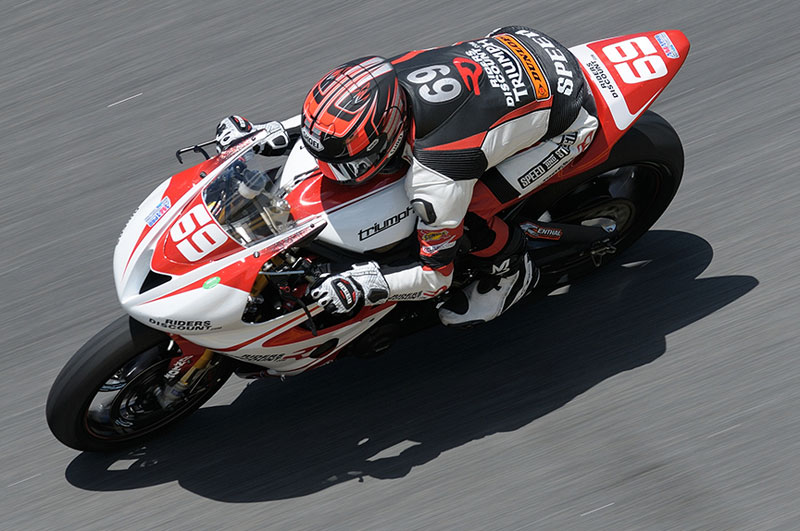
With its high-revving, triple-cylinder engine, the Daytona 675 has achieved multiple race wins and championships. Riders like Danny Eslick have consistently challenged for the title, further solidifying Triumph’s reputation as a manufacturer of high-performance motorcycles.
Today, Triumph's racing legacy continues in various disciplines. The brand is a major player in road racing, motocross, and enduro. Triumph's commitment to racing is a testament to their passion for pushing the limits of motorcycle design and engineering.
Expansion to Global Markets
In 2020, Triumph made a strategic move by shifting some of its manufacturing operations to Thailand in response to evolving global market trends and growing demand in Asia. This move enabled Triumph to remain competitive while expanding its reach to new markets.
By 2023, the brand recorded positive sales figures in regions like Latin America, Eastern Europe, and Asia. Triumph continues to push the boundaries of motorcycle design and technology, as evidenced by its partnership with Dorna Sports to become the exclusive engine supplier for the Moto2 World Championship in 2019.
The Triumph motorcycle history is a compelling saga marked by perseverance and reinvention. From early innovations like the Type H "Trusty" to modern masterpieces like the Speed Triple 1200 RS, Triumph has consistently pushed the boundaries of motorcycle engineering.
Triumph's journey has been one of high speeds and setbacks. The brand's commitment to engineering excellence and understanding of riders' aspirations have secured Triumph's legacy as a symbol of British motorcycle manufacturing.
Triumph motorcycles are more than just machines; they represent a dedication to the craft and a passion for the ride that continues to captivate motorcycle enthusiasts around the globe.
As Triumph looks toward the future, its dedication to quality, performance, and timeless design ensures that the legend of Triumph motorcycle history will endure for many years.
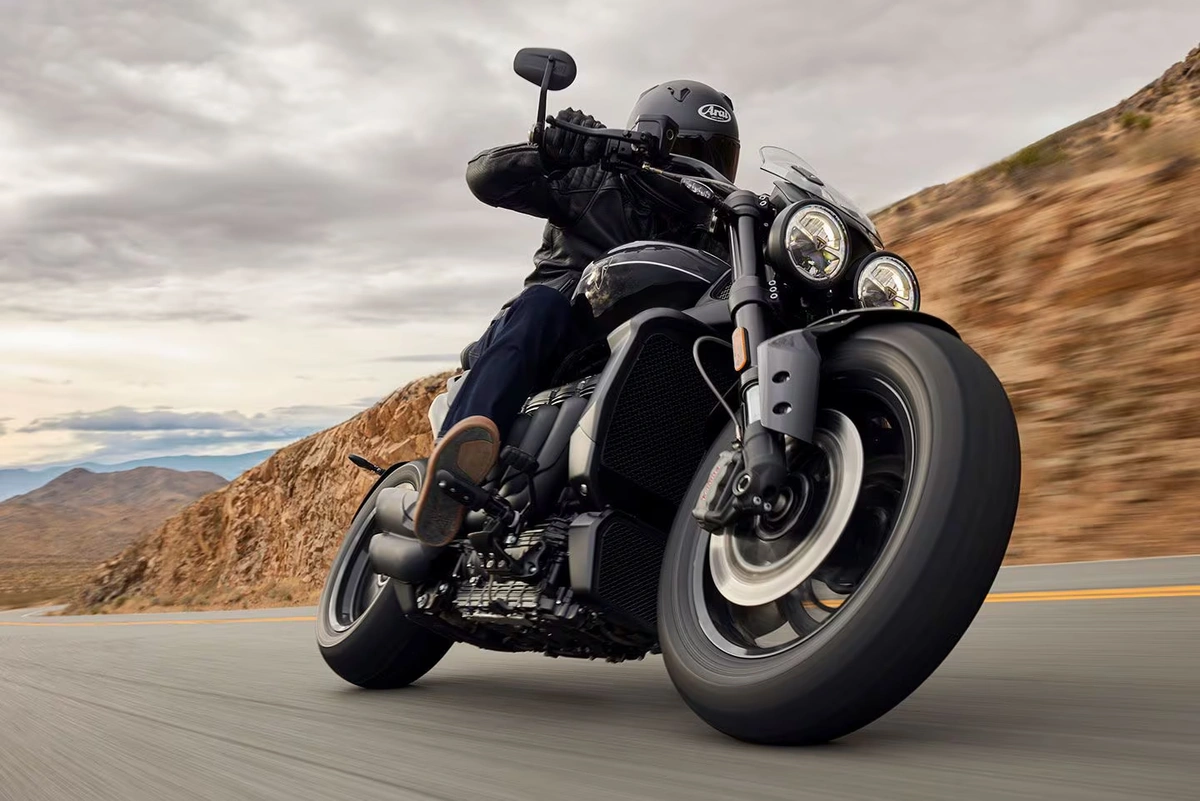
Current Triumph Motorcycle Lineup
Triumph's current lineup is diverse, catering to various segments of the motorcycle market. Below is a list of the current models segmented by category:
Modern Classics
-
Bonneville Family
-
Bonneville T100
-
Engine: 900cc parallel-twin
-
Power: 64 hp @ 7,400 rpm
-
Torque: 59 lb-ft @ 3,750 rpm
-
-
Bonneville T120
-
Engine: 1,200cc parallel-twin
-
Power: 79 hp @ 6,550 rpm
-
Torque: 77 lb-ft @ 3,500 rpm
-
-
Bonneville Speedmaster
-
Engine: 1,200cc parallel-twin
-
Power: 77 hp @ 6,100 rpm
-
Torque: 78 lb-ft @ 4,000 rpm
-
-
Bonneville Bobber
-
Engine: 1,200cc parallel-twin
-
Power: 77 hp @ 6,100 rpm
-
Torque: 78 lb-ft @ 4,000 rpm
-
-
Street Twin
-
Engine: 900cc parallel-twin
-
Power: 64 hp @ 7,500 rpm
-
Torque: 59 lb-ft @ 3,800 rpm
-
-
Street Scrambler
-
Engine: 900cc parallel-twin
-
Power: 64 hp @ 7,250 rpm
-
Torque: 59 lb-ft @ 3,250 rpm
-
-
Thruxton RS
-
Engine: 1,200cc parallel-twin
-
Power: 104 hp @ 7,500 rpm
-
Torque: 83 lb-ft @ 4,250 rpm
-
Roadsters & Supersports
-
Speed Triple 1200 RS
-
Engine: 1,160cc inline-triple
-
Power: 177 hp @ 10,750 rpm
-
Torque: 92 lb-ft @ 9,000 rpm
-
-
Street Triple R
-
Engine: 765cc inline-triple
-
Power: 118 hp @ 12,000 rpm
-
Torque: 57 lb-ft @ 9,400 rpm
-
-
Street Triple RS
-
Engine: 765cc inline-triple
-
Power: 128 hp @ 11,750 rpm
-
Torque: 58 lb-ft @ 9,350 rpm
-
-
Daytona Moto2 765
-
Engine: 765cc inline-triple
-
Power: 128 hp @ 12,250 rpm
-
Torque: 59 lb-ft @ 9,750 rpm
-
Adventure & Touring
-
Tiger 850 Sport
-
Engine: 888cc inline-triple
-
Power: 84 hp @ 8,500 rpm
-
Torque: 60 lb-ft @ 6,500 rpm
-
-
Tiger 900 Range
-
Tiger 900 GT/GT Pro
-
Engine: 888cc inline-triple
-
Power: 106 hp @ 8,750 rpm
-
Torque: 66 lb-ft @ 7,250 rpm
-
-
Tiger 900 Rally/Rally Pro
-
Engine: 888cc inline-triple
-
Power: 106 hp @ 8,750 rpm
-
Torque: 66 lb-ft @ 7,250 rpm
-
-
Tiger 1200 Range
-
Tiger 1200 GT/GT Pro/GT Explorer
-
Engine: 1,160cc inline-triple
-
Power: 147 hp @ 9,000 rpm
-
Torque: 95 lb-ft @ 7,000 rpm
-
-
Tiger 1200 Rally Pro/Rally Explorer
-
Engine: 1,160cc inline-triple
-
Power: 147 hp @ 9,000 rpm
-
Torque: 95 lb-ft @ 7,000 rpm
-
Rocket 3
-
Rocket 3 Storm
-
Engine: 2,458cc inline-triple
-
Power: 180 hp @ 6,000 rpm
-
Torque: 166 lb-ft @ 4,000 rpm
-
Scrambler
-
Scrambler 1200 XC
-
Engine: 1,200cc parallel-twin
-
Power: 89 hp @ 7,400 rpm
-
Torque: 81 lb-ft @ 3,950 rpm
-
-
Scrambler 1200 XE
-
Engine: 1,200cc parallel-twin
-
Power: 89 hp @ 7,400 rpm
-
Torque: 81 lb-ft @ 3,950 rpm
-
Trident
-
Trident 660
-
Engine: 660cc inline-triple
-
Power: 81 hp @ 10,250 rpm
-
Torque: 47 lb-ft @ 6,250 rpm
-
Tiger Sport
-
Tiger Sport 660
-
Engine: 660cc inline-triple
-
Power: 81 hp @ 10,250 rpm
-
Torque: 47 lb-ft @ 6,250 rpm
-