

For motorcycle enthusiasts, few European brands hold the same legendary status as BMW.
The Bavarian company’s commitment to engineering, performance, and style has cemented its place in motorcycle history. From humble beginnings crafting aircraft engines to becoming a global giant in the motorcycle (and automobile) world, BMW has consistently pushed the boundaries.
And its status is shown on our motorcycle rental platform. BMW motorcycles are some of the most rented platforms besides Harley-Davidson.
The following is a history of BMW Motorrad and a list of all major models since its very first motorcycle, the 1923 R 32. We see many of the 1990s and newer models for rent, but we would LOVE to see a few available from earlier periods to jump back in time and see how innovative BMW truly was.

The Genesis BMW Motorrad
BMW, an acronym for Bayerische Motoren Werke or Bavarian Motor Works, didn't begin its journey by producing motorcycles.
Founded in 1916 in Munich, Germany, the company initially focused on aircraft engines. However, after the end of World War I, significant restrictions were placed on German aircraft production, pushing BMW to pivot its focus on other products.
The BMW Group shifted its attention to producing other industrial products, which soon led it to motorcycle manufacturing. This shift in focus would forever change the landscape of the motorcycle industry.
The First BMW Motorcycle
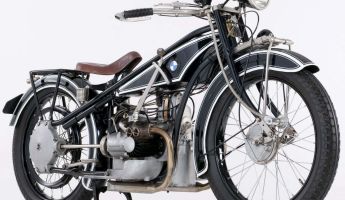
In 1923, BMW unveiled the R 32, designed by technical director and chief designer Max Friz, at the Berlin Motor Show. This machine wasn't a tentative step into the motorcycle world but a bold statement about BMW’s approach to engineering. It showcased a design philosophy that would define BMW motorcycles for decades.
The R 32 featured a horizontally opposed twin-cylinder engine, also known as a "boxer" engine, with its cylinders mounted longitudinally along the frame. This innovative design layout offered several benefits. The opposed cylinder arrangement inherently canceled out vibrations, leading to smoother engine operation.
This boxer engine layout, combined with a cardan shaft drive rather than the more common chain drive of the era, contributed to the R 32’s reputation for reliability and ease of maintenance. The success of the R 32 laid the foundation for BMW's future motorcycle endeavors and solidified its position as a motorcycle manufacturer.
A Legacy of Innovation
Throughout their BMW motorcycle history, the company has consistently introduced groundbreaking technologies. These advancements have not only influenced the brand but also shaped the entire motorcycle industry.
This steadfast commitment to innovation continues to define BMW Motorrad's identity today.
Here are a few key milestones:
- 1935: The hydraulically dampened telescopic fork is introduced on the R 12 and R 17 models.
- 1973: Debut of the first full-fairing motorcycle, the R 90 S, enhancing aerodynamics and aesthetics.
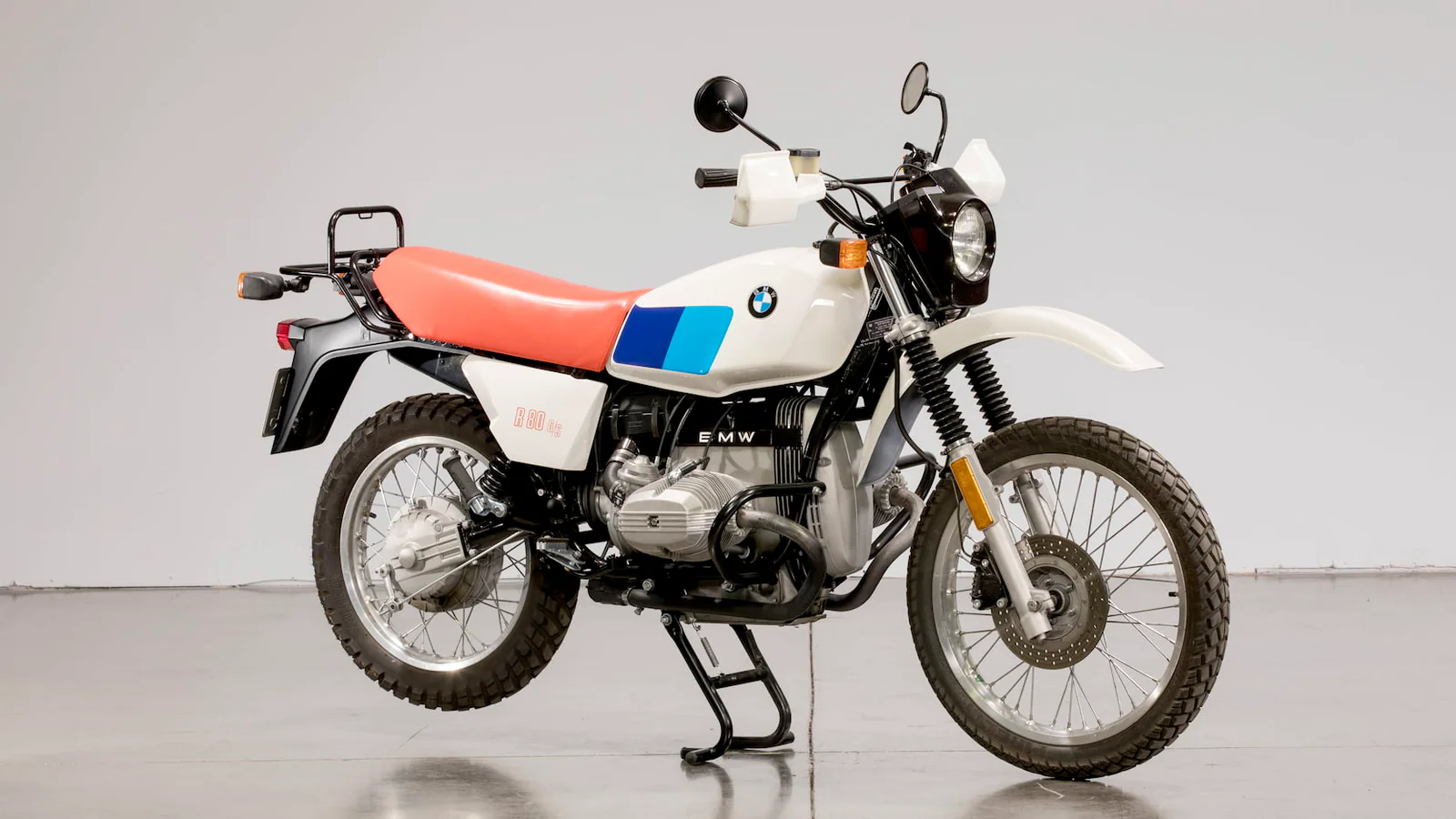
- 1980: The legendary R 80 G/S, powered by a powerful cc engine, revolutionized motorcycling as the first adventure bike with its single-sided swingarm.
- 1988: BMW pioneered rider safety with the introduction of the Anti-lock Braking System (ABS) on the K 100 LT.
- 1994: The F650 Funduro marks the return to single-cylinder models after 30 years.
- 2000: BMW launches the R 1150 GS, an upgraded adventure bike with more power.
- 2009: BMW enters the superbike segment with the S 1000 RR.
- 2011: Luxury touring takes on a new life with the K1600GT/GTL and its six-cylinder engine.
- 2013: BMW introduced the first water-cooled boxer engine in the R 1200 GS.
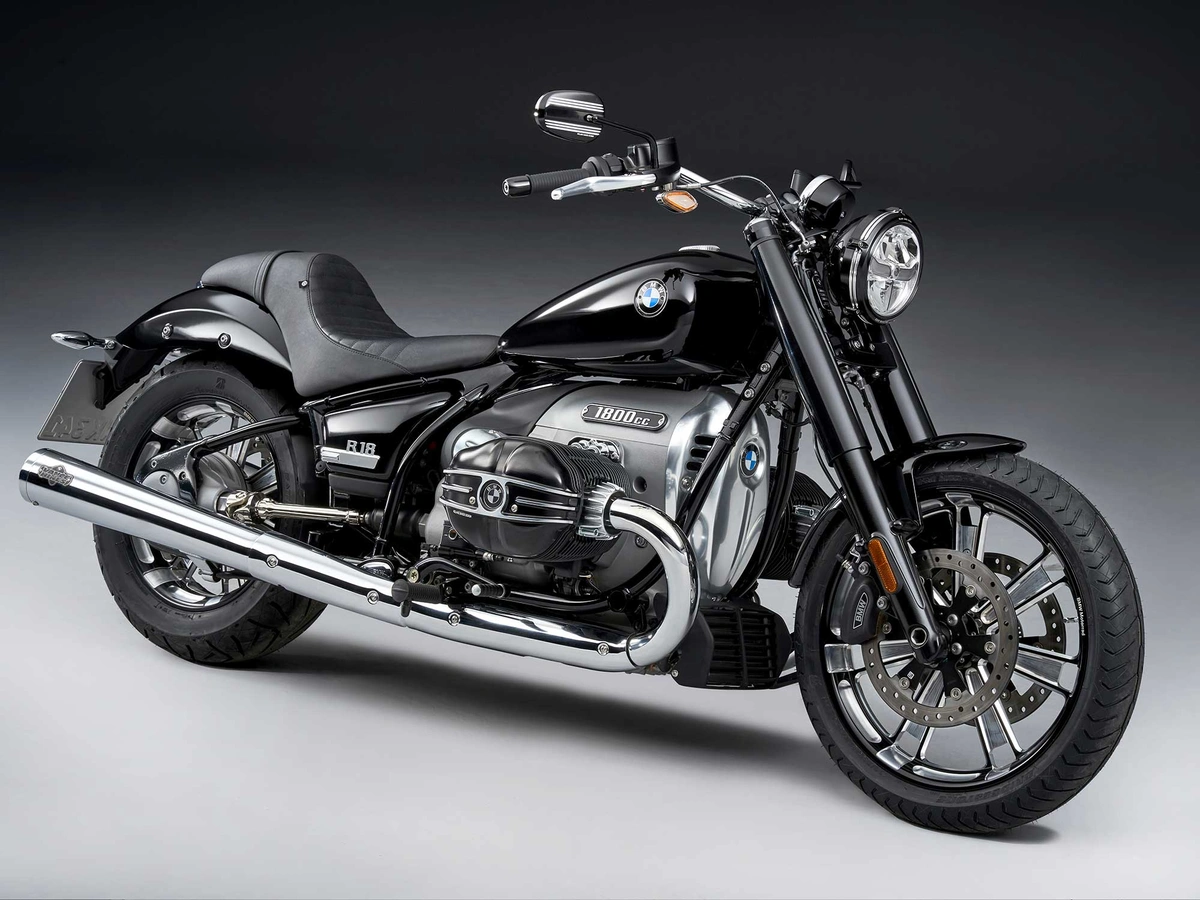
- 2021: BMW takes on the heavyweight cruiser market with the R18.
- 2022: The CE 04 electric scooter represents BMW's push into electric mobility.
Whether introducing telescopic forks in 1935 or integrating ABS in 1988, BMW prioritizes enhancing both performance and, most importantly, rider safety.
The Evolution of Iconic Series
BMW’s success in the motorcycle world isn’t defined by individual innovations but by its ability to create enduring motorcycle series. These series, representing various ccm categories, became synonymous with distinct riding experiences, capturing the hearts and minds of riders worldwide.
They are a testament to the powerful combination of innovative design and unwavering performance throughout BMW's motorcycle history.
The /5 Series
In the late 1960s, BMW’s production strategy shifted, leading to the relocation of a portion of its motorcycle production to Berlin.
To streamline manufacturing in this new factory, BMW implemented a more straightforward design with fewer components, making assembly easier and more efficient. BMW also made another strategic decision: to actively target the expanding American motorcycle market.
Introduced in 1969, the /5 series exemplified these pivotal changes. This series, consisting of the R 50/5, the R 60/5, and the R 75/5 models, combined classic boxer-twin design with contemporary elements, captivating the attention of American riders.
The GS (Gelände/Straße) Series
Few series resonate as strongly with the spirit of adventure as the GS series, which means "terrain/road" in German. Its narrative began in 1980, with the world witnessing the birth of a motorcycling legend—the R 80 G/S.
Designed to excel both on and off-road, the R 80 G/S was unlike anything else on the market at the time. It marked a turning point in BMW motorcycle history, laying the groundwork for the wildly popular adventure bike segment we see today.
One of its most famed moments was captured in a book that helped further ignite the future of adventure touring: “10 Years on 2 Wheels: 77 Countries, 250000 Miles” by Photojournalist Helge Pedersen.
The GS legacy endures, as these bikes remain favorites among riders who seek thrilling experiences and long journeys. The GS, particularly the GS Adventure model, continues to embody the spirit of adventure riding.
The K Series
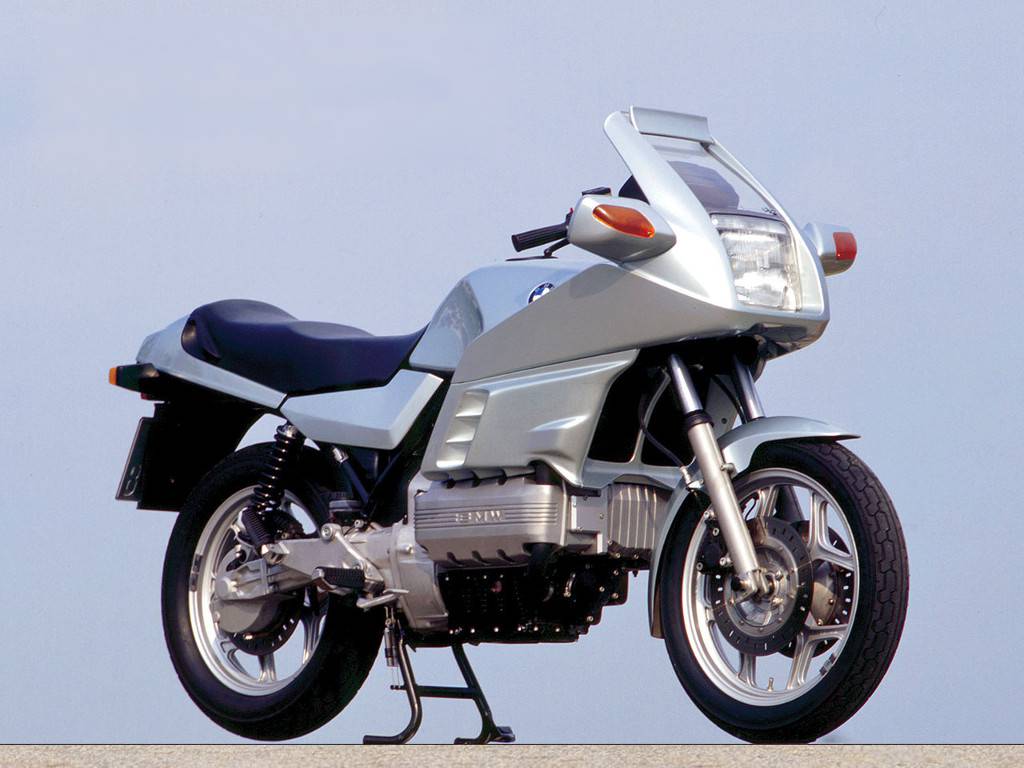
In 1983, BMW boldly challenged motorcycling norms by launching the K 100, a radical departure from their traditional boxer engine configuration.
This move showcased BMW's dedication to innovative design and its ability to think outside traditional boundaries within its BMW motorcycle history. This willingness to explore new engine designs demonstrated their commitment to pushing the boundaries of motorcycle technology.
Powering this sleek machine was a liquid-cooled, inline-four engine mounted horizontally beneath the frame. Its design delivered impressive performance and introduced shaft drive technology. Though it diverged from BMW's traditional design language, it offered a different yet compelling riding experience.
The R Series
The evolution of BMW motorcycles wouldn't be complete without recognizing the persistent lineage of the R series. Spanning from the early R 32 to modern-day marvels like the , it embodies the enduring spirit of the brand's commitment to the timeless boxer engine. The R series showcases this iconic engine configuration's remarkable versatility with models catered to diverse riding preferences.
Whether you’re drawn to the thrill of a sport bike or the allure of a comfortable cruiser, the R series offers a BMW motorcycle tailored for you. The R series stands as a testament to BMW's engineering prowess, consistently delivering a balance of performance and style.
BMW Motorcycles: List of Major Models Since 1923
This decade-by-decade overview highlights some of the most significant models in BMW's illustrious history.
As you explore the evolution of BMW motorcycles, you'll witness the transformation of simple mechanical marvels into today's high-performance, tech-laden machines that continue to influence the global motorcycle landscape.
1920s BMW Motorcycles
1923 R32
-
Significance: The first motorcycle produced by BMW.
-
Engine: 494cc air-cooled, flat-twin boxer engine.
-
Features: Introduced the iconic boxer engine and shaft drive configuration, setting the foundation for future BMW motorcycles.
-
Performance: Produced 8.5 horsepower, reaching top speeds of around 60 mph.
1924 R37
-
Significance: A sportier, racing version of the R32.
-
Engine: Upgraded 494cc engine producing 16 horsepower.
-
Features: Lighter frame with minimal equipment for racing purposes; only about 150 units produced.
-
Performance: Nearly doubled the horsepower of the R32, making it competitive in races.
1925 R39
-
Significance: BMW's first single-cylinder motorcycle.
-
Engine: 247cc single-cylinder engine. (Correction: Engine displacement was 247cc, not 250cc)
-
Features: Designed to be an affordable entry-level bike.
-
Performance: Produced 6.5 horsepower, suitable for everyday riding.
1926 R42
-
Significance: Successor to the R32 with improvements.
-
Engine: 494cc boxer engine.
-
Features: Enhanced frame design, improved brakes, and increased reliability.
-
Performance: Maintained 12 horsepower with better handling.
1928 R52
-
Significance: Mid-range model combining performance and comfort.
-
Engine: 494cc boxer engine.
-
Features: Introduced a pressed-steel frame for added rigidity.
-
Performance: Produced 12 horsepower, offering smoother rides.
1928 R62
-
Significance: BMW's first 750cc touring motorcycle.
-
Engine: 745cc boxer engine.
-
Features: Featured an all-welded "flat tanker" frame, setting the standard for future touring models.
-
Performance: Generated 18 horsepower, suitable for long-distance touring.
1929 R11
-
Significance: First BMW with a pressed-steel frame.
-
Engine: 745cc boxer engine.
-
Features: Improved structural integrity and handling.
-
Performance: Produced 18 horsepower, enhancing touring capabilities.
1930s BMW Motorcycles
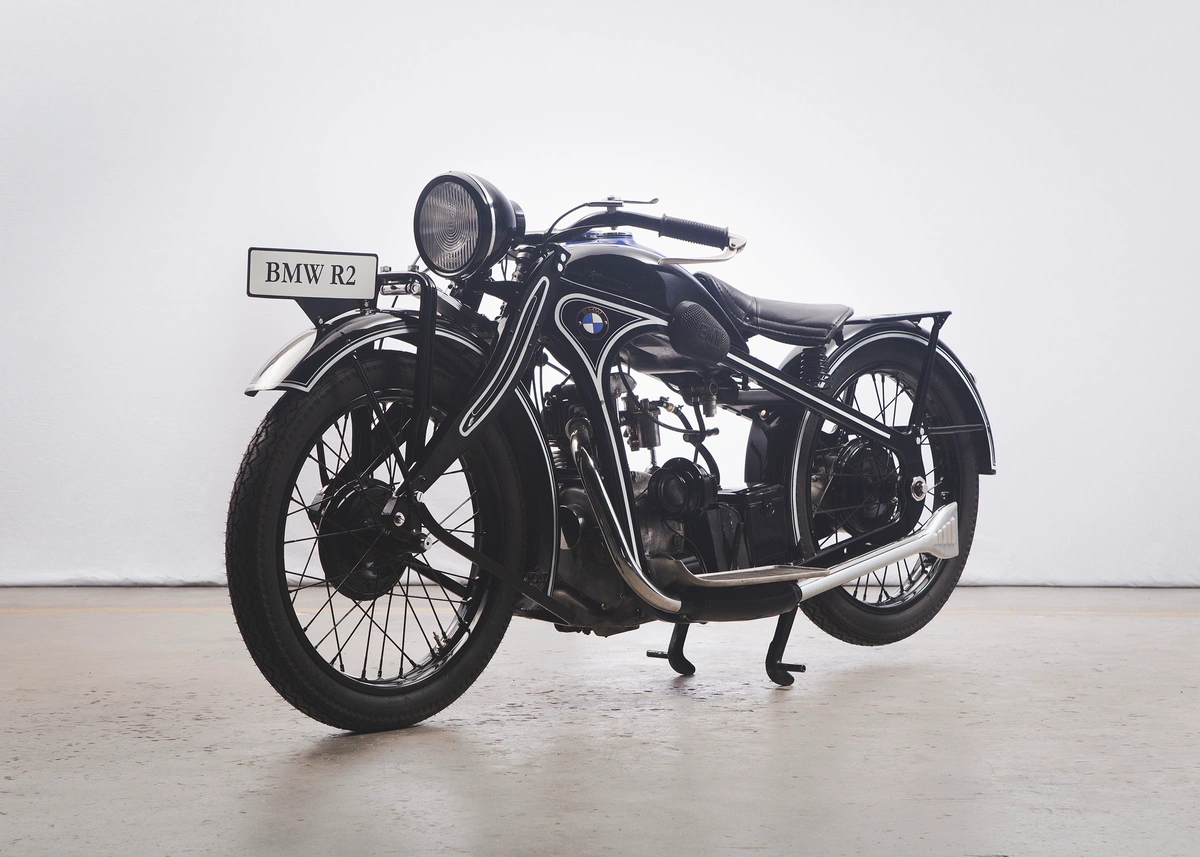
1931 R2
-
Significance: Response to economic hardship; an affordable option.
-
Engine: 198cc single-cylinder engine.
-
Features: "Tunnel" crankcase design, shared features with larger models.
-
Performance: Produced 6 horsepower, ideal for commuting.
1935 R12
-
Significance: First production motorcycle with hydraulically damped telescopic front forks.
-
Engine: 745cc boxer engine.
-
Features: Improved suspension for better ride comfort and handling.
-
Performance: Delivered 18 horsepower.
1935 R17
-
Significance: Luxury sport model of the era.
-
Engine: 745cc boxer engine.
-
Features: Advanced features like hydraulically damped forks, chrome accents.
-
Performance: Produced 33 horsepower, top speed around 87 mph.
1936 R5
-
Significance: Introduced new frame and engine designs influencing future models.
-
Engine: 494cc boxer engine.
-
Features: Dual downtube frame, plunger rear suspension.
-
Performance: Generated 24 horsepower, reaching speeds up to 87 mph.
1938 R51
-
Significance: First BMW with a telescopic front fork and plunger rear suspension.
-
Engine: 494cc boxer engine.
-
Features: Improved handling and comfort.
-
Performance: Produced 24 horsepower.
1938 R71
-
Significance: Basis for the Soviet M72 and later Chinese CJ750 motorcycles.
-
Engine: 745cc boxer engine.
-
Features: Sidecar-compatible, robust design.
-
Performance: Produced 22 horsepower.
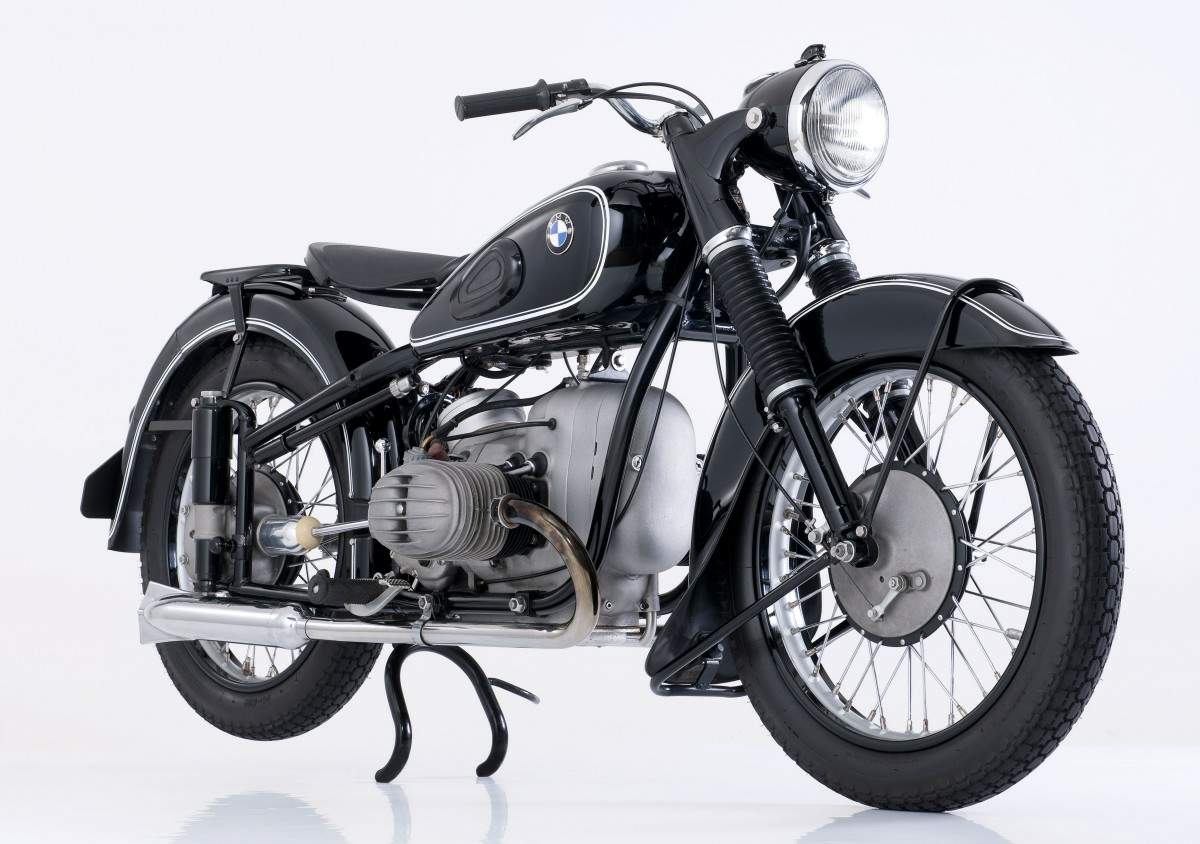
1940s BMW Motorcycles
1941 R75
-
Significance: Military motorcycle with sidecar used in WWII.
-
Engine: 745cc boxer engine.
-
Features: Driven sidecar wheel, reverse gear, and off-road capability.
-
Performance: Produced 26 horsepower.
1948 R24
-
Significance: First post-war BMW motorcycle; production resumed after WWII.
-
Engine: 247cc single-cylinder engine.
-
Features: No rear suspension (hardtail design), affordable and reliable.
-
Performance: Generated 12 horsepower.
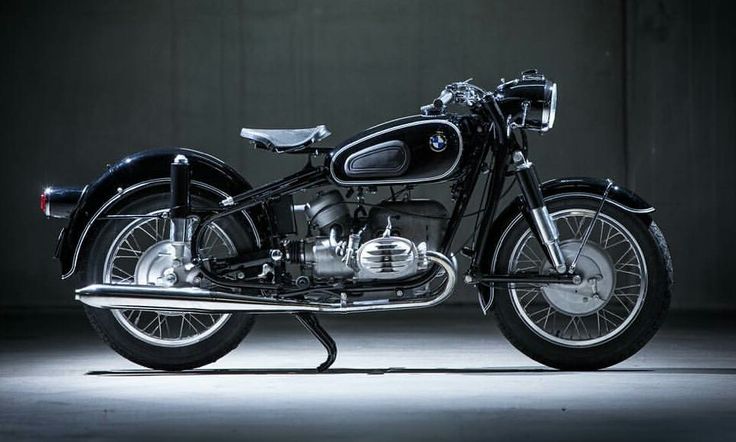
1949 R51/2
-
Significance: First post-war boxer-twin motorcycle from BMW.
-
Engine: 494cc boxer engine.
-
Features: Plunger rear suspension, telescopic front forks.
-
Performance: Produced 24 horsepower.
1950s BMW Motorcycles
1950 R25
-
Significance: Successor to the R24 with rear suspension added.
-
Engine: 247cc single-cylinder engine.
-
Features: Improved comfort with rear swingarm suspension.
-
Performance: Produced 12 horsepower.
1952 R68
-
Significance: High-performance sport bike of its time.
-
Engine: 594cc boxer engine.
-
Features: Higher compression ratio, larger valves, sporty styling.
-
Performance: Generated 35 horsepower, top speed close to 106 mph.
1955 R50
-
Significance: Introduced BMW's new "Earles Fork" front suspension.
-
Engine: 494cc boxer engine.
-
Features: Designed for sidecar use, improved handling and stability.
-
Performance: Produced 26 horsepower.
1955 R69
-
Significance: High-end model with performance enhancements.
-
Engine: 594cc boxer engine.
-
Features: Sportier version of the R50, designed for enthusiasts.
-
Performance: Delivered 35 horsepower.
1956 R26
-
Significance: Upgraded single-cylinder model.
-
Engine: 247cc single-cylinder engine.
-
Features: Enclosed driveshaft, improved suspension.
-
Performance: Produced 15 horsepower.
1960s BMW Motorcycles
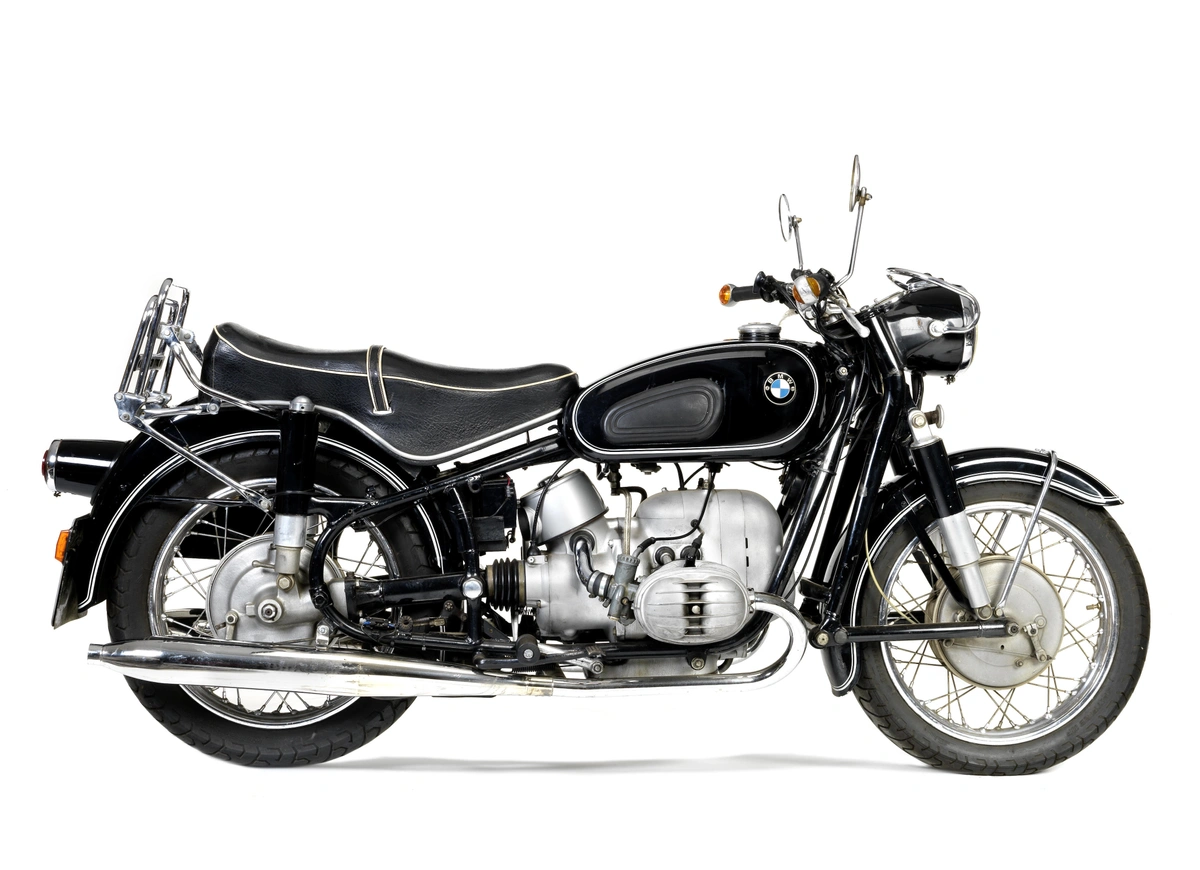
1960 R69S
-
Significance: BMW's flagship sport bike of the era.
-
Engine: 594cc boxer engine.
-
Features: High-compression engine, magneto ignition, sport suspension.
-
Performance: Produced 42 horsepower, top speed over 109 mph.
1967 R50/2, R60/2, R69S
-
Significance: Continuation of the slash-2 series with improvements.
-
Engine: Various boxer engines (494cc to 594cc).
-
Features: Known for reliability and sidecar compatibility.
-
Performance:
-
R50/2: 26 horsepower.
-
R60/2: 30 horsepower.
-
R69S: 42 horsepower.
-
1969 /5 Series (R50/5, R60/5, R75/5)
-
Significance: Modernization of BMW motorcycles.
-
Engine:
-
R50/5: 498cc, 32 horsepower.
-
R60/5: 599cc, 40 horsepower.
-
R75/5: 745cc, 50 horsepower.
-
-
Features: Electric starters, telescopic forks, updated styling, and improved performance.
1970s BMW Motorcycles
1973 R90S
-
Significance: High-performance sport bike with café racer styling.
-
Engine: 898cc boxer engine.
-
Features: First BMW with a factory fairing, Dell'Orto carburetors, dual disc front brakes.
-
Performance: Produced 67 horsepower, 0-62 mph in 4.8 seconds, top speed of 124 mph.
1974 R90/6
-
Significance: Versatile motorcycle suitable for touring and sport.
-
Engine: 898cc boxer engine.
-
Features: Less aggressive than the R90S but shared many components.
-
Performance: Produced 60 horsepower.
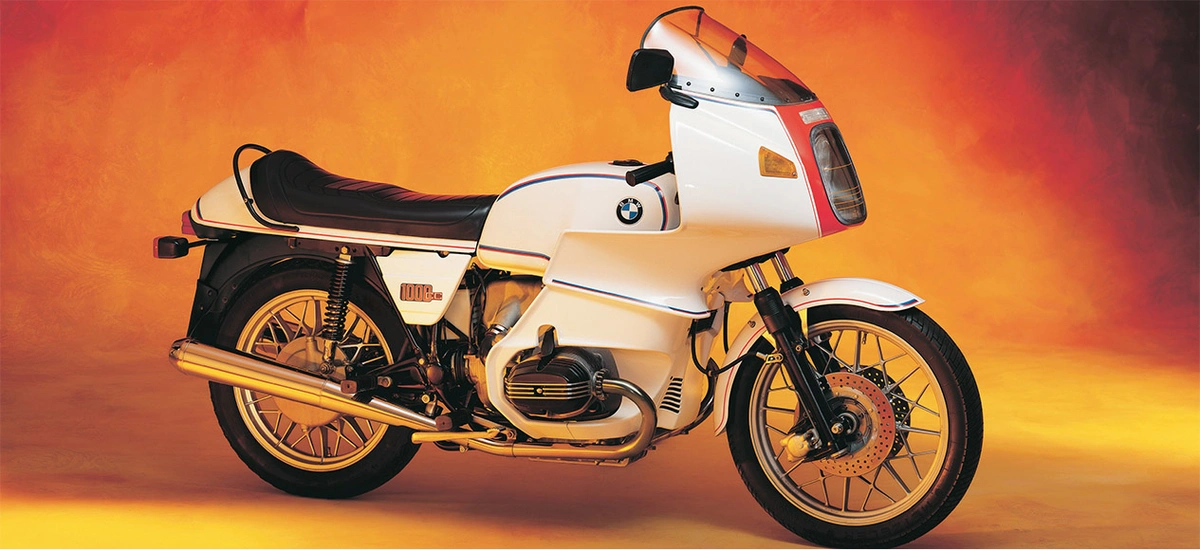
1976 R100RS
-
Significance: First production motorcycle with a full-frame fairing.
-
Engine: 980cc boxer engine.
-
Features: Aerodynamic fairing tested in wind tunnels, enhanced touring comfort.
-
Performance: Delivered 70 horsepower, excellent high-speed stability.
1978 R100RT
-
Significance: Touring version of the R100RS.
-
Engine: 980cc boxer engine.
-
Features: Larger fairing for better wind protection, comfortable seating.
-
Performance: Produced 70 horsepower.
1980s BMW Motorcycles
1980 R80 G/S
-
Significance: Birth of the adventure motorcycle segment.
-
Engine: 797cc boxer engine.
-
Features: Single-sided monolever swingarm, capable off-road and on-road.
-
Performance: Produced 50 horsepower.
1983 K100
-
Significance: Introduction of the K-Series with an inline-four engine.
-
Engine: 987cc liquid-cooled, fuel-injected inline-four.
-
Features: Laid-flat engine orientation (longitudinal), smooth power delivery.
-
Performance: Generated 90 horsepower.
1985 K75
-
Significance: First three-cylinder BMW motorcycle.
-
Engine: 740cc liquid-cooled inline-three.
-
Features: Balanced performance, shared parts with the K100.
-
Performance: Produced 75 horsepower.
1986 R80 G/S Paris-Dakar
-
Significance: Celebrated BMW's success in the Paris-Dakar Rally.
-
Engine: 797cc boxer engine.
-
Features: Larger fuel tank (32 liters), off-road enhancements like reinforced suspension.
-
Performance: Same as R80 G/S but with extended range.
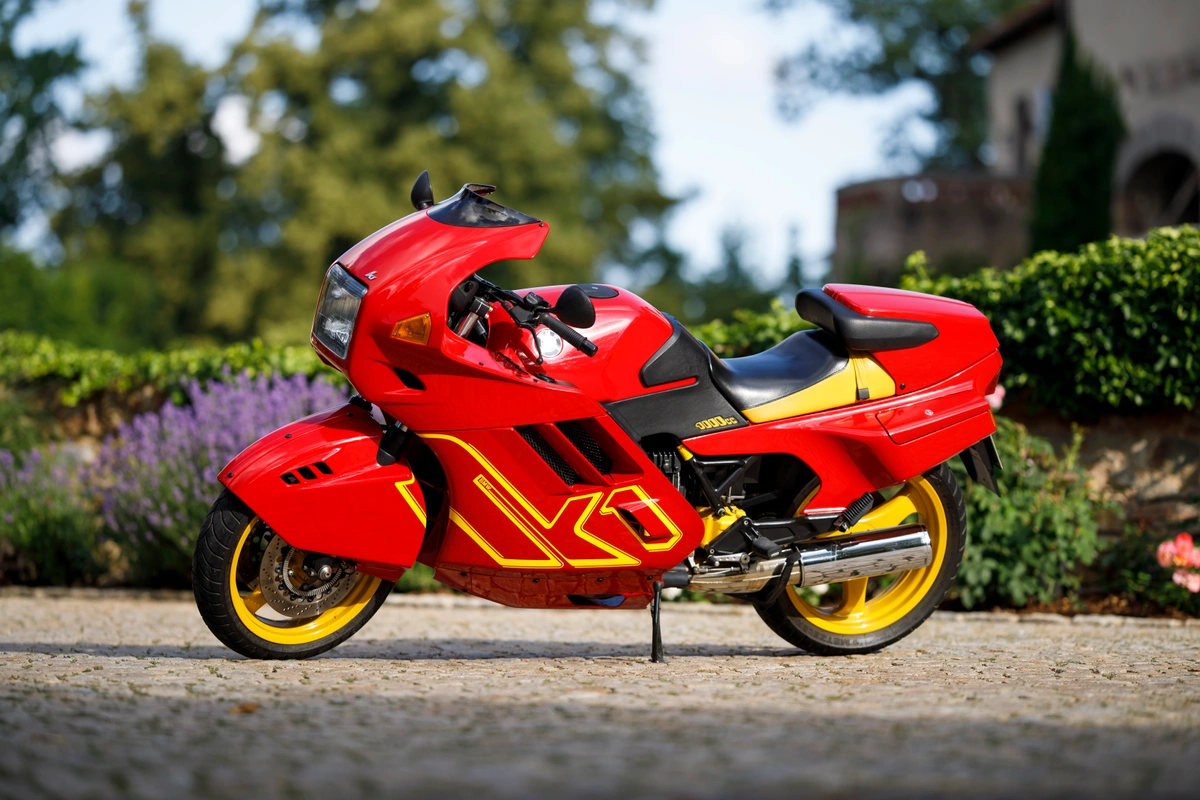
1988 K1
-
Significance: High-speed sport-tourer with advanced aerodynamics.
-
Engine: 987cc inline-four with four valves per cylinder.
-
Features: Distinctive full fairing, first BMW with a 16-valve engine.
-
Performance: Produced 100 horsepower, top speed around 150 mph.
1988 K100LT
-
Significance: First motorcycle with standard ABS.
-
Engine: 987cc inline-four.
-
Features: Luxury touring amenities, advanced safety features.
-
Performance: Produced 90 horsepower.
1990s BMW Motorcycles
1991 K1100LT
-
Significance: Evolution of the luxury touring line.
-
Engine: 1,092cc inline-four.
-
Features: Improved comfort, ABS, fuel injection.
-
Performance: Generated 100 horsepower.
1993 R1100RS
-
Significance: First BMW with the "Oilhead" boxer engine.
-
Engine: 1,085cc air/oil-cooled boxer engine.
-
Features: Fuel injection, four valves per cylinder, Telelever front suspension.
-
Performance: Produced 90 horsepower.
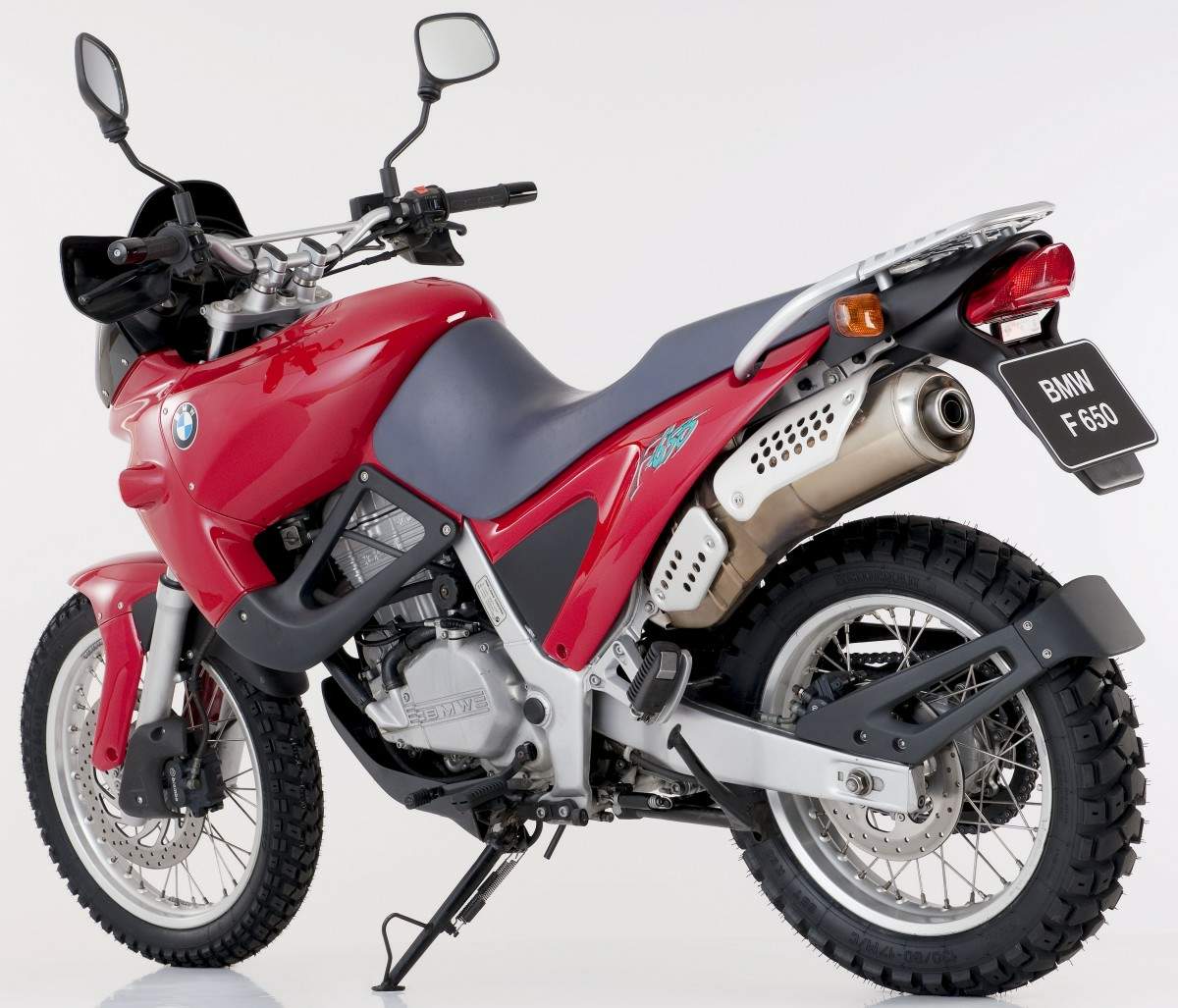
1994 F650 Funduro
-
Significance: Return to single-cylinder models after 30 years.
-
Engine: 652cc single-cylinder Rotax engine.
-
Features: Versatile dual-sport capabilities, developed in collaboration with Aprilia.
-
Performance: Produced 48 horsepower.
1996 R850R
-
Significance: Entry-level standard bike with boxer engine.
-
Engine: 848cc boxer engine.
-
Features: Classic styling, comfortable ergonomics.
-
Performance: Generated 70 horsepower.
1998 K1200RS
-
Significance: Sport-touring bike with increased displacement.
-
Engine: 1,171cc inline-four.
-
Features: Electronic fuel injection, ABS, aerodynamic fairing.
-
Performance: Produced 130 horsepower.
2000s BMW Motorcycles
2000 R1150GS
-
Significance: Upgraded adventure bike with more power.
-
Engine: 1,130cc boxer engine.
-
Features: Six-speed transmission, Telelever and Paralever suspension.
-
Performance: Produced 85 horsepower.
2004 K1200S
-
Significance: High-performance sport bike with innovative engineering.
-
Engine: 1,157cc inline-four with transverse mounting.
-
Features: Duolever front suspension, Electronic Suspension Adjustment (ESA).
-
Performance: Generated 165 horsepower.
2006 F800S/F800ST
-
Significance: Introduction of the parallel-twin engine in mid-sized bikes.
-
Engine: 798cc liquid-cooled parallel-twin.
-
Features: Belt drive (F800S), chain drive (F800ST), versatile for sport and touring.
-
Performance: Produced 85 horsepower.
2006 R1200GS Adventure
-
Significance: Enhanced version of the R1200GS for extreme adventures.
-
Engine: 1,170cc boxer engine.
-
Features: Larger fuel tank (33 liters), increased suspension travel, rugged protection.
-
Performance: Produced 100 horsepower.
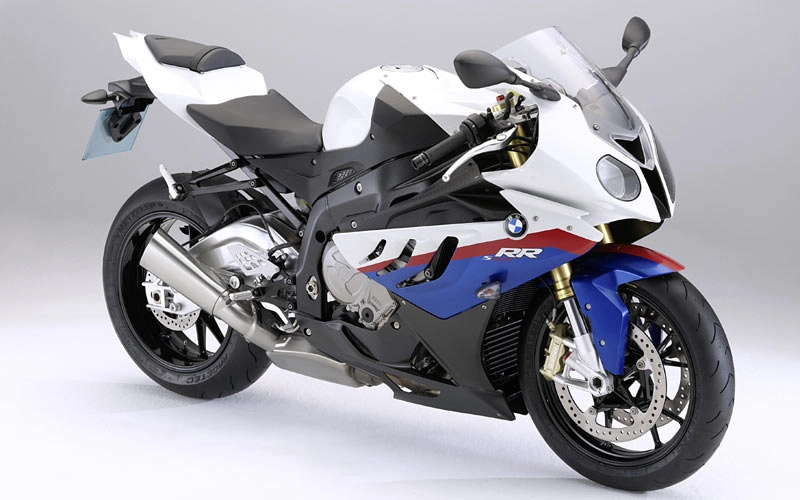
2009 S1000RR
-
Significance: BMW's entry into the superbike segment.
-
Engine: 999cc inline-four.
-
Features: Advanced electronics package including ABS, traction control, and dynamic damping control.
-
Performance: Produced 193 horsepower, highly competitive in World Superbike racing.
2010s BMW Motorcycles
2011 K1600GT/GTL
-
Significance: Luxury touring bikes with a six-cylinder engine.
-
Engine: 1,649cc inline-six.
-
Features: Adaptive headlights, ESA II, Bluetooth connectivity, ride modes.
-
Performance: Generated 160 horsepower, smooth power delivery.
2013 R1200GS
-
Significance: First water-cooled boxer engine in the GS series.
-
Engine: 1,170cc liquid-cooled boxer engine.
-
Features: Ride-by-wire throttle, multiple riding modes, Dynamic ESA.
-
Performance: Produced 125 horsepower.
2014 R nineT
-
Significance: Heritage model celebrating BMW's 90th anniversary.
-
Engine: 1,170cc air/oil-cooled boxer engine.
-
Features: Modular design for customization, classic styling, standard ABS.
-
Performance: Generated 110 horsepower.
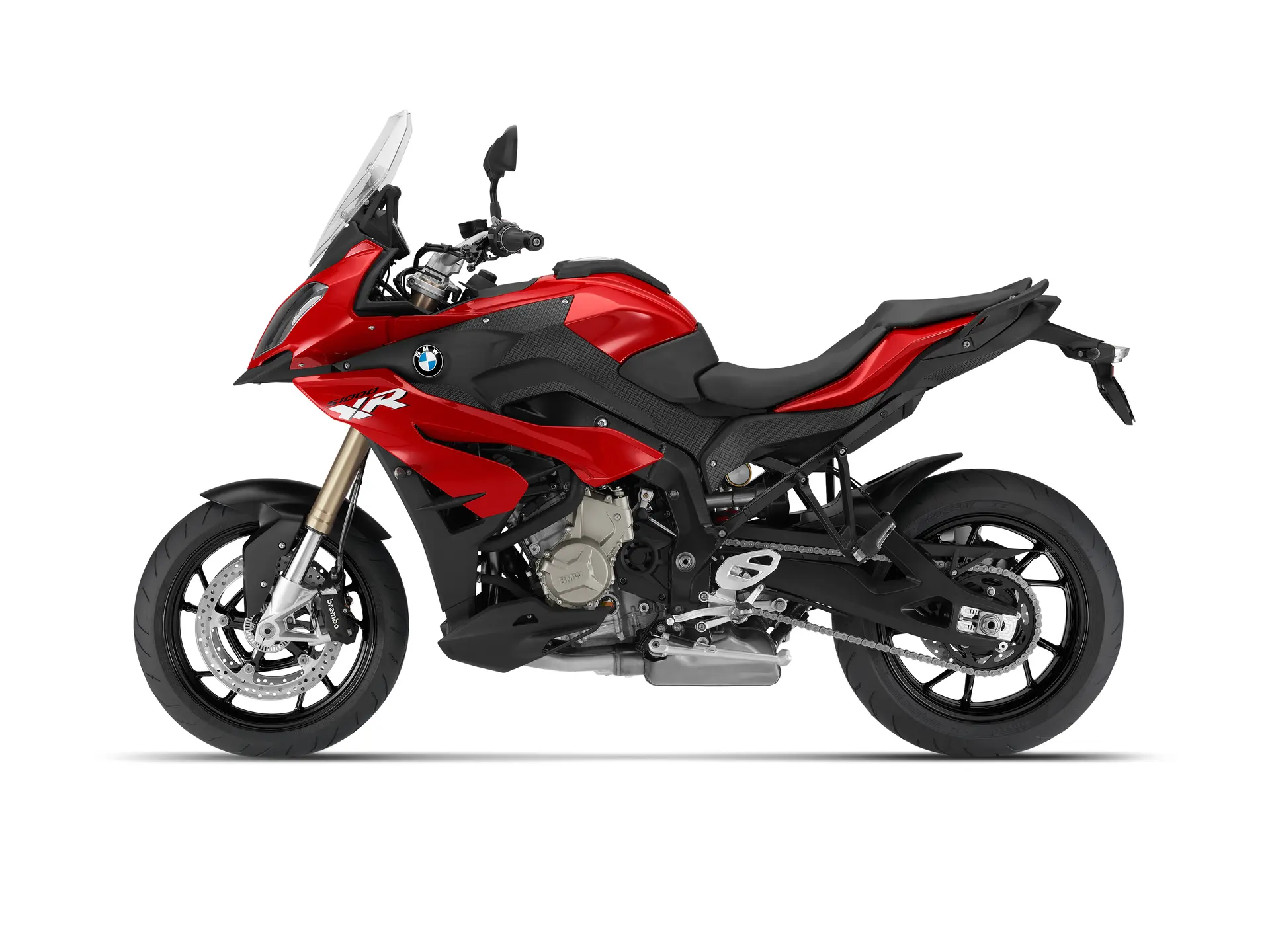
2015 S1000XR
-
Significance: Sport-touring motorcycle blending performance and comfort.
-
Engine: 999cc inline-four.
-
Features: Upright riding position, advanced electronics, dynamic suspension.
-
Performance: Produced 160 horsepower.
2017 G310R
-
Significance: Entry-level roadster aimed at new riders.
-
Engine: 313cc single-cylinder.
-
Features: Lightweight design, affordable pricing.
-
Performance: Generated 34 horsepower.
2018 F850GS/F750GS
-
Significance: Updated mid-size adventure bikes.
-
Engine: 853cc parallel-twin.
-
Features:
-
F850GS: Improved off-road capability, TFT display, connectivity options, spoked wheels.
-
F750GS: More road-oriented, cast wheels, lower seat height.
-
-
Performance:
-
F850GS: Produced 95 horsepower.
-
F750GS: Produced 77 horsepower.
-
2020s BMW Motorcycles
2020 R1250 GS
-
Significance: Introduced ShiftCam variable valve timing.
-
Engine: 1,254cc boxer engine.
-
Features: Increased efficiency, Dynamic ESA, advanced rider aids, TFT display.
-
Performance: Produced 136 horsepower.
2020 F900R/F900XR
-
Significance: New models in the mid-size segment.
-
Engine: 895cc parallel-twin.
-
Features: Adaptive Cornering Lights, TFT display with connectivity, ride modes.
-
Performance: Produced 99 horsepower.
2021 R18
-
Significance: BMW's entry into the heavyweight cruiser market.
-
Engine: 1,802cc boxer engine (largest ever by BMW).
-
Features: Classic design inspired by the 1936 R5, modern tech like keyless ride, exposed shaft drive.
-
Performance: Produced 91 horsepower and 116 lb-ft of torque.
2021 M 1000 RR
-
Significance: First M-series motorcycle from BMW Motorrad.
-
Engine: 999cc inline-four with ShiftCam technology.
-
Features: Carbon fiber components, aerodynamic winglets, advanced electronics, M brakes.
-
Performance: Produced 212 horsepower.
2022 CE 04
-
Significance: Electric scooter representing BMW's push into electric mobility.
-
Engine: Electric motor producing 42 horsepower.
-
Features: Futuristic design, 10.25-inch TFT display, range of approximately 80 miles.
-
Performance: Top speed of 75 mph.
2022 K1600 Series (GT, GTL, B, Grand America)
-
Significance: Updated luxury touring lineup.
-
Engine: 1,649cc inline-six, Euro 5 compliant.
-
Features: New 10.25-inch TFT display with navigation, improved electronic suspension, enhanced audio system.
-
Performance: Maintained 160 horsepower with smoother delivery.
2023 R1250 RS
-
Significance: Sport-touring bike with enhanced features.
-
Engine: 1,254cc boxer engine with ShiftCam.
-
Features: New LED headlights, TFT display, optional active cruise control, enhanced aerodynamics.
-
Performance: Produced 136 horsepower.
2023 M 1000 R
-
Significance: Naked version of the M 1000 RR superbike.
-
Engine: 999cc inline-four.
-
Features: High-end suspension, M brakes, winglets for downforce, dynamic traction control.
-
Performance: Produced 205 horsepower.
2024 R1300 GS (Anticipated)
-
Significance: Next-generation adventure bike.
-
Engine: Larger, 1,300cc boxer engine.
-
Features: Enhanced electronics, lighter chassis, improved off-road capability, updated design.
-
Performance: Produced 150 horsepower.
2024 CE 02
-
Significance: Electric urban mobility solution.
-
Engine: Electric motor targeting urban commuters.
-
Features: Compact design, connectivity features, accessible for new riders, possibly with modular battery options.
-
Performance: Modest power suitable for city riding, with speeds up to 56 mph.
BMW Motorcycles: A Legacy of Adventure and Style
Looking back on BMW's motorcycle history reveals a narrative shaped by unwavering innovation, technological advancements, and a deep respect for its motorcycles' enduring legacy.
The company has left an undeniable impact, from those early aircraft engines to cutting-edge motorcycles. Each revolution and advancement showcases a commitment to exceeding expectations.
BMW's dedication to pushing the boundaries of technology ensures that the brand will continue to shape the world of motorcycles for years to come.