
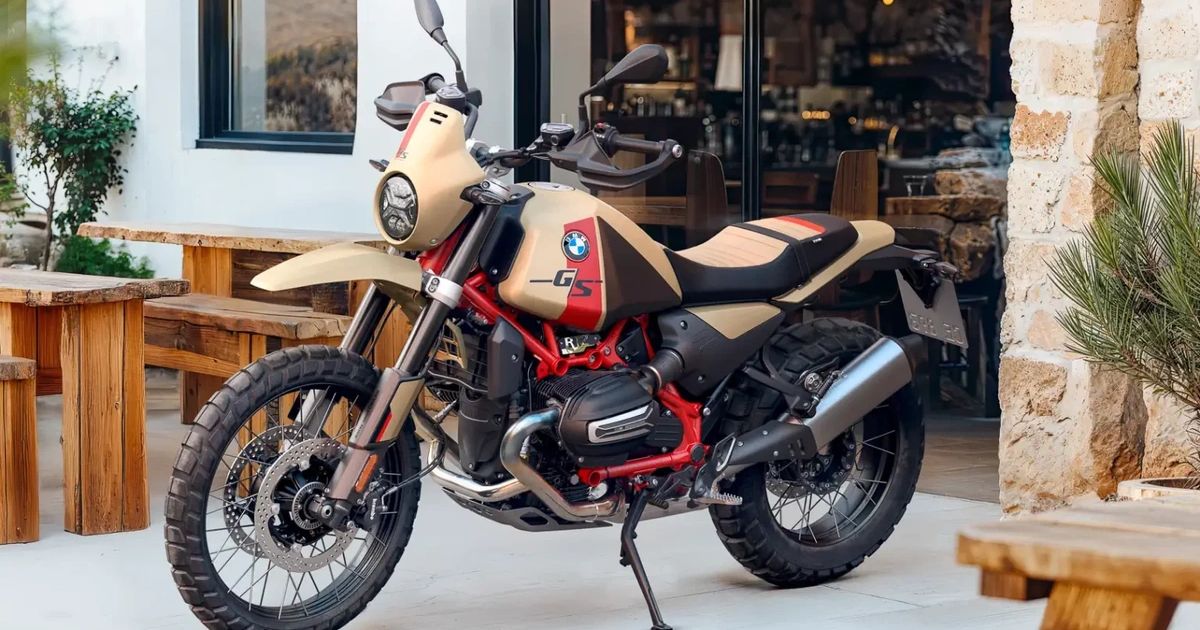
In a market often saturated by data-driven engineering and aero-optimized panels, BMW Motorrad’s 2026 R 12 G/S is a refreshing paradox: a raw, mechanically expressive machine that conceals precise, modern tech beneath its nostalgic skin.
But don’t mistake this heritage-forward machine for a mere styling exercise. BMW has architected the R 12 G/S as a purpose-built homage to the 1980 R 80 G/S—the original dual-purpose icon that launched an entirely new segment—while infusing it with just enough modernity to make it legitimately capable.
Unlike the other GS models, this is not a bike for adventure tourism prestige. It’s a visceral, low-electronic, boxer-powered ride meant to connect rider and terrain, especially when that terrain gets dirty.
Revisiting the GS Genesis: 1980 R 80 G/S
To understand the R 12 G/S’s ethos, you need to go back 45 years.
First, notice the G/S branding. This stands for Gelände/Straße, which translates into off-road/street in German.
The R 80 G/S wasn't just a mashup of an off-road bike and a touring machine. It was a philosophical pivot—one that encouraged long-distance exploration on unpaved roads when most touring bikes didn’t leave the asphalt. With a monolever rear swingarm, a single-sided driveshaft, and that signature boxer thrum, it was something truly different.
It wasn’t just engineering novelty. The R 80 G/S won four Paris-Dakar Rallies in the '80s, permanently burning the GS letters into the DNA of adventure motorcycling. The R 12 G/S picks up this DNA, particularly from the lighter, simpler era of the air-cooled boxers.
Engine: Analog Character, Tuned for the 21st Century
The R 12 G/S is powered by BMW’s 1,170cc air/oil-cooled flat twin boxer engine—shared with the R 12 nineT and R 12—but tuned to deliver a broader spread of torque earlier in the rev range. Output is rated at 109 horsepower at 7,000 rpm and 85 lb.-ft. of torque at 6,500 rpm. But those numbers only tell part of the story.
Thanks to reworked intake and exhaust tract geometry, the torque curve comes on strong right off idle. It’s the kind of power delivery that feels old-school mechanical but with new-school throttle precision.
A new airbox design, relocated behind the cylinders instead of above them (as in the R nineT), contributes to the bike’s lowered tank line and more centralized mass.
The intake routing also optimizes combustion efficiency while keeping the tank slim and ergonomically natural when standing on the pegs.

Chassis and Suspension: Geometry Built for Dirt
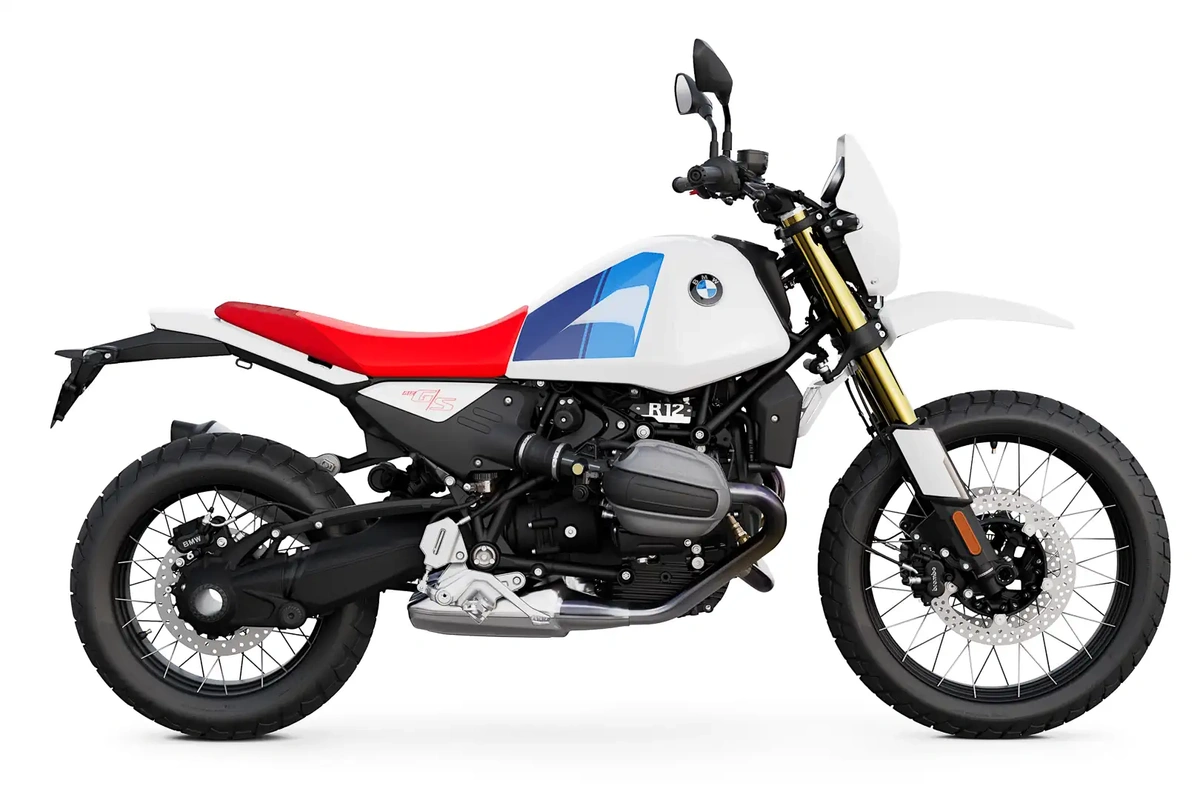
The new one-piece steel trellis frame is not a modular bolt-up like the R 1300 GS; it’s welded together for maximum rigidity and minimal weight. The rear subframe is a tubular steel trellis that supports the flat two-up seat and integrated rear fender, lending a clean, retro profile.
Up front, a 45mm inverted telescopic fork with 8.2 inches of travel handles rough terrain with far more composure than you’d expect from a heritage machine. Rear suspension is BMW’s Paralever swingarm with a central monoshock and 7.8 inches of travel. The R 12 G/S also has a nice 9.4-inch ground clearance. Damping is manually adjustable for the front and rear—there is no ESA here. The focus is simplicity and serviceability.
The 21-inch front and 17-inch rear spoked wheels set this bike apart from the R nineT Urban G/S, which runs 19/17 cast wheels. However, when ordered with the Enduro Pro package, the R 12 G/S becomes the only BMW ever to feature an 18-inch rear wheel.
For braking, the front wheel receives two-piston, radially mounted Brembo calipers that squeeze 310mm discs. Out back, a two-piston Brembo caliper clinches a 265mm disc.
Ergonomics and Control
The 34-inch seat height and upright bar position mean it’s clearly targeted at intermediate and experienced off-road riders. But the bike’s slim waist and narrow seat make it manageable, even for shorter riders with off-road skills. For those seeking something higher, the optional Rallye seat offers another 0.8 inches.
Thanks to wide enduro foot pegs, a straight-aluminum handlebar with 30mm risers, and minimal cockpit fairing, the R 12 G/S feels like a stripped-down enduro machine with a big twin heartbeat.
The analog-style circular instrument cluster is minimal, with a digital insert for gear position, trip data, and ride mode. It’s refreshingly basic in an era of TFT overload, although a 3.5-inch TFT is available as an option.
Electronics: Just Enough, Nothing More
Standard electronics include:
- ABS Pro (cornering ABS with lean-angle sensitivity)
- Dynamic engine brake control
- Dynamic Traction Control
- Three ride modes: Road, Rain and Enduro
- Optional ENDURO PRO mode via the Enduro Package Pro
That’s it—no radar, no adaptive cruise, no automatic preload. This was intentional. The R 12 G/S is for riders who prefer learning throttle finesse over electronic crutches. For those who want connectivity, an optional ConnectedRide Control adds smartphone integration, USB-C charging, and media functions.
BMW also offers two packages:
-
Premium Package: Adds shift assist, cruise control, heated grips, adaptive headlight, and tire pressure monitoring (which can be disabled in Enduro modes).
-
Enduro Package Pro: Tailors the bike for off-road use with ENDURO PRO mode, 18-inch rear wheel, aggressive tires, wide spiked pegs, serrated brake pedal, a reinforced skid plate, bar risers, hand guards, and an extended kickstand.
Design Details: Purposeful Aesthetic
The R 12 G/S is engineered for modern performance despite its heritage look. Every line is deliberate. The high front fender, minimal cockpit fairing, and simple tail section are not just for show—they reduce weight and simplify maintenance. For lighting, the G/S arrives with a 5.75-inch headlight (the smallest offered in BMW's current range) and a 12V socket. An adaptive Headlight Pro upgrade is also available.
The fuel tank is steel and shaped to recall the original R 80 G/S. It holds 4.1 gallons. The curb weight is just over 500 pounds, making this one of the lightest big-boxer models in BMW’s stable.
BMW has delivered a highly specific experience here: one that celebrates the brand’s analog roots but includes just enough refinement to stay current.
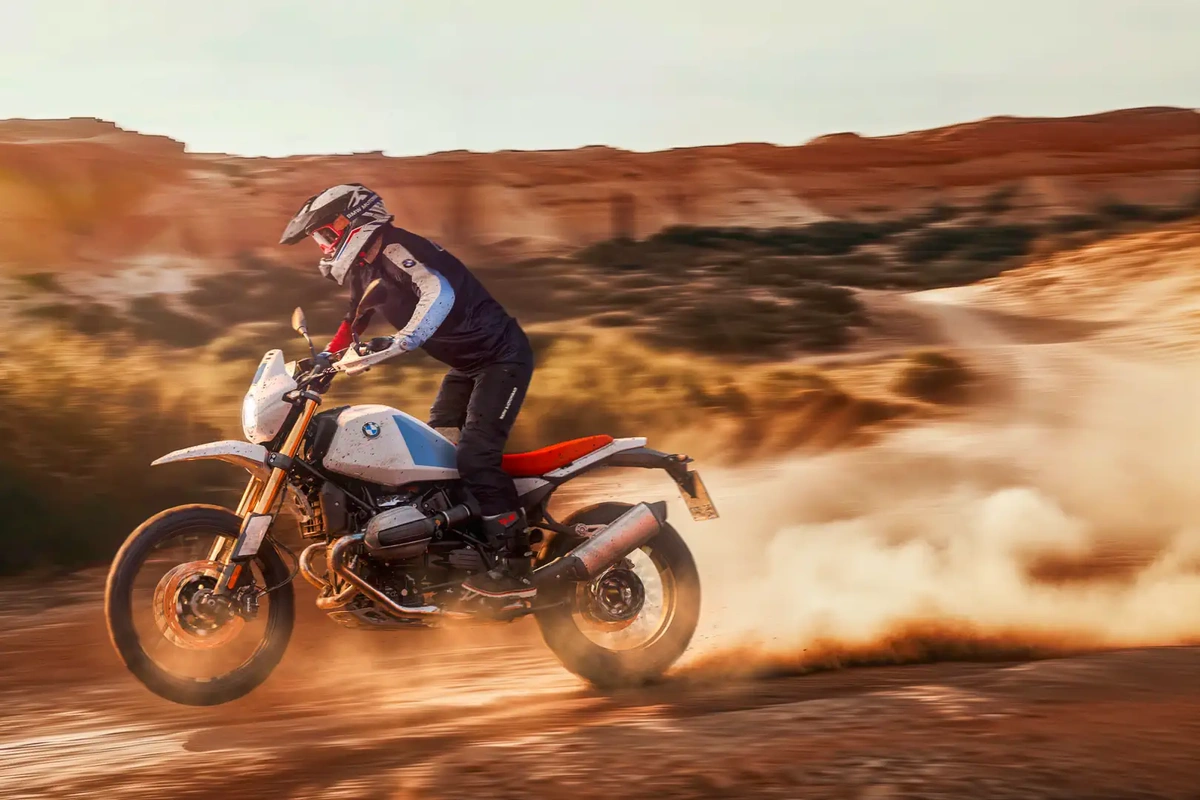
Whether you’re traversing two-track fire roads or hitting the twisty tarmac on the weekends, the R 12 G/S is about feel—mechanical, tactile, and unmistakably vintage GS.
Now - we just can't wait until one is available for rent. But that won't be until the end of the year.
2026 BMW R 12 G/S Colors and Pricing
The R 12 G/S comes in three finishes:
- Light White (with the red seat and blue graphics—classic homage)
- Option 719 Aragonite Sand Matte (exclusive with red and grey accents)
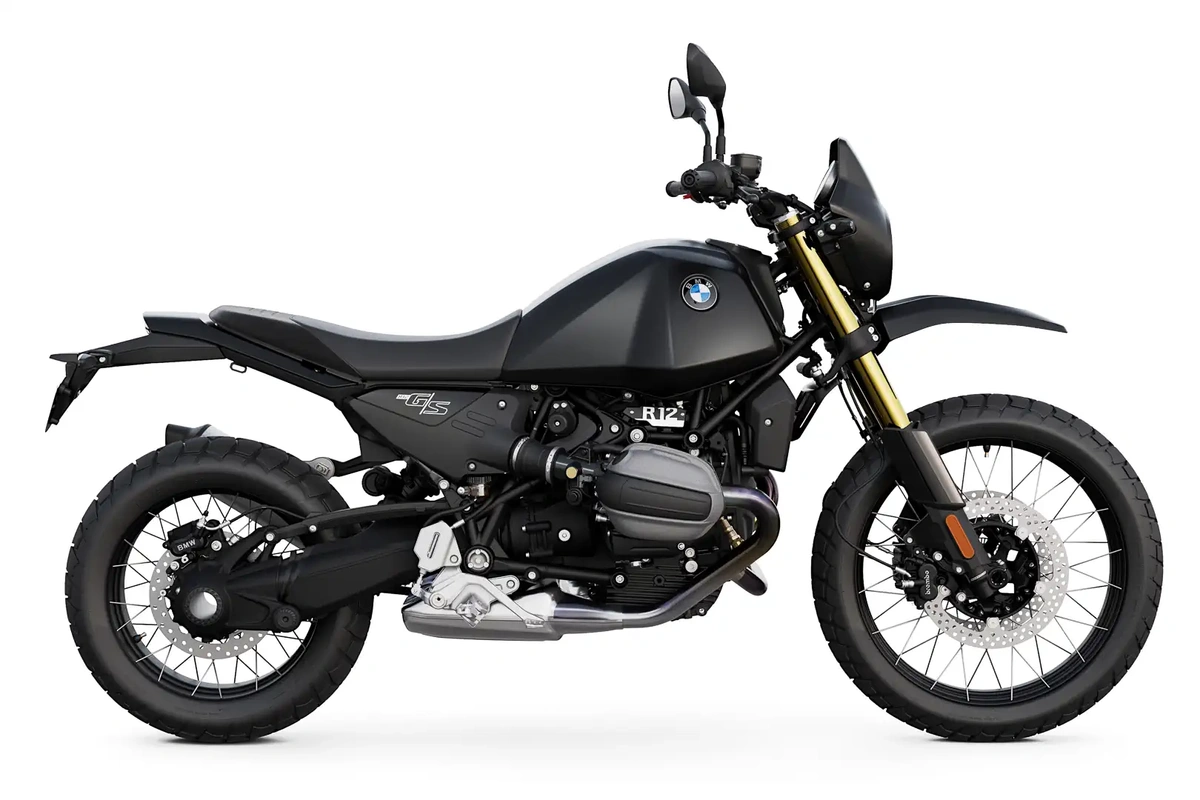
- Night Black Matte (all-black stealth styling)
Pricing starts at $16,395, and the bike should arrive in US dealerships in Q34.
2026 BMW R 12 G/S Specs:
- Engine: Air/oil-cooled, 1170cc flat-twin Boxer
- Power: 109 hp @ 7,000 rpm
- Torque: 85 lb.-ft. @ 6,500 rpm
- Compression Ratio: 12.0:1
- Gearbox: 6-speed with optional Quickshifter
- Final Drive: Shaft
- Frame: One-piece trellis steel main frame
- Front Suspension: 45mm inverted fork, 8.2 in travel
- Rear Suspension: Cast aluminum Paralever swingarm, 7.8 in travel
- Front Brake: Dual 310mm discs, radial 2-piston floating Brembo calipers, ABS Pro
- Rear Brake: 265mm disc, floating Brembo 2-piston caliper
- Front Wheel: 21 x 2.15 in
- Rear Wheel: 17 x 4.00 in (18 x 4.00 in Enduro Pro Package)
- Seat Height: 34 in
- Fuel Capacity: 4.1 gallons
- Curb Weight: 504 lbs