

Adventure motorcycle group riding isn't just about hitting the road with friends; it's about creating unforgettable experiences that amplify the thrill of ADV riding.
As someone who's clocked countless miles on both tarmac and trails, I can tell you that sharing the journey with like-minded riders takes the excitement to a whole new level. But let's face it: group rides can also introduce complexities that, if not managed properly, can turn a dream ride into a nightmare.
I learned this the hard way while testing a BMW F 850 GS in Moab, Utah. Chasing a fast rider up front, we inadvertently passed and pulled away from our lead rider—the one responsible for signaling dangerous sections like steep cliffs or treacherous loose corners.
Without his guidance, we barreled ahead, unaware of the hazards that lay before us. Approaching a sharp cliff with no warning, I launched the bike off the edge, severely bending the front rim (tacoing it, as we say) and breaking my nose (second time that year!) upon impact.
Despite the mishap, I managed to ride out safely and switch bikes, but the incident was a stark reminder of how crucial communication is during group rides. The lack of coordination didn't just cost me physically; it underscored the risks we take when we don't ride as a cohesive unit.
Mastering group riding techniques is crucial whether you're a seasoned rider or new to the adventure scene. And if you're looking to join a ride but don't have the right bike, we offer an incredible selection of ADV motorcycle rentals to get on your way, from the Kawasaki KLR to the Yamaha Tenere 700 to the BMW GS!

In this guide, I'll provide some essential motorcycle group riding tips that will maximize safety and enjoyment on the road and, as importantly, off the road. Remember, a group can also consist of just two riders, so all of the below apply.
Also, remember that bike prep is crucial for serious adventure riding that spends much time—hopefully more than 90%—off-road.
Proper adventure motorcycle tires for both on- and off-road riding, like the Bridgestone AX41 or Pirelli Scorpion Rally STR, grippy pegs, properly adjusted handlebars, and bike protection are just a few of the essentials (stay clicked to our blog for more on this).
Maximizing Group Riding Safety
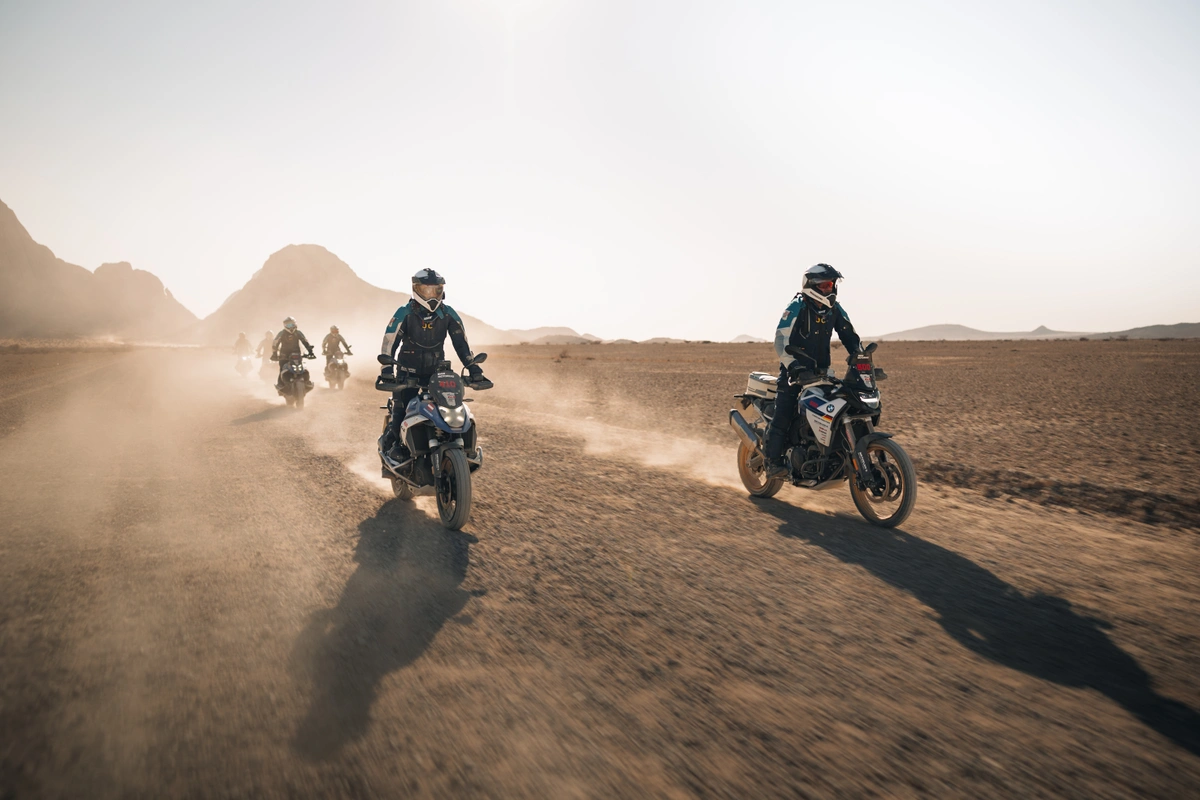
Riding in a group can be electrifying, but it also brings its own set of challenges and risks. Effective communication, proper prep, and knowing your riding limits are the cornerstones of a successful group ride.
Here are some tips to make you not only safer but a happier rider.
Effective Communication Techniques
One non-negotiable aspect of safe group riding is maintaining crystal-clear communication among all members. This is especially crucial when venturing off-road and having some fun.
Here's how to make that happen:
-
Hand Signals: Don't underestimate the power of universal hand signals. Knowing and using them for actions like stopping, turning, or pointing out hazards can be a game-changer. The Motorcycle Safety Foundation (MSF) provides an excellent guide for these signals.
-
Rider-to-Rider Communication Systems: Invest in top-notch intercom devices that allow seamless conversations on the move. Brands like Cardo Systems and Sena Technologies offer reliable options with long battery life and clear audio, even at highway speeds. Advanced models can connect multiple riders, have noise cancellation, and some even offer mesh networking for larger groups.
-
Pre-Ride Briefings: Before you twist that throttle, gather the troops. Discuss route plans, rest stops, fuel breaks, and any potential hazards. This ensures everyone is on the same page and minimizes surprises. It's also a good time to set ground rules and address any concerns.
Maintaining Proper Formation & Spacing
A well-organized formation isn't just for show, it's a safety imperative. While maintaining proper spacing is crucial for most group rides, there are exceptions among riders who have honed their skills together over years.
-
The Staggered Formation: This is ideal for highway and open road riding. In this setup, riders position themselves in a zigzag pattern: the leader rides on the left side of the lane, the next rider follows one second behind on the right, and so on. This formation enhances visibility and allows ample reaction time. It also prevents riders from being directly behind one another, reducing the risk of collision if sudden braking occurs.
-
The Single File Formation: This is recommended when tackling off-road trails or twisty roads with limited visibility. Switching to single file with generous spacing gives each rider room to maneuver around obstacles and react to sudden changes in terrain. Maintaining at least a two-second gap is essential for safety.
However, among close-knit groups of experienced riders—like some of my fellow journalists and closest riding friends—we've developed a level of trust and understanding that allows us to ride bar-to-bar and tire-to-tire.
Years of riding together have tuned us into each other's habits, reactions, and decision-making processes. This mutual awareness enables us to maintain closer formations safely, especially during photo shoots or when navigating familiar routes.
That said, this level of proximity is not advisable for most riders and should only be attempted by those with significant experience riding together. For the majority, maintaining proper spacing not only improves visibility but also provides the necessary buffer to react to unexpected events.
Remember, motorcycles don't have the luxury of four wheels for stability; we need to be proactive in ensuring our safety.
Speed Control & Riding Within Your Limits
Let's get real—ego has no place on a group ride. Every time I crashed, I was riding way over my limits. Thankfully, I was either on a race track where this happens often, or alone on the trails.
I learned a few things while leading riders who began quickly but began riding sloppily while trying to keep up with front riders. I’ve seen a few crashes, some that required ambulances and resulted in broken bones.
So now I make this very clear: I will only pick up the pace when I know the riding skills of the riders I lead. If not, I slow down to a pace where everyone is safe and having the most fun possible.
The following are super essential for successful group rides.
-
Ride at Your Own Pace: If you're not comfortable keeping up with faster riders, don't. Pushing beyond your limits is a recipe for disaster. Communicate with the group; they can adjust the pace or arrange meeting points along the route.
-
Select an Experienced Lead Rider: The lead rider sets the tone for the entire group. They should have the experience to navigate various terrains and make quick decisions about adjusting speeds due to traffic, weather changes, or unexpected obstacles. They should also monitor the group through mirrors or communication devices.
-
Avoid Abrupt Actions: Sudden braking or acceleration can cause a chain reaction in a tightly packed group, increasing the risk of collisions. Smooth and predictable movements are key. If you need to slow down or stop, signal well in advance. Consistency helps maintain group cohesion.
Adhering to these practices will create a safer environment that allows everyone to soak in the joy of the ride, whether you're tearing up the asphalt or the dirt trails.
Off-Road Riding Strategies
Venturing off-road adds another layer of complexity to group riding. The terrain is unpredictable, and challenges can escalate quickly without proper planning.
And some riders are amazing at group riding when on the road, but quickly become unsafe when the off-road sections begin. Here are a few tips to help ensure your safety and fun.
Trail Selection
Picking the right trail is more than just choosing a scenic route—it's about matching the trail's difficulty with the skill levels of all riders.
-
Research Thoroughly: Utilize online forums and Facebook groups (my favorites—with GPS tracks always!), local adventure riding clubs, and apps like Rever to find trails suitable for your group. Pay attention to recent trail conditions reported by other riders. Factor in seasonal changes that might affect trail accessibility.
-
Assess Critical Factors: Consider the trail's difficulty level, length, elevation changes, and weather conditions. Also, note the availability of support facilities like fuel stations, water sources, and camping spots. Always have a contingency plan in case the primary route becomes impassable, which often happens during routes like the Northeast BDRs after bad storms due to heavy mud, fallen trees, or overflowing streams.
Navigation Techniques
Getting lost in the wilderness isn't the adventure you're looking for. Here’s what helps you prevent the bad adventures.
-
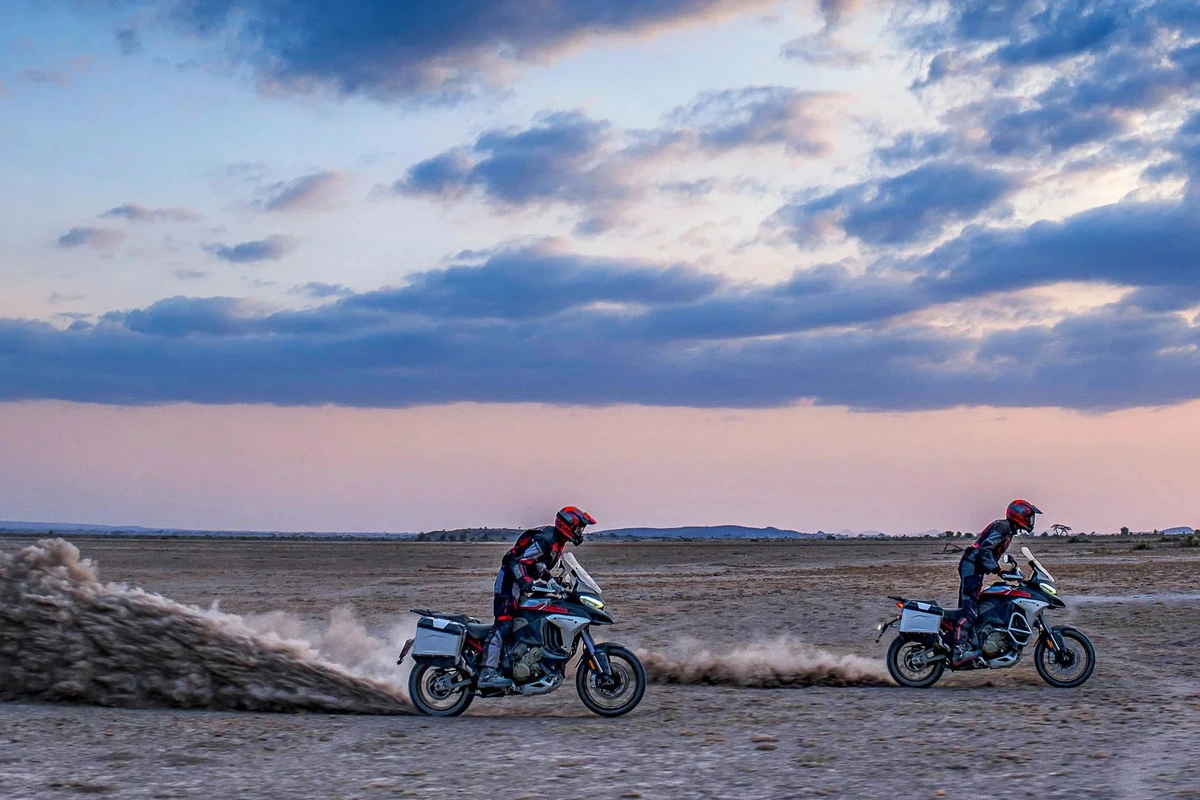
Equip with Reliable GPS Devices: Invest in motorcycle-specific GPS units like Garmin's Zumo series. I have a Zumo XT on my Ducati DesertX loaded with GPS maps, and won’t leave without it. Devices like the Zumo offer glove-friendly touchscreens, rugged designs, and off-road navigation features like topographic maps and breadcrumb trails. But always carry a paper map, along with some paper and a pencil (ink freezes fast in cold weather), just in case your GPS malfunctions, you lose one, or you crash and break one. I’ve been a victim of all three, and paper maps and my phone helped get me out. I also have an old Garmin 590 ML that I carry as a backup when leading extended adventure touring rides in new areas or on BDRs.
-
Share the Route Plan: Before departure, distribute the route, including waypoints and potential hazards, to all riders. Apps like Rever allow you to share detailed maps and tracks. Encourage riders to download offline maps in case of signal loss.
-
Assign a Skilled Navigator: Designate a lead rider experienced in off-road navigation to guide the group through challenging sections. They should be adept at reading terrain and making quick decisions.
Hazard Avoidance
Mother Nature is unpredictable, and off-road hazards simply appear. Here's some help.
-
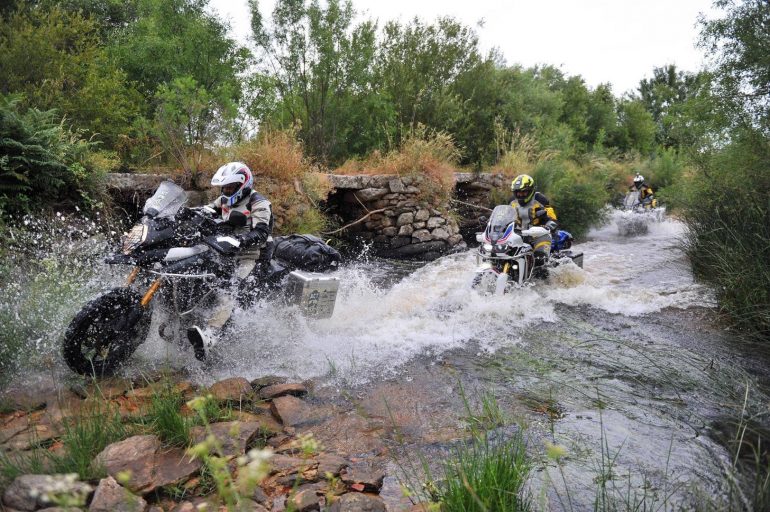
Maintain Safe Following Distances: When off-road, increase the gap between riders. This gives you more time to react to sudden obstacles like fallen trees, rocks, or wildlife. A minimum of three seconds is advisable on rough terrain.
-
Communicate Proactively: Use hand signals or helmet communication systems to alert the group about upcoming hazards such as steep inclines, water crossings, or slippery surfaces. Call out obstacles like "rock," "branch," or "mud" to keep everyone informed.
-
Pace Appropriately: Set a pace that accommodates the least experienced rider in the group. Pushing someone beyond their comfort zone can lead to accidents and dampen the group's morale. Regularly check in to ensure everyone is comfortable.
-
Pause at Crucial Turns When You Can't See the Rider Behind: Even if everyone has GPS devices with pre-loaded maps, it's important to stop and wait whenever you reach a fork in the trail and can't see the rider behind you. This is especially critical as distances between riders can naturally increase when some get tired, or others pick up the pace. By pausing at key intersections, you ensure that no one misses a turn, keeping the group together and preventing anyone from getting lost.
Incorporating these strategies ensures that your off-road group ride is both thrilling and safe, allowing everyone to enjoy the adventure to its fullest.
Emergency Preparedness
Let's face it—things can go sideways, backwards, and sometimes you get stuck in trees (don’t ask…).
Being prepared for emergencies is not optional; it's essential. Here’s what’s essential.
First Aid Kits
Every rider should carry a comprehensive first aid kit tailored for adventure motorcycling.
-
Bandages and Dressings: For cuts, scrapes, and larger wounds, include assorted sizes of sterile gauze pads and adhesive tape.
-
Medications: Pack pain relievers, antihistamines, anti-inflammatory meds, and any personal medications. Include electrolyte tablets to prevent dehydration.
-
Tools: Tweezers, scissors, safety pins, and a multi-tool can be invaluable for various situations.
-
Emergency Blanket and Whistle: An emergency blanket prevents hypothermia, and a whistle can signal for help if you're out of sight.
Communication Devices
When cell service is nonexistent, you'll need alternative ways to call for help.
-
Satellite Communicators: Devices like the Garmin InReach Explorer+ allow you to send SOS messages and share your location via satellite. They also offer two-way texting capabilities.
-
Two-Way Radios: Useful for short-range communication, especially in areas where intercom systems may fail. Ensure they're charged and have extra batteries if needed.
Emergency Plan
Hope for the best, prepare for the worst.
-
Assign Roles: Designate a medic, a navigator, and a mechanic within the group. Each person should be clear on their responsibilities.
-
Exchange Critical Information: Share emergency contacts, medical information, and any allergies. Keep this info easily accessible.
-
Plan Rendezvous Points: Identify spots along your route where the group can regroup if separated. Use landmarks that are easy to find.
-
Know Local Services: Research towing services, repair shops, and medical facilities along your planned route. Save their contact information in your devices.
By integrating these emergency preparedness measures, you enhance safety and gain peace of mind, allowing you to fully immerse yourself in the adventure.
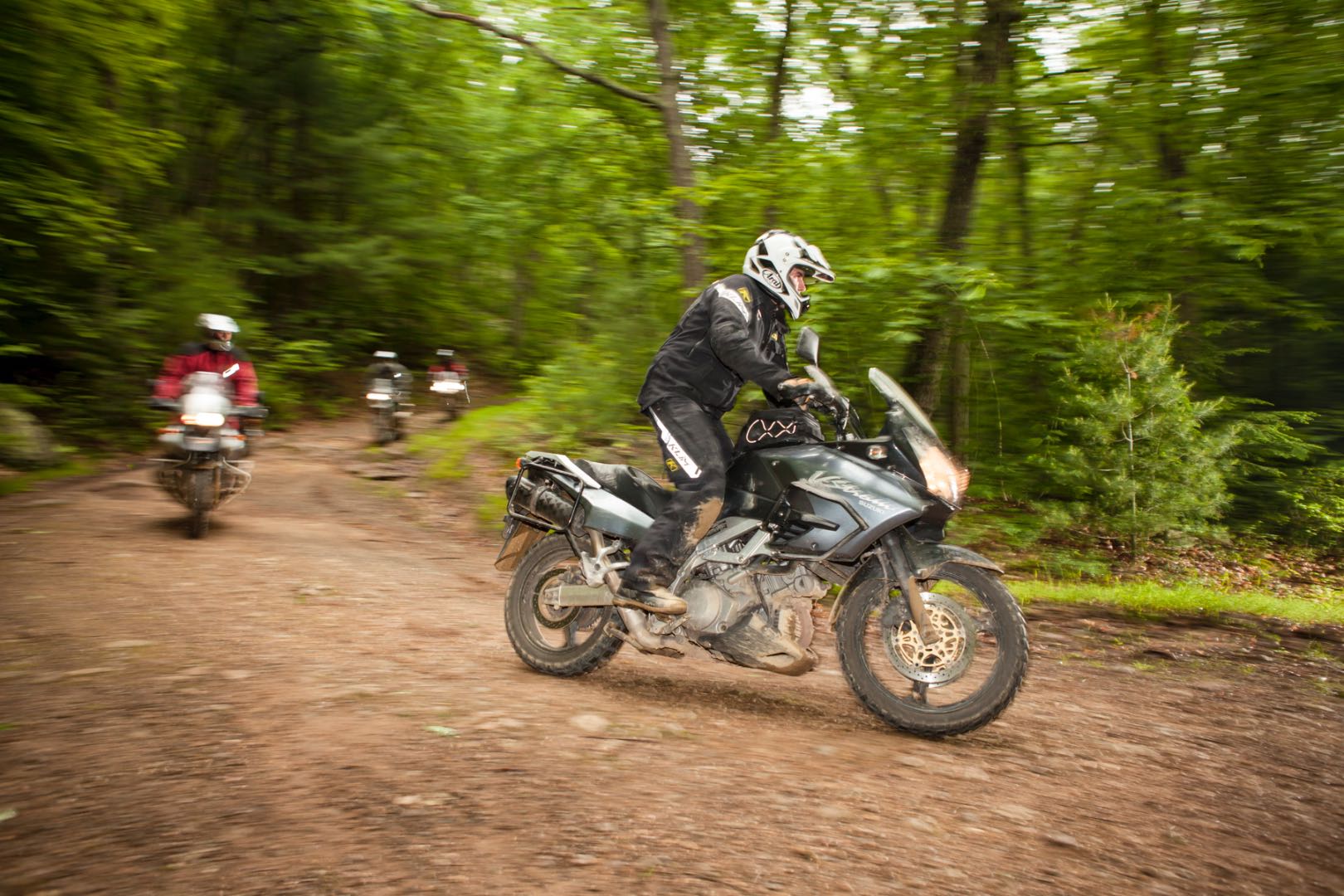
Yes, I still embrace solo motorcycle adventures, but group riding while adventure touring is one of life's great pleasures, especially when done safely and thoughtfully.
So gear up, plan meticulously, and embrace the camaraderie that comes with group riding. With these tips in your arsenal, you're well on your way to creating unforgettable memories on two wheels.